What is stainless steel bright annealing furnace and how does it work?
 09-23-2026 Author: KJ technology
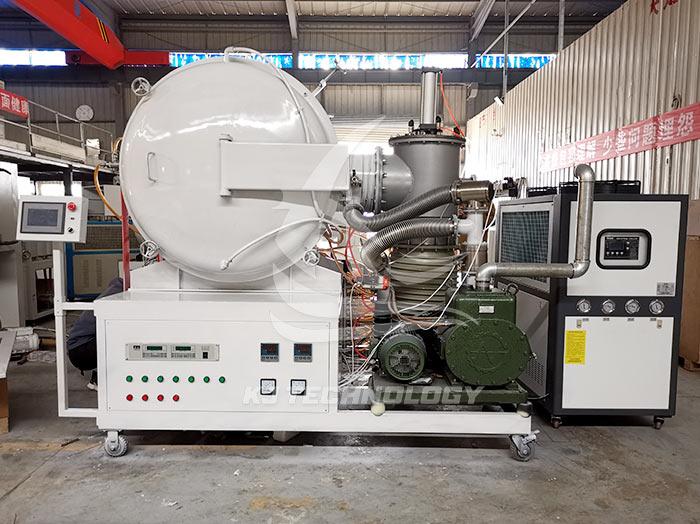
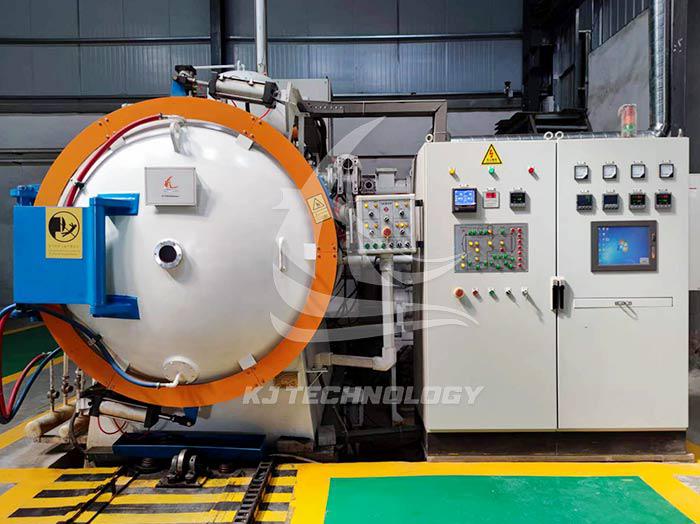
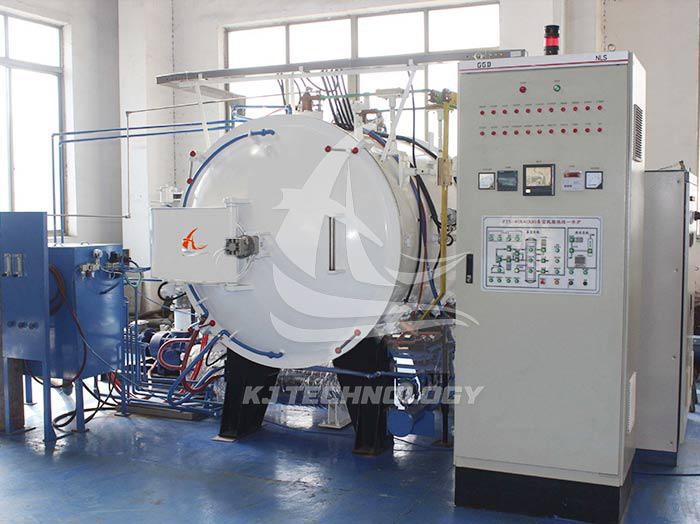
A stainless steel bright annealing furnace is a specialized heat treatment equipment designed to anneal stainless steel workpieces while retaining a clean, mirror-like bright metallic surface without oxidation, scaling or discoloration. Unlike ordinary annealing furnaces that heat steel in air and produce black oxide layers, bright annealing relies on controlled protective atmosphere or vacuum environment during the whole heating and cooling cycle. It is widely used for stainless steel coils, strips, wires, tubes, fittings and precision hardware in metal processing, automotive, sanitary ware, medical and food equipment industries.
Stainless steel tends to oxidize easily at high temperatures. If heated in the air, chromium on the surface will react with oxygen to form dark oxide scale, which requires subsequent pickling and polishing. The stainless steel bright annealing furnace eliminates this extra process. After treatment, the workpiece directly obtains a bright BA surface, improves ductility, releases internal residual stress, softens the material and optimizes grain structure for further stamping, bending and forming.
How does a stainless steel bright annealing furnace work?
The core principle of bright annealing is heating and cooling under oxygen-free protective atmosphere. The whole process is divided into four main stages: loading, heating & holding, controlled cooling and unloading.
1. Sealed chamber and atmosphere purgin
Workpieces are loaded into the sealed furnace chamber. Air inside the furnace is fully displaced by protective gas, usually hydrogen, nitrogen or hydrogen-nitrogen mixed gas. Oxygen content inside the chamber is reduced to an extremely low level before heating starts, preventing oxidation at high temperature.
Bell type bright annealing furnaces for stainless steel coils use an inner cover to seal the charge. Continuous bright annealing lines for strips and tubes maintain positive protective atmosphere through gas sealing gates. Vacuum bright annealing models achieve low oxygen environment by vacuum pumping.
2. Heating and annealing holding stage
The furnace heats stainless steel slowly up to the preset annealing temperature, generally ranging from 850℃ to 1150℃, depending on stainless steel grades such as SUS304, SUS316, SUS430.
At the target temperature, the material keeps warm for a certain period. Internal stress inside the stainless steel is released, distorted crystal grains recrystallize, hardness decreases and toughness increases. This step changes the mechanical properties of cold-worked stainless steel.
3.Controlled rapid cooling (critical for bright surface)
This is the key difference between bright annealing and conventional annealing. After heat preservation, the stainless steel must be cooled quickly within the protective atmosphere. If exposed to air during cooling, oxidation and discoloration will occur immediately.
The furnace adopts water-cooled jacket or gas quenching cooling. Workpieces cool down rapidly in the oxygen-free atmosphere until the temperature drops below the oxidation threshold. Only after sufficient cooling can the material be exposed to air.
4. Unloading finished bright parts
Once cooled, workpieces are taken out directly with bright metallic surface, no oxide skin, no pickling required.
Main types of stainless steel bright annealing furnaces
- Bell type bright annealing furnace: Batch type furnace for stainless steel coils, wire coils and stacked parts, common for large batch processing.
- Continuous bright annealing furnace: Used for stainless steel strip, welded tube continuous production, high production efficiency for mass production lines.
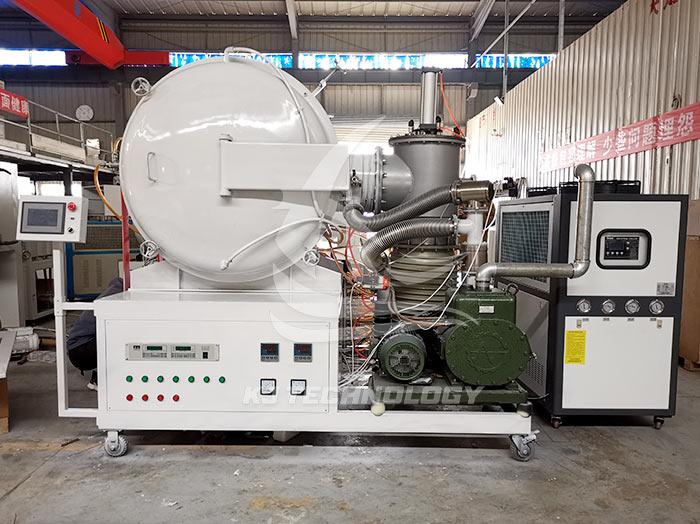
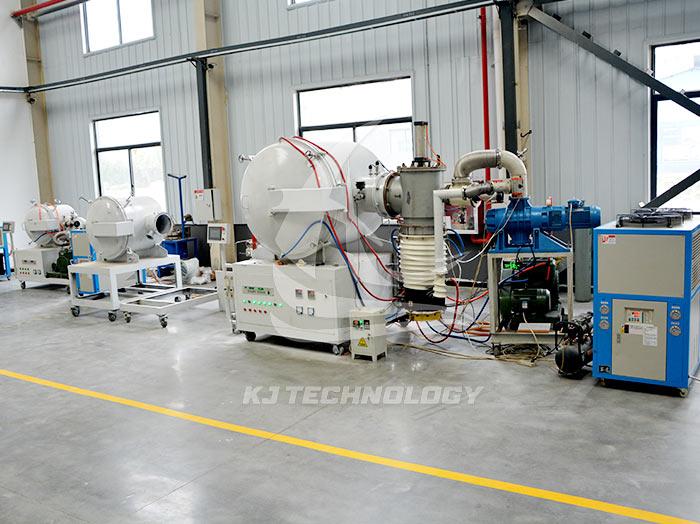
- Vacuum bright annealing furnace: Suitable for small precision stainless steel parts, medical fittings, high requirement for surface quality.
- Horizontal bright annealing furnace: For long stainless steel pipes and profiles.
Common applicable stainless steel grades and products
- Austenitic stainless steel: SUS304, SUS316L, SUS321, used for pipe fittings, sanitary components, medical parts
- Ferritic stainless steel: SUS430, SUS410, widely used for decorative strips and hardware
- Stainless steel wire, strip, coil, welded tube, stamping precision components
Key advantages of stainless steel bright annealing furnace
1. Bright oxide-free surface: Avoid pickling, reduce environmental pollution and secondary processing cost.
2. Improve material plasticity: Remove cold working hardening, suitable for deep drawing, bending and forming.
3. Stable material performance: Uniform grain structure, consistent mechanical properties for each batch.
4. Low gas consumption options: Optimized gas circulation system reduces consumption of hydrogen and mixed protective gas.
5. Customizable design: Batch furnace or continuous line can be customized according to workpiece size and output.
FAQ
Q: What protective gas is commonly used in bright annealing furnace for stainless steel?
A: Hydrogen or hydrogen-nitrogen mixture is most widely used. High purity nitrogen can be used for some low-grade stainless steel. Hydrogen has stronger reduction effect to remove minor surface oxides.
Q: What is the difference between vacuum bright annealing and atmosphere bright annealing?
A: Vacuum bright annealing is ideal for small precision workpieces with ultra-high surface requirement. Atmosphere bright annealing is more economical for large coils, strips and tubes with high production volume.
Q: Can bright annealing completely remove work hardening of stainless steel?
A: Yes. By reaching the full annealing temperature and proper holding time, cold-work hardening can be fully eliminated, making stainless steel soft enough for subsequent forming.