What industries use horizontal vacuum diffusion bonding furnaces?
 09-24-2026 Author: KJ technology
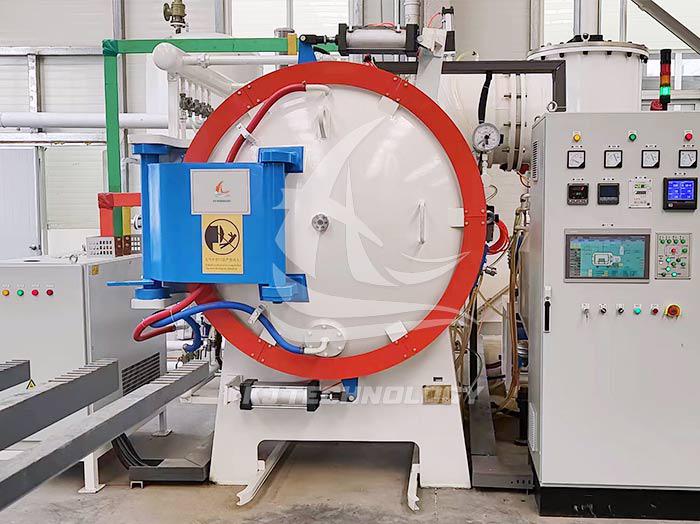
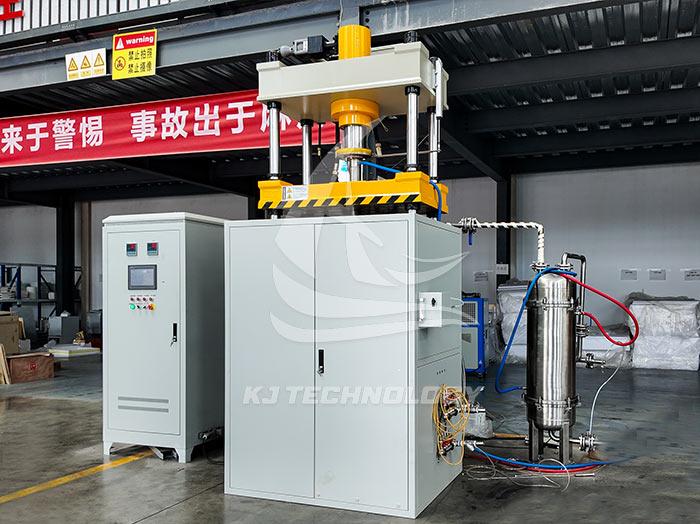
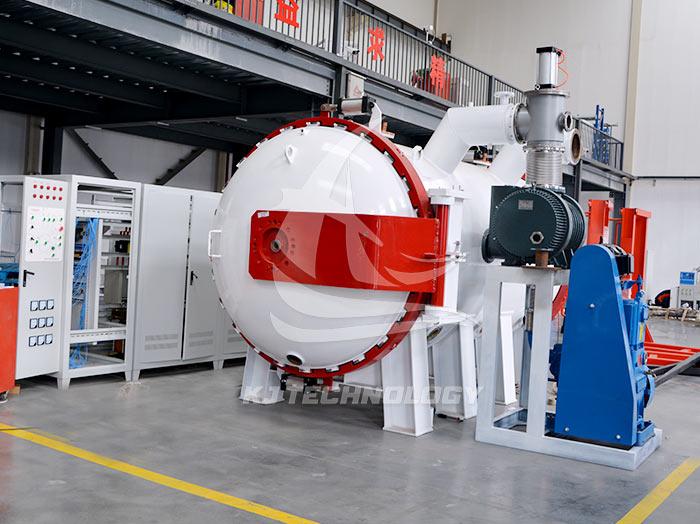
A horizontal vacuum diffusion bonding furnace is industrial thermal processing equipment for solid-state atomic bonding. Under high temperature, precise pressure and high vacuum conditions, it creates seamless metallurgical joints without melting the base materials. The horizontal chamber design simplifies loading large, heavy or multilayer stacked workpieces compared with vertical furnaces, making it widely adopted in multiple high-end manufacturing sectors. Below we break down the main industries and typical applications of horizontal vacuum diffusion bonding furnaces.
Aerospace & Defense Industry
Aerospace is the largest application field for horizontal vacuum diffusion bonding furnaces. Aircraft, rocket and defense components require ultra-strong, distortion-free joints that withstand extreme temperature cycling, vibration and high pressure.
Horizontal furnaces are ideal for large plate-fin heat exchangers, cooling panels, honeycomb structural parts, turbine engine components and titanium alloy assemblies. The solid-state bonding process joins dissimilar high-temperature alloys without brittle intermetallic layers. Manufacturers rely on horizontal vacuum diffusion bonding furnaces to produce lightweight, high-reliability parts for aircraft engines, satellite thermal control assemblies and missile components.
Semiconductor & Electronic Packaging Industry
The semiconductor and electronics sector uses horizontal vacuum diffusion bonding furnaces to manufacture thermal management and hermetic packaging components.
Common products include microchannel cold plates, high-power heat sinks, semiconductor showerheads, backplates and RF microwave components. Many assemblies need copper-aluminum, copper-stainless steel or metal-ceramic bonding. Since diffusion bonding produces flat, low-resistance, leak-free joints, it is widely used for power electronics packaging, data center liquid cooling plates and high-frequency communication devices. The horizontal chamber easily accommodates large-size cooling plates and stacked multilayer structures.
New Energy & Power Industry
New energy and power generation manufacturers use horizontal vacuum diffusion bonding furnaces to fabricate fuel cell bipolar plates, hydrogen equipment components, high-voltage busbars and thermal exchangers.
For fuel cell stacks, diffusion bonding joins thin metal sheets to form precise micro flow channels. In power transmission equipment, it creates copper-aluminum bonded busbars with low contact resistance. Nuclear energy components also use this furnace for corrosion-resistant, hermetic structural parts that operate under harsh environments. The vacuum environment prevents oxidation and ensures long-term joint stability.
Automotive Industry
The automotive industry, especially electric vehicle (EV) manufacturers, increasingly adopts horizontal vacuum diffusion bonding furnaces.
The furnace produces EV battery cooling plates, power inverter heat sinks and lightweight structural components. Conventional fusion welding may deform thin microchannel plates, but solid-state diffusion bonding keeps micro channels intact and leak-proof. EV thermal management systems depend on diffusion-bonded cold plates to control battery temperature safely.
Medical Device Industry
Medical manufacturing requires biocompatible, contamination-free precision joints. Horizontal vacuum diffusion bonding furnaces are used to make surgical instrument components, implant parts, microfluidic diagnostic chips and medical heat exchangers.
It can bond titanium, stainless steel and biocompatible alloys without filler metals. The high-vacuum process avoids impurities, meeting strict medical material standards. Microfluidic chips for lab testing often rely on diffusion bonding to form tiny sealed fluid channels.
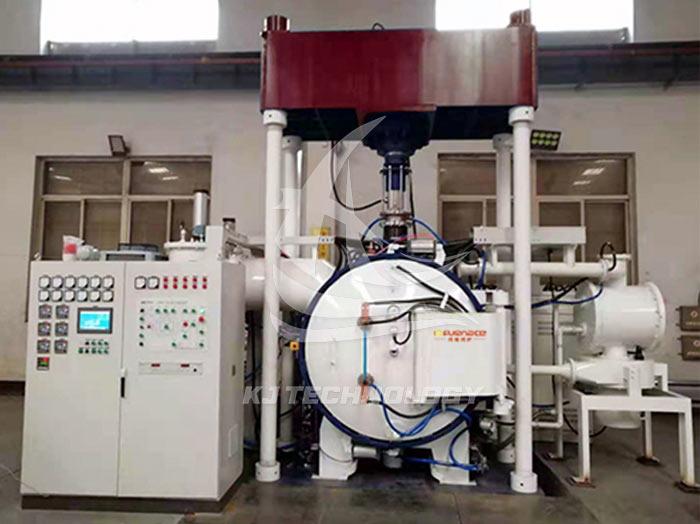
A commonly used horizontal diffusion welding furnace (click on the image to view product details)
Oil & Gas Industry
Subsea and oilfield equipment must resist high pressure and corrosive media. Horizontal vacuum diffusion bonding furnaces produce compact heat exchangers, valve assemblies and corrosion-resistant manifolds.
Diffusion bonded joints maintain integrity under high temperature and corrosive working fluids. Horizontal furnaces handle larger block-style manifolds that are difficult to load in vertical furnace systems.
Research & Advanced Material Laboratories
Universities, research institutes and new material R&D companies use laboratory-scale horizontal vacuum diffusion bonding furnaces for material testing and process development.
Researchers conduct trials on dissimilar material joining, metal-ceramic bonding and refractory alloy experiments. The horizontal design supports easy sample placement and observation, suitable for small batch trials before mass production.
Conclusion
Horizontal vacuum diffusion bonding furnaces serve high-tech industries that demand ultra-reliable precision joining. Aerospace, semiconductor packaging, new energy, automotive EV, medical devices, oil & gas and material research all depend on this furnace technology for solid-state bonding. Its horizontal loading design is a major advantage for large thermal management plates and multilayer stacked components.
FAQ
Q1: Why choose horizontal diffusion bonding furnace instead of vertical type?
A: Horizontal furnaces excel at large, flat, stacked plate workpieces. Loading and unloading is simpler, and the workpiece stays horizontally supported during pressurization, reducing bending risk for thin multilayer assemblies. Vertical furnaces are more suited for small cylindrical samples.
Q2: What materials can be bonded inside a horizontal vacuum diffusion bonding furnace?
A: It bonds similar and dissimilar metals including titanium, stainless steel, copper, superalloys, refractory metals, plus metal-ceramic composite structures.
Q3: What are the key advantages of diffusion bonding over traditional welding?
A: No melting of base material, minimal workpiece deformation, joint strength close to parent material, and ability to bond dissimilar materials. It creates clean, hermetic joints with no weld pores.