Key Parameters to Evaluate When Buying Vertical Vacuum Carbon Tube Furnace
 09-18-2026 Author: KJ technology
A vertical vacuum carbon tube furnace is a core piece of high-temperature thermal processing equipment widely used for carbonization, graphitization, vacuum sintering, and heat treatment of advanced materials. It serves critical industries including new energy materials, ceramic manufacturing, powder metallurgy, laboratory scientific research, and aerospace composite material processing. Unlike conventional horizontal tube furnaces, the vertical structural design optimizes material suspension heating, reduces workpiece contamination, and delivers more uniform temperature distribution for high-purity material processing.
Selecting a qualified vertical vacuum carbon tube furnace directly determines production stability, finished product quality, operational safety, and long-term maintenance costs. Many buyers only focus on maximum temperature while ignoring core functional parameters, leading to mismatched equipment performance, low yield rates, or frequent failures. This article systematically sorts out the key technical and functional parameters that must be evaluated when purchasing a vertical vacuum carbon tube furnace, helping laboratories and industrial manufacturers complete accurate, cost-effective equipment selection.
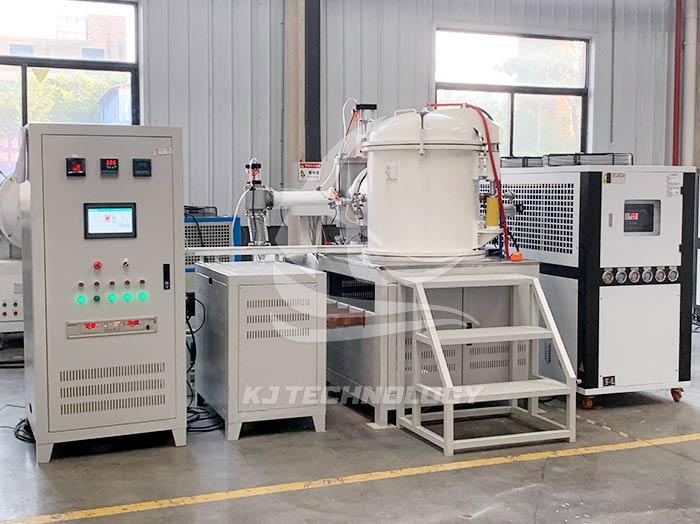
A commonly used vertical carbon tube vacuum furnace (click on the image to view product details)
1. Maximum Working Temperature & Temperature Control Accuracy
Temperature performance is the most fundamental indicator of a vertical vacuum carbon tube furnace, as it decides the applicable material processing processes. Different carbon materials, ceramics, and composite materials require strictly matched temperature ranges to complete sintering, carbonization, and purification reactions.
Most standard vertical vacuum carbon tube furnaces support a maximum temperature of 1600°C to 2200°C, while high-end customized models can reach 2800°C to 3000°C for high-purity graphitization processing. It is essential to distinguish between maximum instantaneous temperature and long-term stable working temperature. Many low-cost equipment can reach ultra-high temperatures instantly but cannot maintain stable operation for a long time, resulting in inconsistent product batch quality.
In addition, temperature control accuracy and uniformity are core evaluation points. Excellent models adopt multi-zone independent temperature control systems, with a temperature control accuracy of ±1°C and a furnace temperature uniformity within ±3°C. This precision is crucial for experimental research and high-standard industrial mass production, effectively avoiding product defects caused by local overheating or insufficient heating.
2. Vacuum Degree & Air Tightness Performance
The core advantage of a vertical vacuum carbon tube furnace is high-temperature processing under a vacuum or protective atmosphere, which isolates oxygen, prevents material oxidation, and removes impurities and volatile substances in materials. Therefore, vacuum level is a decisive parameter for improving product purity.
Commercial vertical vacuum carbon tube furnaces are divided into three vacuum grades: low vacuum, high vacuum, and ultra-high vacuum. Conventional laboratory models can reach 1×10⁻⁴ Torr, while industrial high-precision models support 1×10⁻⁶ Torr to 1×10⁻⁷ Torr ultra-high vacuum environments. Buyers need to select according to processing requirements: ordinary sintering and carbonization adapt to low and medium vacuum, while high-purity graphite purification, semiconductor material processing, and high-precision experimental research require ultra-high vacuum configuration.
Meanwhile, the furnace body’s air tightness cannot be ignored. High-quality equipment adopts integral sealing structure and high-temperature resistant sealing materials, with low vacuum leakage rate, ensuring long-term stable vacuum environment and reducing frequent pumping and energy consumption.
3. Furnace Tube Size & Effective Heating Zone
Furnace tube specification and effective heating zone length determine the equipment’s production capacity and experimental scale, which must be matched with the size and batch of processed materials. The vertical structure adopts upper and lower feeding and suspension heating, which is more suitable for long strip, rod-shaped, and suspension workpieces than horizontal furnaces.
When evaluating parameters, do not only refer to the total length of the furnace tube. The effective constant temperature heating zone is the key standard. Only materials placed in the constant temperature zone can obtain stable and consistent heating effects. For small-batch laboratory experiments, small-diameter and short heating zone models are cost-effective; for industrial batch production, it is necessary to customize the furnace tube diameter and extend the effective heating zone to meet large-capacity processing demands.
In addition, the carbon tube (graphite tube) material directly affects high-temperature resistance and service life. High-purity graphite carbon tubes with high temperature resistance, low impurity content, and good thermal stability are preferred, which can avoid secondary pollution to materials at high temperatures.
4. Heating Rate & Cooling Control Mode
Reasonable heating and cooling curves are key to ensuring material processing quality and preventing workpiece cracking and furnace body damage. Professional vertical vacuum carbon tube furnaces support programmable segmented temperature rise, with adjustable heating rate, which can meet the slow carbonization and rapid sintering process requirements of different materials.
Conventional equipment has a heating rate adjustable from 1°C/min to 10°C/min, supporting multi-stage temperature setting and automatic temperature holding. For cooling, high-quality models adopt slow natural cooling + optional rapid gas cooling mode, which can flexibly adjust the cooling speed according to process requirements, effectively improving production efficiency while ensuring material molding quality.
Equipment with fixed heating rates cannot adapt to diversified process experiments and industrial production, so programmable temperature control function is a necessary configuration for formal procurement.
5. Atmosphere Control System Configuration
In addition to vacuum environment processing, most carbon material heat treatment needs to be matched with inert protective atmospheres such as argon and nitrogen to further isolate oxidation and improve material compactness and purity. Therefore, the atmosphere control system is an indispensable evaluation parameter for vertical vacuum carbon tube furnaces.
High-quality equipment is equipped with a precise gas flow control meter and automatic gas inflation and deflation system, which can realize automatic switching of vacuuming, gas filling, and constant pressure maintenance. It supports mixed atmosphere processing and stable gas flow control, ensuring consistent atmosphere environment in each production batch and improving product repeatability.
For special processes such as chemical vapor deposition and surface modification, it is necessary to confirm whether the equipment supports corrosive gas adaptation and customized atmosphere control functions.
6. Safety Protection & Intelligent Control System
High-temperature vacuum equipment has potential risks such as high temperature, negative pressure, and gas leakage, so perfect safety protection parameters and functions are essential procurement indicators. Standard qualified vertical vacuum carbon tube furnaces must be equipped with multiple safety mechanisms: over-temperature automatic power-off protection, over-pressure pressure relief protection, water shortage protection, and furnace body leakage detection.
In terms of intelligent control, mainstream high-quality models adopt PLC intelligent touch screen control, which can store multiple process curves, realize one-click start of experimental and production processes, and support real-time data recording, temperature curve viewing, and data export. This intelligent configuration not only reduces manual operation errors but also facilitates process data traceability and batch production management.
In addition, equipment with heat insulation and energy-saving structure design can effectively reduce surface temperature, avoid scalding risks, and reduce long-term operating energy consumption.
7. Load Capacity & Structural Stability
Vertical vacuum carbon tube furnaces adopt vertical suspension heating, so the load-bearing performance of the material bracket and the overall structural stability of the furnace body directly affect operational safety and service life. Buyers need to evaluate the maximum load capacity of the equipment according to the weight of processed workpieces to avoid equipment deformation or safety accidents caused by overloading.
The furnace body is usually made of high-strength stainless steel and high-temperature resistant insulation materials. Integral welding and sealed structural design can ensure stable operation under long-term high temperature and high vacuum environment, not easy to deform or leak air, and extend the overall equipment service life.
8. After-sales Service & Customization Compatibility
Parameter matching is the premise of selection, while reliable after-sales service ensures long-term stable operation of the equipment. When purchasing, you need to confirm whether the supplier provides professional installation and commissioning, process technical guidance, regular maintenance, and spare parts replacement services.
In addition, consider the equipment’s scalability. Excellent vertical vacuum carbon tube furnaces support personalized customization of furnace tube size, temperature range, vacuum degree, and atmosphere system, which can adapt to subsequent process upgrading and production capacity expansion, avoiding equipment elimination caused by process iteration.
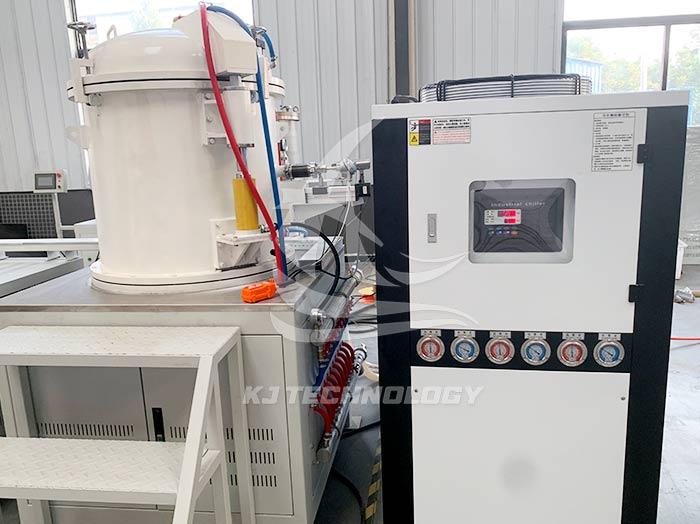
A commonly used vertical carbon tube vacuum furnace (click on the image to view product details)
Conclusion
Purchasing a suitable vertical vacuum carbon tube furnace is not simply choosing the highest temperature or lowest price equipment, but comprehensively matching core parameters such as temperature performance, vacuum degree, furnace tube specification, atmosphere control, safety configuration, and load capacity with actual application scenarios. Only by fully evaluating the above key parameters can buyers avoid selection errors, improve experimental accuracy and production yield, and reduce long-term operation and maintenance costs.
Whether for university laboratory material research, new energy battery anode material graphitization, ceramic sintering, or aerospace composite material heat treatment, targeted parameter selection is the key to giving full play to the performance of vertical vacuum carbon tube furnaces.