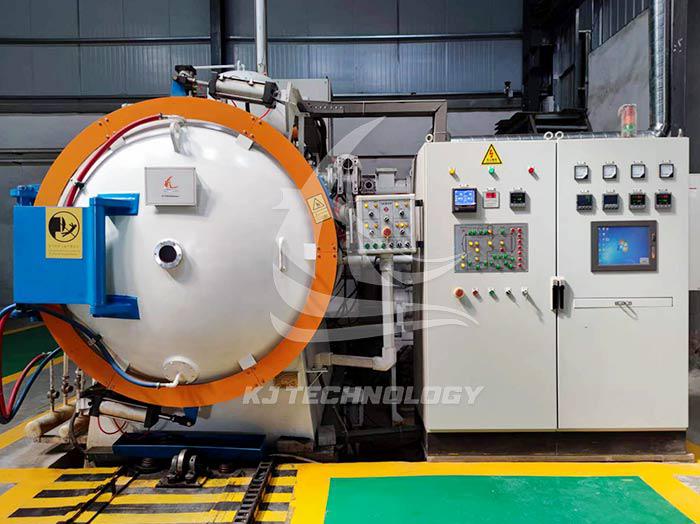
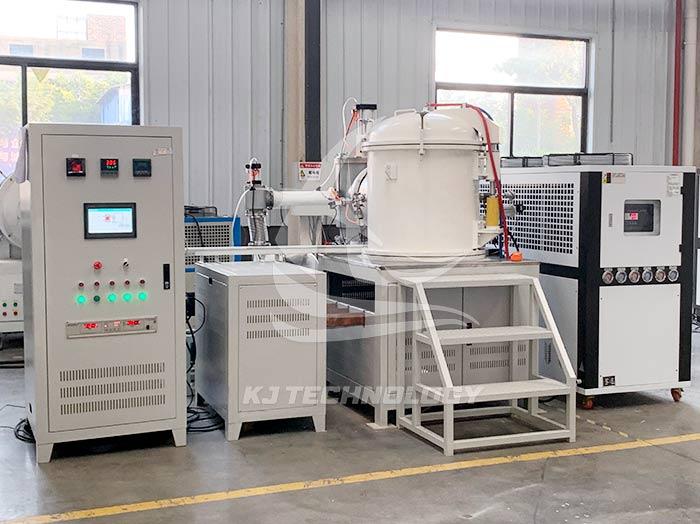
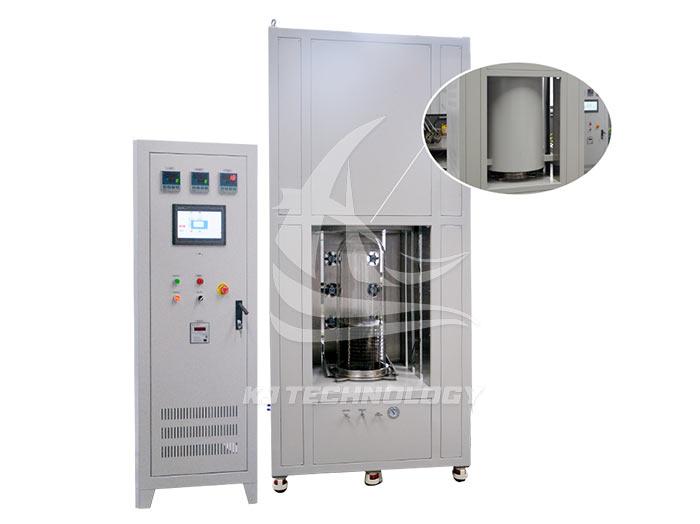
What Makes a 750°C Vacuum Furnace Ideal for Aluminum Brazing?
 08-03-2026 Author: KJ technology
Aluminum vacuum brazing is a core manufacturing process for new energy cooling plates, automotive heat exchangers, aerospace aluminum assemblies and electronic thermal management components. When selecting vacuum brazing furnaces, most manufacturers prioritize models rated for stable operation at 750°C. Many buyers wonder: Why is 750°C the standard temperature target instead of higher or lower values?
This article breaks down the metallurgical logic, equipment characteristics and production advantages that make a 750°C vacuum furnace perfectly matched for aluminum brazing.
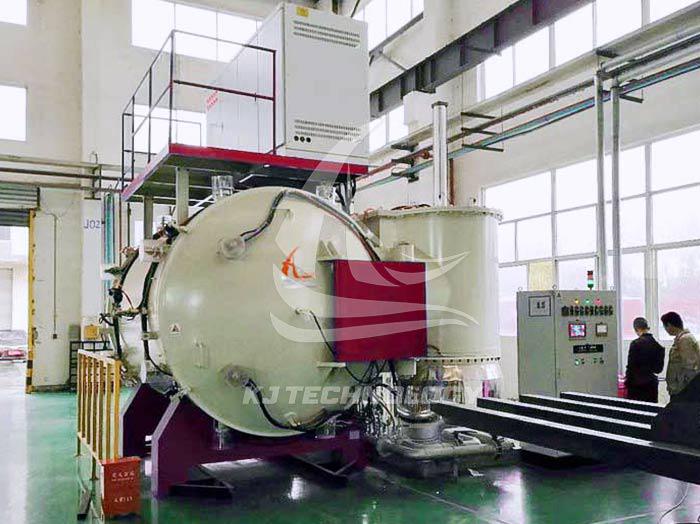
1. Perfect Temperature Window for Aluminum Silicon Brazing Alloys
Pure aluminum melts at approximately 660°C. The widely adopted Al-Si brazing filler metals have a melting range around 575–615°C.
A stable working temperature of 750°C creates an ideal temperature difference:
It provides sufficient superheat for molten filler metal, promoting excellent capillary flow to fill tiny joint gaps;
It maintains a safe margin below the softening and overheating threshold of aluminum base alloys, preventing base metal partial melting, grain coarsening and permanent component deformation.
If the target temperature is too low, the braze alloy cannot flow uniformly, resulting in incomplete joints, pores and leakage risks. If operating temperature rises far above 750°C, thin-wall aluminum parts will warp, compromising dimensional precision.
2. Enables Effective Removal of Aluminum Oxide Films
Aluminum instantly forms a dense, high-melting alumina layer on its surface, which blocks wetting of brazing filler. Flux-free vacuum aluminum brazing depends on magnesium vapor to break down this oxide barrier.
At 750°C, magnesium additives in the filler metal vaporize steadily inside the vacuum chamber. Magnesium vapor acts as an oxygen getter, reacting with residual oxygen and undermining alumina films. This reveals clean aluminum surfaces for reliable metallurgical bonding.
Lower temperatures cannot generate enough magnesium vapor to remove oxides thoroughly, while excessive temperature accelerates uncontrolled magnesium evaporation and causes furnace contamination.
3. High Vacuum Environment Prevents Re-Oxidation at 750°C
Quality aluminum brazing requires a vacuum level of 10⁻² ~ 10⁻³ Pa during heat preservation. At 750°C, aluminum remains highly reactive with oxygen and moisture.
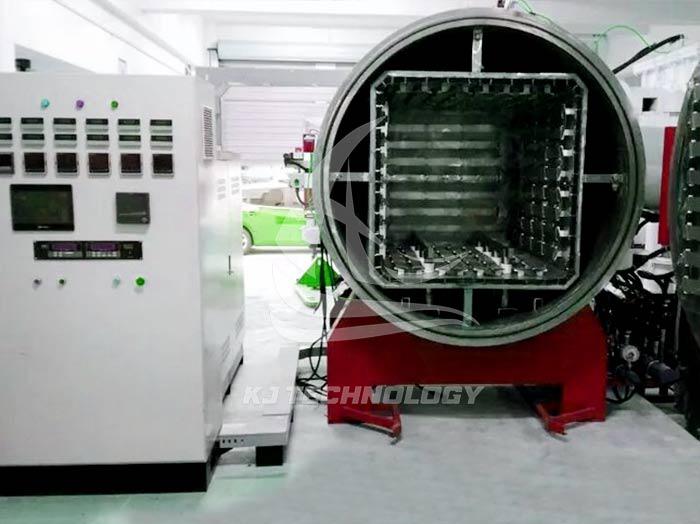
A dedicated 750°C vacuum furnace adopts water-cooled chamber walls, reliable sealing and multi-layer thermal shielding. The closed vacuum environment eliminates air contact, so newly exposed aluminum surfaces will not re-form oxide layers during brazing cycles.
Compared with atmosphere brazing, this process is completely flux-free. Manufacturers avoid corrosive flux residues, post-braze chemical cleaning and long-term joint corrosion failures.
4. Balanced Energy Consumption & Equipment Service Life
Furnaces designed for maximum temperatures well above 750°C come with higher procurement costs, thicker hot zones and greater power consumption.
For aluminum brazing tasks, a purpose-built 750°C vacuum furnace offers clear economic strengths:
Heating elements, heat shielding and vacuum systems are sized for long-term stable cycling at the target temperature, extending service life;
Lower peak operating temperature cuts power usage for each production batch;
Thermal stress on internal hot zone components is minimized, reducing maintenance frequency and downtime.
5. Consistent Temperature Uniformity Guarantees Batch Repeatability
Qualified 750°C vacuum brazing furnaces adopt multi-zone independent temperature control, achieving temperature uniformity within ±5°C across the full working zone.
For complex assemblies such as multi-channel cooling plates and plate-fin heat exchangers, uniform heat distribution ensures every joint reaches identical brazing conditions. Mass production delivers stable joint strength, air tightness and surface finish, lowering product reject rates.
Typical Industrial Applications for 750°C Vacuum Aluminum Brazing Furnaces
New energy vehicles: Battery cooling plates, motor water cooling housings
HVAC & refrigeration: Aluminum evaporators, condensers, plate-fin heat exchangers
Aerospace: Lightweight aluminum fluid pipelines and heat transfer components
Power electronics: IGBT cold plates, microwave aluminum structural parts
General machinery: Aluminum hydraulic assemblies and compact heat exchangers
Key Selection Tips for 750°C Aluminum Brazing Vacuum Furnaces
Confirm stable working vacuum degree and low chamber leakage rate to avoid oxidation defects;
Verify multi-zone temperature control to guarantee even heating for complex workpieces;
Choose hot zone materials resistant to magnesium vapor deposition;
Match furnace chamber size according to maximum workpiece dimensions and batch loading capacity.
Conclusion
The 750°C working temperature hits the metallurgical sweet spot for aluminum vacuum brazing. It optimizes braze alloy fluidity, supports oxide film removal, protects aluminum substrates from deformation, and balances manufacturing costs and equipment durability.
For companies focused on flux-free, high-precision aluminum component joining, a professional 750°C vacuum furnace remains the most cost-effective and technically reliable solution.