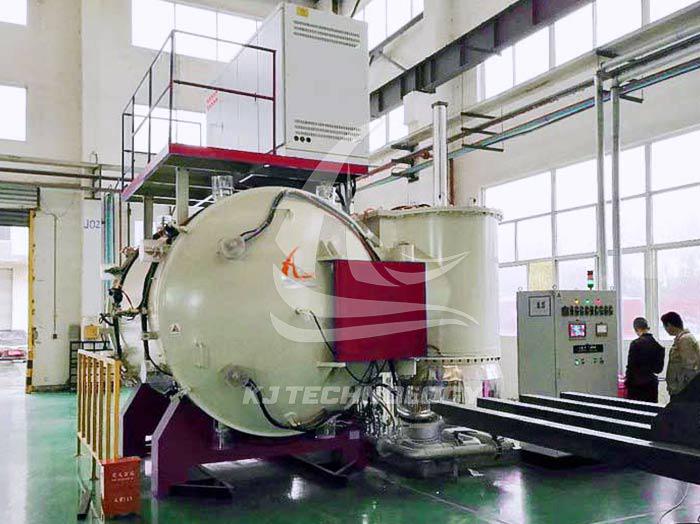
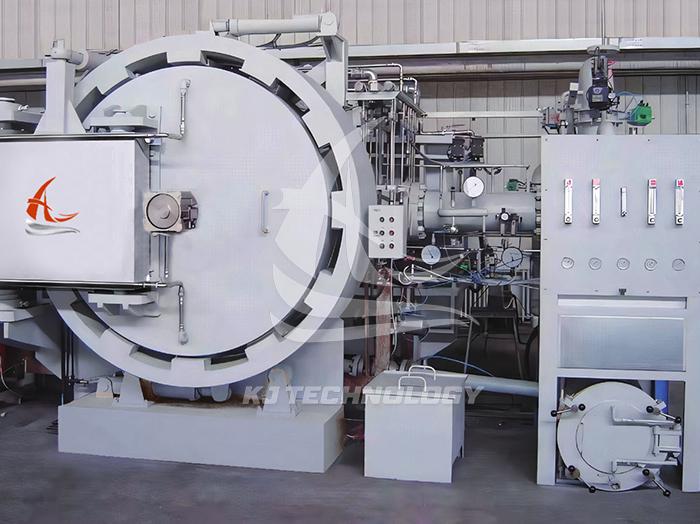
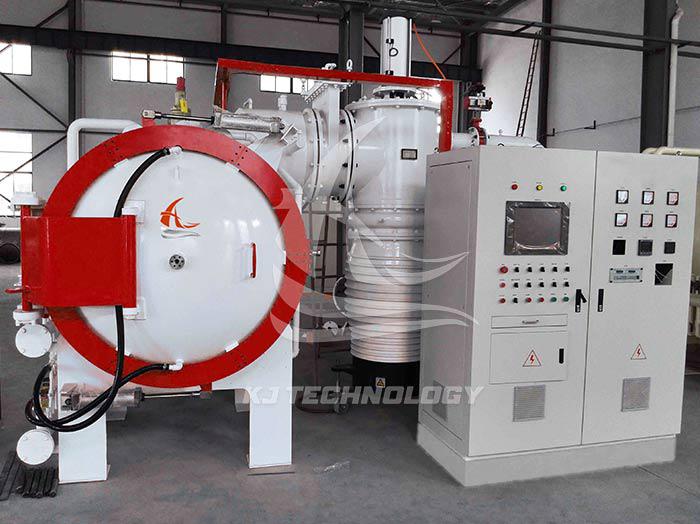
Is the annealing effect of the workpiece poor? Maybe I didn't choose the right vacuum annealing furnace
 04-16-2026 Author: KJ technology
In fields such as metal processing, precision component manufacturing, and new material research and development, annealing process is a key link to improve workpiece performance - eliminating stress, refining grains, improving toughness, and enhancing smoothness. Each requirement directly affects the subsequent processing quality and service life of the workpiece. But many enterprises and laboratories encounter the same problem: poor annealing effect of workpieces, problems such as oxidation discoloration, deformation and warping, uneven hardness, and residual stress, which cannot be improved by repeatedly debugging the process. Actually, it's highly likely not a matter of process parameters, but rather that you didn't choose the right vacuum annealing furnace.
Commonly used vacuum annealing furnaces (click on the image to view product details)
Ordinary annealing furnaces rely on air or simple atmosphere protection, which inherently have defects such as uneven heating and insufficient atmosphere purity, making it difficult to meet the annealing needs of precision workpieces. With the core advantage of "vacuum environment+precise temperature control", the vacuum annealing furnace can solve the pain point of poor annealing effect from the root, becoming the preferred equipment for high-end workpiece annealing. This article combines practical application scenarios to analyze the key selection of vacuum annealing furnaces, helping you avoid misunderstandings, choose the right equipment, and easily achieve ideal annealing effects.
1. First of all, what are the common problems with poor annealing effect of workpieces?
Many people encounter annealing problems, and their first reaction is to adjust the temperature and extend the time, but they ignore the adaptability of the equipment itself. First, compare the following common problems to determine if it is caused by equipment selection errors:
-Oxidation discoloration: After annealing, the surface of the workpiece turns black and yellow, losing its metallic luster. Additional polishing treatment is required, which increases the process and cost;
-Deformation and warping: The workpiece bends and deforms after cooling, which cannot meet the requirements of precision assembly and is directly scrapped;
-Uneven hardness: There is a significant difference in hardness between the surface and interior of the workpiece, resulting in insufficient toughness and susceptibility to fracture and wear;
-Stress residue: After annealing, the stress on the workpiece is not completely eliminated, and subsequent processing is prone to cracking and deformation;
-Batch instability: The annealing effect of the same batch of workpieces varies greatly, affecting production consistency.
The above problems are mostly related to the inherent shortcomings of ordinary annealing furnaces - the workpiece is prone to oxidation in an air atmosphere; Static heating, uneven temperature field; Poor sealing performance and unstable atmosphere control. The vacuum annealing furnace isolates air through a vacuum environment, coupled with precise temperature control and uniform heating design, which can effectively avoid these problems.
2. Core logic: Why does choosing the right vacuum annealing furnace result in different annealing effects?
The core advantage of vacuum annealing furnace is "vacuum environment+controllable temperature field", which is also the key to distinguishing it from ordinary annealing furnace and solving the problem of poor annealing effect:
a. Vacuum environment: eliminate oxidation and maintain the smoothness of the workpiece
The vacuum annealing furnace can control the vacuum degree inside the furnace at the level of 10 ⁻¹~10 ⁻³ Pa, thoroughly extract air (especially oxygen), and anneal the workpiece in an environment without oxidation or decarburization, without worrying about surface discoloration or oxidation peeling. After annealing, the surface of the workpiece is as smooth as new, without the need for additional polishing or acid washing, greatly reducing subsequent processing costs. It is especially suitable for workpieces with high surface quality requirements such as stainless steel, copper, precious metals, and precision components.
b. Precise temperature control: uniform temperature field, avoiding deformation and uneven hardness
The high-quality vacuum annealing furnace adopts a PID intelligent temperature control system, with a temperature control accuracy of ± 1 ℃. It is equipped with multiple program heating and cooling curves, and can set exclusive processes according to different workpiece materials (stainless steel, carbon steel, alloy, ceramic, etc.). At the same time, the furnace body adopts high-quality insulation materials and uniform heating elements, with good uniformity of the temperature field inside the furnace, avoiding local overheating or insufficient heating, effectively preventing deformation and warping of the workpiece, and ensuring uniform hardness and toughness of the workpiece.
c. Thoroughly eliminate stress: improve workpiece stability and reduce subsequent failures
In a vacuum environment, the workpiece is heated more evenly, and the heating and cooling rates can be precisely controlled, which can more thoroughly eliminate the internal stress generated by the workpiece during forging, stamping, and processing. The size of the annealed workpiece is stable, and subsequent processing is not easy to crack or deform, greatly improving its service life, especially suitable for high-end products such as precision molds, instrument components, aerospace parts, etc.
d. Multi functional adaptation: meet the annealing needs of different workpieces
A high-quality vacuum annealing furnace can achieve dual use of "vacuum+atmosphere", and can be filled with inert gases such as nitrogen and argon to meet the annealing needs of different materials of workpieces (such as copper bright annealing, alloy vacuum annealing, ceramic powder annealing, etc.). One equipment can meet various process requirements and improve equipment utilization.
3. Key selection points: Avoid these pitfalls and choose the right vacuum annealing furnace
The core of choosing the right vacuum annealing furnace is to "match process requirements" rather than blindly pursuing high prices. The following 5 key parameters directly determine the annealing effect and must be given special attention:
a Vacuum degree: Select according to the material of the workpiece
Different workpieces have different requirements for vacuum degree: for ordinary metal workpieces (such as carbon steel), a vacuum degree of 10 ⁻¹ Pa is sufficient; Precision components, precious metals, and easily oxidizable materials (such as titanium alloys and aluminum alloys) should be selected with a vacuum degree of ≥ 10 ⁻ Pa and paired with a molecular pump unit to ensure complete air isolation.
b. Temperature parameters: Match process upper limit, reserve margin
Prioritize "long-term working temperature" over "maximum working temperature": for example, if the conventional annealing temperature of a workpiece is 800 ℃, it is recommended to choose a machine with a long-term working temperature ≥ 800 ℃ and a maximum working temperature ≥ 900 ℃ to avoid equipment degradation caused by long-term full load operation and affecting annealing stability. The temperature range of common models is 600 ℃~1600 ℃, which can be flexibly selected according to the material (such as ceramic requiring high temperature, copper requiring medium low temperature).
c. Uniformity of temperature field: directly affects the consistency of the workpiece
It is recommended to choose a machine with a temperature field uniformity of ≤± 5 ℃ (for precision workpieces, it is recommended to be ≤± 3 ℃) to avoid differences in local annealing effects of the workpiece due to temperature differences inside the furnace. Meanwhile, pay attention to the layout of heating elements (such as surround heating) to ensure even heat transfer.
d. Furnace cavity size: adapted to the size of the workpiece while considering efficiency
The size of the furnace chamber should be selected according to the batch and size of the workpieces, to avoid "large furnace for small use" (wasting energy) or "small furnace for large use" (crowded workpieces, uneven heating). Small batch experiments in the laboratory can choose small vacuum annealing furnaces (furnace cavity diameter ≤ 100mm), while industrial batch production can choose large box or tube vacuum annealing furnaces.
e. Safety and Control: Ensuring Stable Operation
Priority should be given to selecting models equipped with safety devices such as over temperature alarm, trip protection, vacuum interlock, and power-off when opening doors to avoid safety hazards in high temperature and vacuum environments; It is recommended to choose touch screen operation for the control system, which supports program editing, data storage and export, facilitates process debugging and recording, and improves production efficiency.
4. Common selection misconceptions must be avoided!
-Misconception 1: Only looking at the price, ignoring the vacuum degree and temperature field accuracy - low-priced models often have poor sealing performance and inaccurate temperature control, seemingly saving money, but actually leading to workpiece scrap and increasing costs;
-Misconception 2: Blindly pursuing high vacuum degree - there is no need to choose high vacuum machine models for all workpieces, just choose according to material requirements. Excessive pursuit of high vacuum will increase equipment costs and energy consumption;
-Misconception 3: Ignoring the material of the furnace chamber - The furnace chamber material needs to match high temperature and atmosphere. For example, it is recommended to choose a corundum furnace chamber for high-temperature annealing, and a stainless steel furnace chamber for precision workpieces to avoid material intolerance affecting the annealing effect.
5. Summary
The poor annealing effect of the workpiece may seem to be a process issue, but in essence, it is a mismatch between equipment selection and process requirements. Ordinary annealing furnaces are difficult to solve pain points such as oxidation, uneven temperature field, and residual stress, while vacuum annealing furnaces, with their core advantages of vacuum environment, precise temperature control, and uniform heating, can fundamentally improve annealing quality, reduce workpiece scrap, and lower subsequent processing costs.
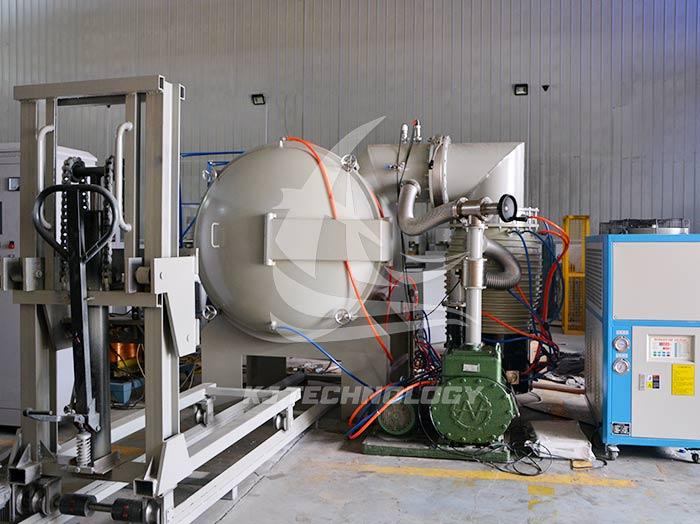
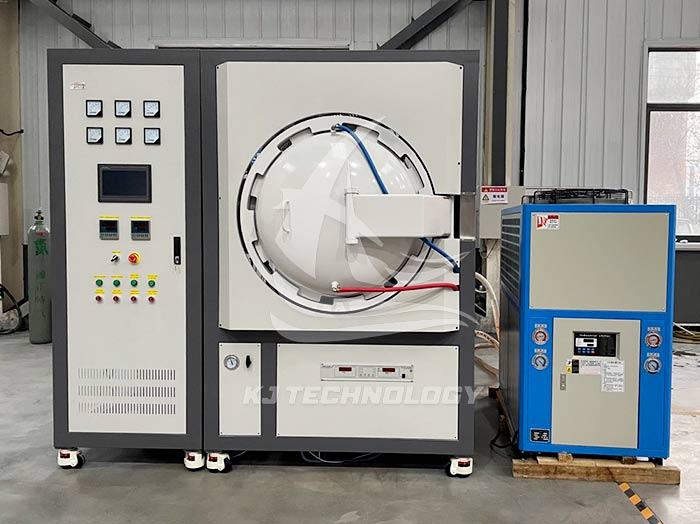
Customized industrial vacuum annealing furnace (click on the image to view product details)
When choosing a vacuum annealing furnace, there is no need to blindly pursue high-end configurations. Focus on the four core parameters of vacuum degree, temperature, temperature field uniformity, and furnace cavity size, match the material of the workpiece and production needs, and easily achieve the ideal annealing effect. Whether it is small-scale laboratory research and development or industrial mass production, choosing the right vacuum annealing furnace can make the annealing process more efficient and stable, and safeguard the quality of workpieces.