Must see when choosing a graphite vacuum sintering furnace: core parameters, heating element, vacuum system, and manufacturer selection guide
 04-15-2026 Author: KJ technology
In the fields of high-temperature vacuum heat treatment such as hard alloys, special ceramics, graphite purification, and new energy materials, graphite vacuum sintering furnace is a key equipment that determines product purity, density, and yield. Faced with a variety of equipment models and parameters in the market, many procurement and engineers are prone to falling into selection errors. This article focuses on four dimensions: core parameters, graphite heating element, vacuum system, and manufacturer selection, providing direct and practical selection criteria to help you avoid pitfalls, choose the right furnace, and use equipment effectively.
1. Core parameter selection: determines equipment performance and applicable scenarios
When choosing a graphite vacuum sintering furnace, first lock in 6 key parameters and directly match the process requirements to avoid excessive or insufficient configuration.
a. Maximum operating temperature
Conventional sintering: 1600 ℃ -1800 ℃
Ultra high temperature ceramic/graphite purification: 1800 ℃ -2200 ℃
Selection principle: 100 ℃ -200 ℃ higher than the highest temperature of the process, leaving enough safety margin to extend the life of the heating element.
b. Uniformity of temperature field
High quality equipment: Temperature difference in the uniform temperature zone ≤ ± 5 ℃
Precision sintering suggestion: within ± 3 ℃
Impact: Directly determines product consistency, reduces deformation, over burning, and under burning issues.
c. Temperature control accuracy
Standard configuration: ± 1 ℃
Adopting PLC+dual temperature measurement (thermocouple+infrared), supporting 30 segment program curves to ensure process reproducibility.
d. Effective furnace size
Select according to the single loading amount and the maximum size of the workpiece. Common specifications include furnace diameter of 300-800mm and volume of 8L-500L, balancing production capacity and energy consumption.
e. Heating rate
Industrial mass production: 5 ℃ -10 ℃/min, balancing efficiency and thermal stress to avoid workpiece cracking.
f. Cooling method
Natural cooling: suitable for processes without speed requirements
Gas quenching/argon rapid cooling: suitable for rapid densification of hard alloys and ceramics
Double layer water-cooled furnace body: Ensure that the shell temperature is ≤ 45 ℃, safe and energy-saving.
2. Selection of graphite heating element: key factors for high temperature stability, lifespan, and cost
The heating element is the core of graphite vacuum sintering furnace, which directly affects the upper temperature limit, service life, and maintenance cost.
a. Material grade
High purity isostatic pressed graphite is preferred, with high temperature resistance, thermal shock resistance, and high temperature strength.
Avoid ordinary molded graphite: prone to deformation, powder loss, short lifespan, and contamination of workpieces.
b. Structural form
Graphite rod/tube: Strong universality, balanced temperature field
Graphite cylinder: with a large heating area, suitable for large-sized furnaces
Key points: symmetrical structure, minimal splicing, low contact resistance, and more stable heating.
c. Lifespan and Maintenance
Normal working condition lifespan: 1-3 years
Comparison: Tungsten molybdenum heating elements have a lifespan of only 6-12 months and higher maintenance costs.
d. Thermal insulation system
Multi layer graphite hard felt+soft felt composite structure improves insulation efficiency and is more energy-efficient.
The thickness and number of insulation layers directly determine the temperature and energy consumption of the furnace shell.
3. Vacuum system selection: high vacuum, low leakage rate, stable and reliable
The vacuum degree determines whether the product is oxidized, decarburized, or contains impurities, and is the core indicator of high-end sintering.
a. Ultimate vacuum degree
Conventional type: ≤ 6 × 10 ⁻ ³ Pa
High purity process: ≤ 10 ⁻⁴ Pa (with molecular pump unit)
b. Vacuum unit configuration
Basic configuration: mechanical pump+Roots pump
High vacuum configuration: mechanical pump+Roots pump+diffusion pump/molecular pump
Essential: Pneumatic high vacuum baffle valve, composite vacuum gauge (Pirani+ionization gauge).
c. Sealing and pressure maintenance
Adopting metal sealing/magnetic fluid sealing to prevent leakage.
Pressure rise rate: ≤ 0.67Pa/h, strong pressure holding capacity, suitable for long-term high-temperature sintering.
d. Atmosphere compatibility
Supports argon/nitrogen protection, can switch between vacuum/atmosphere, and is compatible with processes such as lithium negative electrode, powder metallurgy, C/C composite materials, etc.
4. Manufacturer selection guide: Source manufacturer, technical strength, and after-sales support
Choosing the right manufacturer is more important than parameters, as it relates to equipment stability, process adaptation, and long-term usage costs.
a. Qualifications and Manufacturing Capability
Prioritize the manufacturer of the vacuum furnace source and reject intermediaries.
Capable of integrating design, production, and debugging, and able to customize non-standard products.
b. Process experience
There are industry cases such as hard alloy, ceramics, and graphite purification.
We can provide process debugging, temperature curve optimization, and rapid production implementation.
c. After sales and spare parts
Nationwide on-site installation, training, and maintenance.
Spare parts such as graphite heating element, insulation felt, vacuum pump, etc. are available in stock to shorten downtime.
d. Cost effectiveness and warranty
Compare configurations rather than just looking at the total price, be wary of low configurations and high prices.
The whole machine has a warranty of ≥ 1 year, and vulnerable parts such as heating elements can be replaced at a discounted price.
5. Selection Summary and Quick Decision Checklist
According to the process, the temperature should be set at 1800/2000/2200 ℃, with priority given to temperatures between 100-200 ℃ higher.
Heating element: high-purity isostatic pressed graphite, temperature difference ≤ ± 5 ℃.
Vacuum: Starting from ≤ 6 × 10 ⁻³ Pa, high-purity is selected at 10 ⁻⁴ Pa.
Manufacturer: Source factory, with case studies, timely after-sales service.
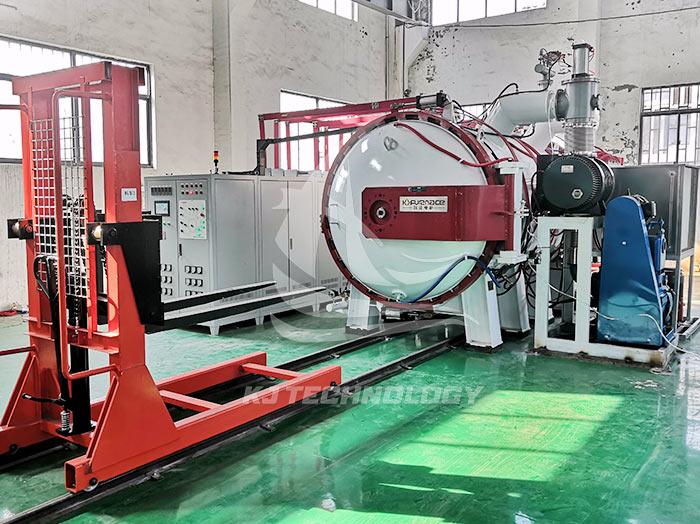
Following the above standards can not only meet the requirements of high-temperature vacuum sintering, but also control energy consumption and maintenance costs, ensuring long-term stable operation of the equipment.