What are the advantages of ceramic sintering vacuum furnace?
 03-26-2026 Author: KJ technology
Ceramic sintering vacuum furnace has shown significant advantages in material preparation, with its core value reflected in three dimensions: improving material performance, optimizing process control, and expanding application scope. Let's take a detailed look at the advantages of ceramic vacuum sintering furnace below!
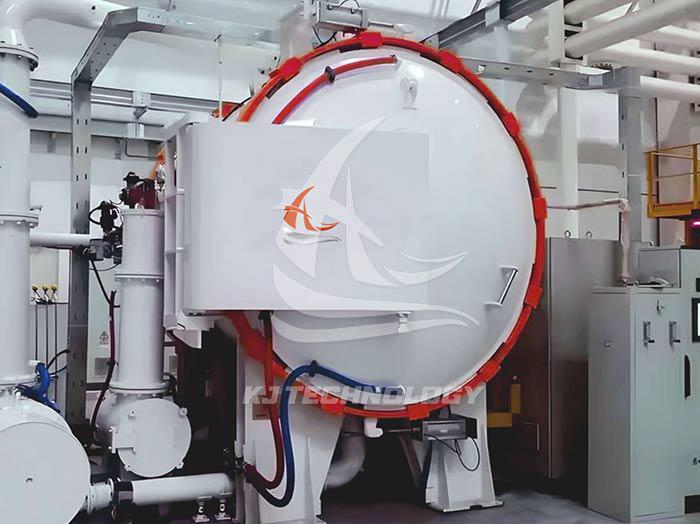
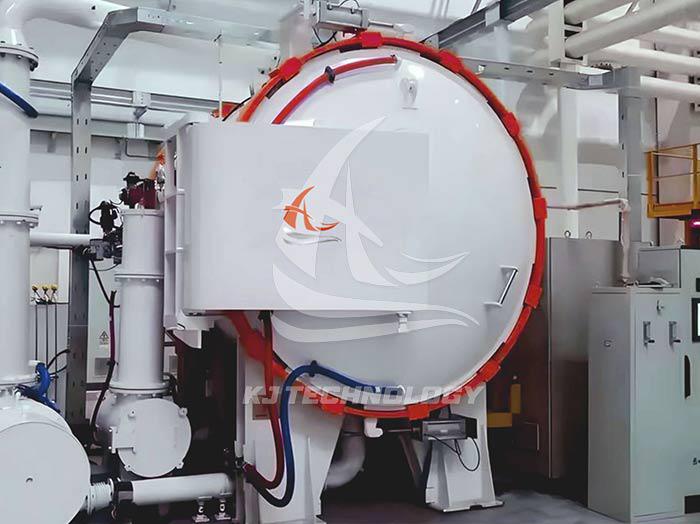
Commonly used Silicon nitride sintering furnace (click on the image to view product details)
1. Improving material performance: high purity and high density
Avoid oxidation and pollution
The vacuum environment effectively prevents oxidation reactions of ceramic powders during high-temperature sintering by removing air, moisture, and impurity gases. For example, ceramic materials containing easily oxidizable components such as silicon carbide and silicon nitride can significantly reduce impurity content and improve product purity when sintered under vacuum. Meanwhile, the vacuum environment reduces the loss of volatile components, ensuring the stability of material composition.
Promote densification
Vacuum sintering helps to eliminate pores and gases inside the billet, promoting sufficient particle bonding. For example, in the preparation of transparent ceramics, a vacuum environment can reduce residual pores, resulting in a product density of over 99% of the theoretical value and a more uniform internal structure, thereby improving the hardness, strength, and wear resistance of the material.
Optimize microstructure
Vacuum sintering can suppress abnormal grain growth and obtain a microstructure with small and evenly distributed grains. For example, in the sintering of aluminum nitride ceramics, a vacuum environment can promote grain boundary movement, reduce grain coarsening, and improve the thermal conductivity and insulation properties of the material.
2. Optimizing process control: precision and stability
Multi zone temperature control and uniform heating
Vacuum sintering furnaces often adopt multi zone temperature control design, combined with distributed temperature measuring elements and intelligent temperature control algorithms, which can accurately control the temperature of each area inside the furnace cavity, avoiding local overheating or temperature fluctuations. For example, when sintering precision ceramic components, the temperature uniformity can reach ± 1 ℃, ensuring the consistency of batch product performance.
Flexible atmosphere regulation
The vacuum sintering furnace supports multiple atmosphere switching (such as vacuum, inert gas, reducing gas), and can adjust the environment according to the sintering needs of different ceramic materials. For example:
Transparent alumina ceramics: sintered in a hydrogen atmosphere can reduce oxygen vacancies and improve transparency;
Aluminum nitride ceramics: Sintering in a nitrogen atmosphere can promote nitriding reaction and improve material properties;
Metal ceramics: Sintering in a reducing atmosphere can prevent oxidation of metal elements and maintain stable composition.
Low oxygen environment
Before sintering, pumping the furnace to a high vacuum state can further reduce the oxygen content, provide a purer sintering environment for oxygen sensitive ceramic materials (such as certain intermetallic compounds and semiconductor materials), reduce oxidation defects, and improve product performance.
3. Expand application scope: high-end and customized
High end ceramic production
Vacuum sintering furnace is the core equipment for preparing high-purity and high-performance ceramics, widely used in fields such as semiconductors, aerospace, biomedicine, etc. For example:
In the semiconductor field, it is used for sintering aluminum nitride ceramic substrates for power semiconductor module packaging. Its excellent thermal conductivity and insulation properties can solve the heat dissipation problem of power chips;
Aerospace field: used for preparing ceramic components with high temperature resistance, high voltage resistance, and strong insulation properties, such as internal insulation components of spacecraft and heat dissipation components around engines;
In the field of biomedicine, it is used for sintering bioceramics such as artificial bones and dental implants, and its high purity and uniformity can meet the requirements of biocompatibility.
Preparation of special component ceramics
For ceramic materials containing metal elements and volatile components, vacuum sintering furnaces can effectively protect the material components and reduce performance losses. For example, when sintering ceramic composite materials containing metal phases, a vacuum environment can prevent metal oxidation and maintain the reinforcement effect of the composite material.
Precision ceramic component processing
The temperature uniformity and atmosphere controllability of vacuum sintering furnace can reduce product deformation rate and improve product yield. For example, in products such as sintered ceramic bearings and sensor housings that require strict dimensional accuracy and surface quality, vacuum sintering can reduce defects such as cracking and deformation, and improve production efficiency.
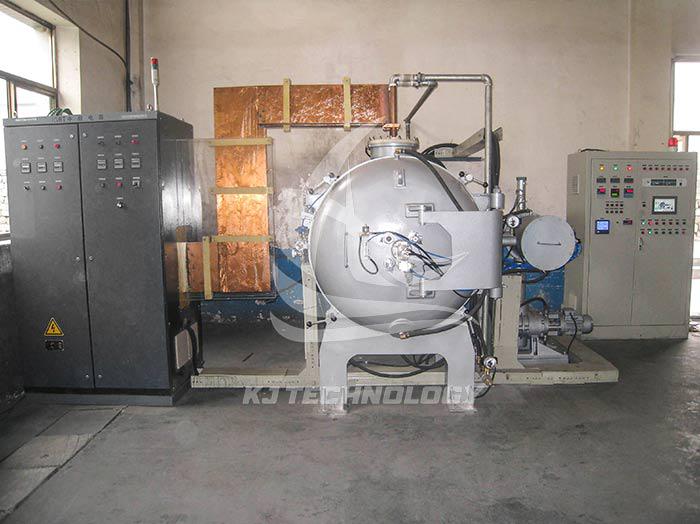
Customize Silicon nitride sintering furnace (click on the image to view product details)