What are the technical advantages of vacuum brazing furnaces compared to ordinary box type brazing furnaces?
 04-02-2026 Author: KJ technology
Compared to ordinary box type brazing furnaces, vacuum brazing furnaces have significant technological advantages, mainly reflected in five core dimensions: welding quality, material adaptability, process stability, environmental safety, and production efficiency. Let's take a detailed look below!
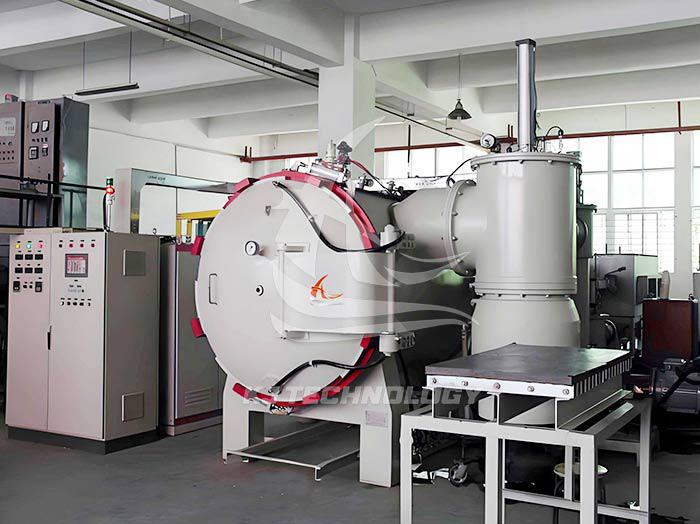
Commonly used vacuum brazing furnaces (click on the image to view product details)
1. Welding quality: Achieving atomic level connection in a non oxidizing environment
Vacuum environment isolation pollution: The vacuum brazing furnace uses a high vacuum system (with a maximum vacuum degree of 10-4Pa or below) to completely eliminate impurities such as oxygen and nitrogen in the furnace, avoiding oxidation, decarburization, or carbonization of the workpiece at high temperatures. For example, in the aerospace field, active materials such as titanium alloys and high-temperature alloys can achieve oxygen free brazing in a vacuum environment, with joint strength close to the base material and significantly improved airtightness.
No residual flux: Ordinary box type brazing furnaces require the use of flux to remove oxides, but residual flux may cause joint corrosion or a decrease in electrochemical performance. Vacuum brazing furnaces do not require brazing agents and have high purity of welds, making them particularly suitable for connecting precision parts such as electronic components and optical devices that require extremely high cleanliness.
Dense microstructure: Under vacuum environment, the brazing material uniformly fills the joint gap through capillary action, and forms a dense and pore free metallurgical bond after cooling. This structure enables the joint to maintain stable performance under extreme conditions such as high temperature and high pressure.
2. Material adaptability: Breaking through the bottleneck of connecting difficult to weld materials and dissimilar materials
Reliable connection of difficult to weld materials: Titanium alloys, molybdenum, zirconium and other easily oxidizable or high melting point materials are difficult to achieve high-quality brazing in ordinary box furnaces, while vacuum environments can effectively suppress oxidation reactions, allowing these materials to achieve reliable connections at low temperatures.
Strong compatibility with heterogeneous materials: The vacuum brazing furnace can connect metal and non-metal (such as ceramic metal), materials with different thermal expansion coefficients (such as copper stainless steel). By designing gradient intermediate layers to alleviate thermal stress, seamless splicing of complex structural components is achieved, expanding the possibilities of product design.
Complex geometric structure support: By filling brazing materials through capillary action, porous, multi-layered, or internally complex components (such as honeycomb structures, heat sinks) can be welded.
3. Process stability: precise temperature control and uniform heating ensure quality consistency
High temperature control accuracy: The vacuum brazing furnace adopts a multi zone independent temperature control system, combined with infrared temperature measurement technology, and the temperature uniformity error can be controlled within ± 5 ℃. For example, precise temperature control during the welding of aircraft engine blades can avoid local overheating that may cause base metal melting or incomplete melting of brazing materials.
Excellent thermal stress control: Under vacuum environment, the workpiece is uniformly heated, and the thermal stress is significantly reduced, with deformation only one-third of that of ordinary box furnaces. This feature makes it particularly suitable for the processing of thin-walled or precision components, such as the pacemaker casing in medical devices.
Highly controllable process parameters: The entire process of heating, insulation, and cooling is automated through a PLC control system, and parameters such as vacuum degree, temperature, and time can be accurately reproduced, making it suitable for mass production.
4. Environmental safety: Green processes reduce health and ecological risks
No harmful gas emissions: The flux used in ordinary box type brazing furnaces may volatilize harmful gases such as fluoride and chloride, while vacuum brazing furnaces do not require flux, completely eliminating such pollution and meeting environmental standards.
Superior safety production conditions: The vacuum environment eliminates the risk of workpiece oxidation at high temperatures and reduces fire hazards. At the same time, there is no need to handle residual flux, reducing the health risks for operators.
High energy utilization efficiency: The vacuum brazing furnace adopts an efficient insulation layer structure and a rapid cooling system, which improves thermal efficiency compared to ordinary box furnaces, reduces energy consumption, and conforms to the trend of green manufacturing.
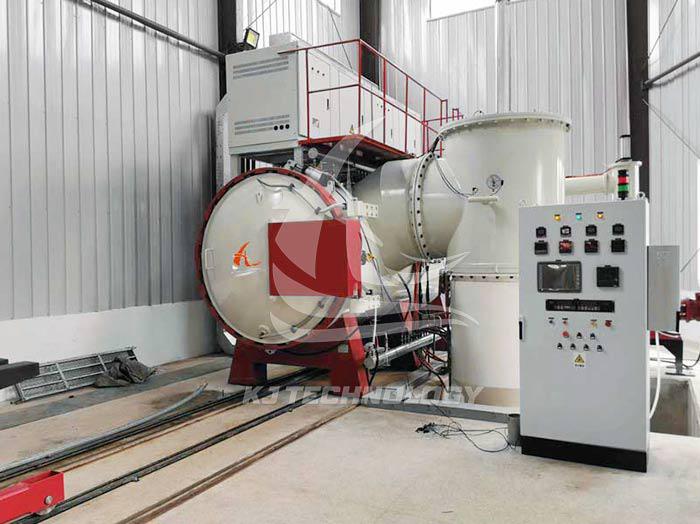
Customized vacuum brazing furnace (click on the image to view product details)
5. Production efficiency: automation and long-life design reduce overall costs
High degree of automation: Integrated touch screen operation interface and centralized production supervision system can achieve automatic scheduling, quality traceability, data collection and other functions, reducing manual intervention and improving production efficiency.
Long equipment lifespan: The key components of the vacuum brazing furnace, such as heating elements and vacuum pumps, are made of wear-resistant and corrosion-resistant materials, with a lifespan 2-3 times that of ordinary box furnaces, reducing equipment replacement and maintenance costs.
Shortened process cycle: The rapid heating and cooling system shortens the single piece process cycle, and with the design of a large-sized furnace, it can process multiple workpieces simultaneously, further improving production capacity.