Large scale production vacuum gas quenching furnace
 03-10-2026 Author: KJ technology
1. Core advantages of equipment
Non oxidative heat treatment
The vacuum environment (ultimate vacuum degree ≤ 5 × 10 ⁻ ³ Pa) can completely eliminate oxygen and water vapor, avoid surface oxidation and decarburization of the workpiece, and the processed workpiece surface is bright and clean, without the need for subsequent polishing or acid washing, saving process costs.
Precise cooling control
By adjusting the pressure and flow rate of high-pressure inert gas (nitrogen/argon), precise control of cooling rate (50-100 ° C/s) can be achieved to meet the martensitic transformation requirements of different materials, while reducing deformation and cracking caused by stress concentration.
Wide adaptability of materials
It can handle high-end materials such as titanium alloy, high-temperature alloy, high entropy alloy, mold steel, stainless steel, etc., solving the problem of "difficult to handle and easy to scrap" of special materials in traditional processes. It is suitable for aerospace, automotive, medical equipment and other fields.
Energy-saving and environmental protection
Gas quenching does not require quenching oil, avoiding oil pollution and waste oil treatment costs; Equipped with a gas recovery system to reduce the consumption of inert gases; The double-layer water-cooled furnace body and composite insulation screen design reduce heat loss and overall energy consumption.
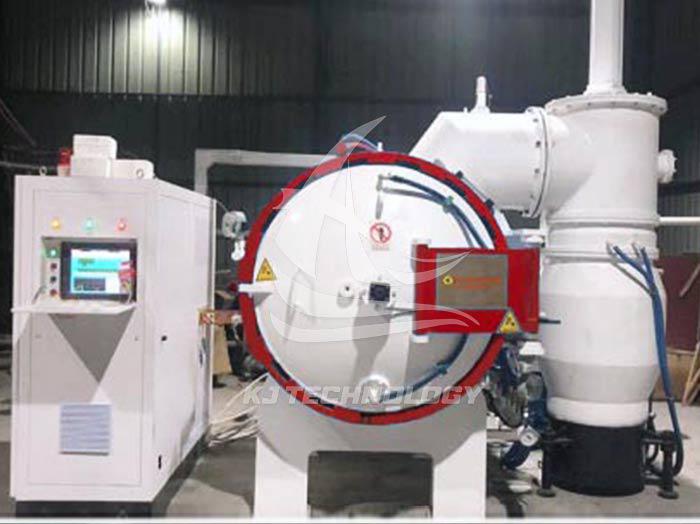
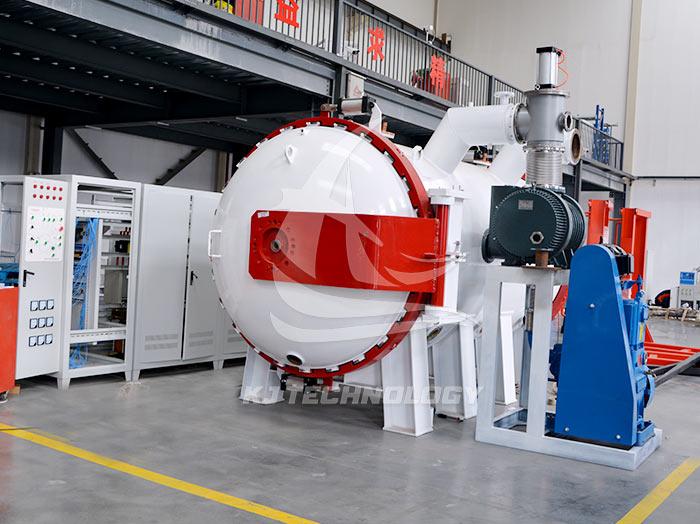
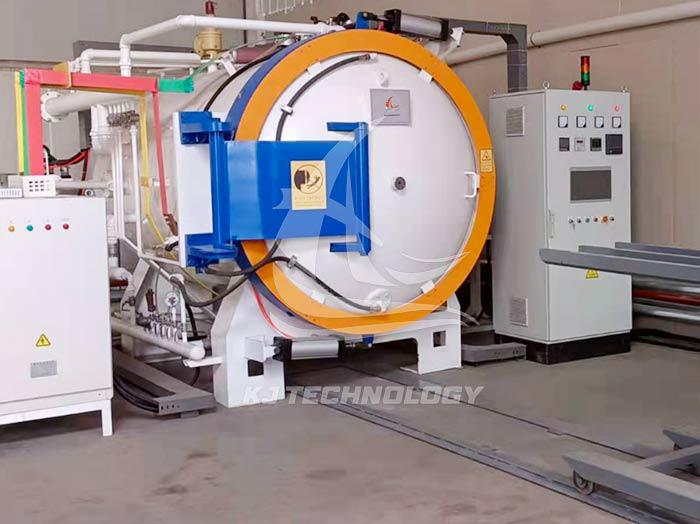
Commonly used gas quenching vacuum furnace (click on the image to view product details)
2. Application Fields and Cases
aerospace
The solid solution treatment and aging treatment of titanium alloy components (such as engine blades and landing gear) eliminate internal pores, improve density and mechanical properties.
Case: A certain aviation enterprise uses KJ-V1320-324W model to treat Ti6Al4V alloy, resulting in higher surface hardness and smaller deformation.
automotive industry
The quenching treatment of precision gears and molds reduces heat treatment deformation, improves wear resistance and service life.
Case: A certain automotive parts manufacturer used KJ-V1320-175W model to treat H13 mold steel, which resulted in better hardness uniformity after quenching and increased mold life by multiple times.
medical device
Vacuum annealing of stainless steel precision parts (such as surgical instruments and implants) ensures surface smoothness and corrosion resistance.
Case: A medical enterprise uses KJ-V1320-36W model to process 316L stainless steel, which has a smaller surface roughness and meets medical standards.
3. Selection suggestions
Choose a workspace based on the size of the workpiece: For large workpieces (such as shafts and plates), select a model with a workspace length of ≥ 1000mm.
Select cooling pressure based on material characteristics:
Titanium alloys and high-temperature alloys: It is recommended to use ultra-high pressure gas quenching above 10 bar to reduce deformation.
Mold steel and stainless steel: 6-10 bar conventional pressure is sufficient to meet the requirements.
Pay attention to device scalability: Priority should be given to manufacturers that support non-standard customization and can integrate automation systems to meet future production capacity upgrade needs.