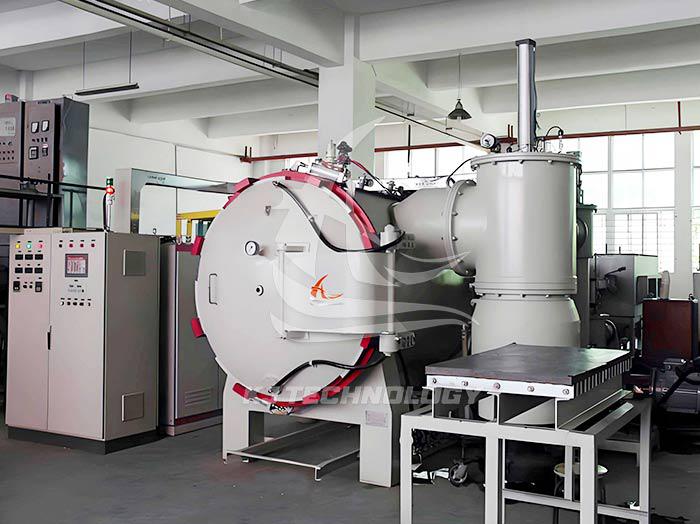
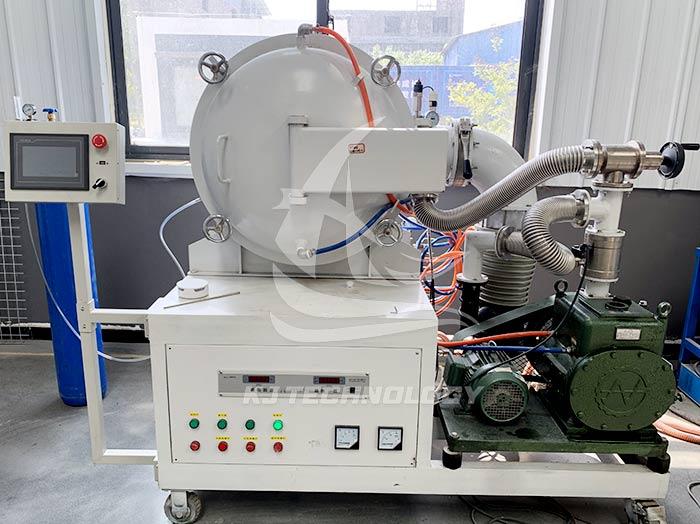
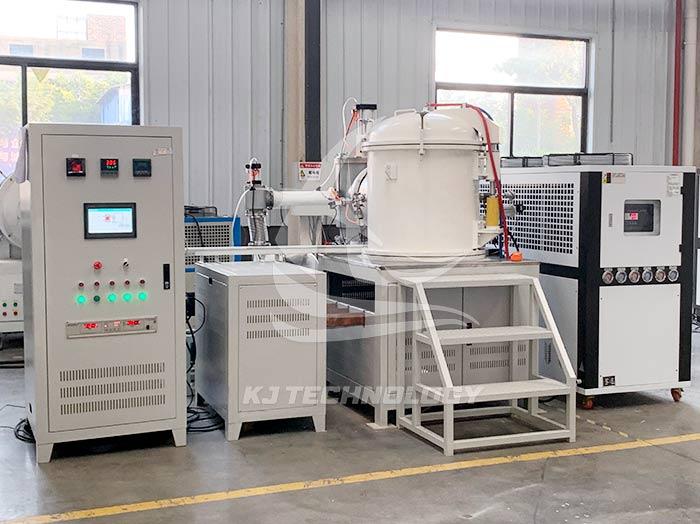
Titanium alloy vacuum high-temperature sintering electric furnace
 02-04-2026 Author: KJ technology
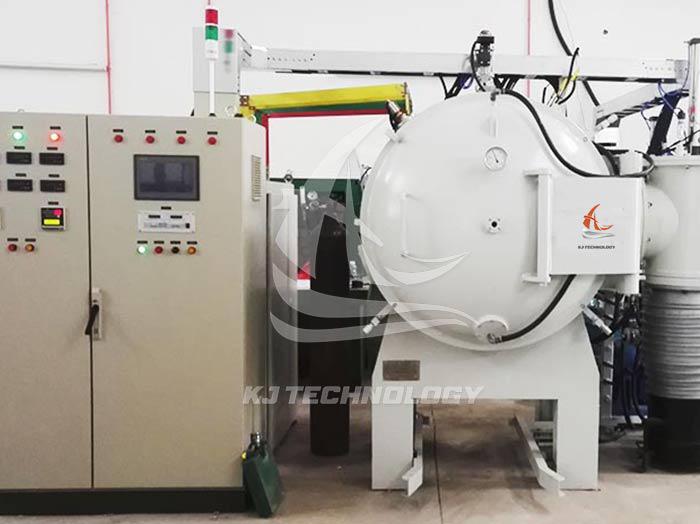
The titanium alloy vacuum high-temperature sintering electric furnace is a special equipment specifically used for high-temperature sintering treatment of titanium alloy materials in a vacuum or protective atmosphere environment. Its core function is to solve key problems such as easy oxidation and excessive grain growth of titanium alloys at high temperatures, thereby improving the mechanical properties and purity of the material. The following provides a detailed introduction from the technical characteristics, application fields, and selection points:
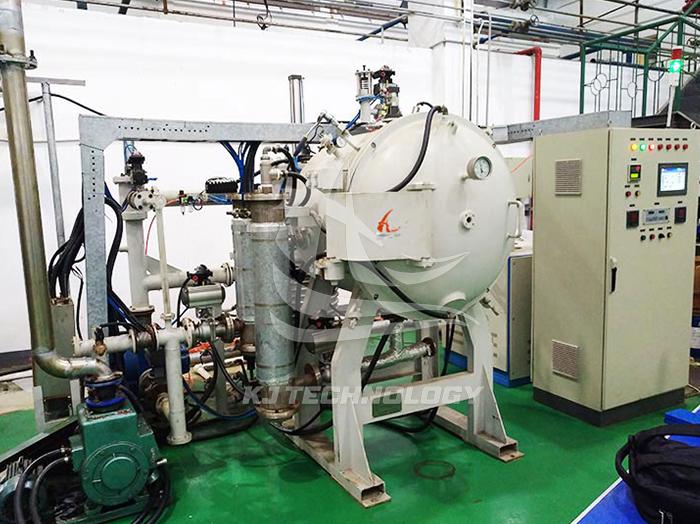
Commonly used titanium alloy sintering furnaces (click on the image to view product details)
1. Technical features
Vacuum environment control
High vacuum degree: By combining a mechanical pump and a diffusion pump (such as a crown top equipment that can reach 6.67 × 10 ⁻ ³ Pa), the air, moisture, and volatile impurities inside the furnace can be quickly removed, avoiding the reaction of titanium alloy with oxygen, nitrogen, and other gases to generate oxides.
Atmosphere circulation purification: Some equipment adopts the process of "pre vacuuming inert gas backfilling secondary vacuuming" to thoroughly remove residual oxidizing gases and ensure the purity of materials in the early stage of sintering.
Dynamic compensation system: Real time monitoring of vacuum degree, automatic filling of inert gases such as argon in case of abnormalities, forming a protective layer to block external gas intrusion.
Precise temperature control system
Multi zone temperature control: using molybdenum wire heating elements and multiple layers of high-purity insulation materials to form a stable thermal radiation field, reduce thermal convection interference, and ensure that the furnace temperature difference is ≤ ± 5 ℃.
Segmented process curve: supports custom heating insulation cooling curve. For example:
Low temperature preheating stage: Slowly raise the temperature (such as below 300 ℃ ≤ 3-8 ℃/min), remove the internal gas of the billet, and avoid pores and oxidation.
High temperature sintering stage: Precisely control the insulation temperature and duration (such as 1200-1600 ℃) to promote particle densification while suppressing excessive grain growth.
Cooling stage: The program controls the cooling rate (such as 700 ℃ or above ≤ 10 ℃/min) to avoid internal stress and abnormal grain precipitation.
Intelligent optimization: The PLC system stores multiple sets of process parameters and adapts to the grain control requirements of different grades of titanium alloys.
Optimization of furnace structure
Double layer furnace shell and pneumatic seal: The furnace door adopts high-temperature and aging resistant sealing components, combined with a water-cooled cooling system, to ensure stable sealing during high-temperature sintering.
High purity inner wall material: The inner wall of the furnace chamber is treated with high-purity stainless steel substrate and graphite coating to reduce impurity volatilization and avoid chemical reactions with titanium alloy powder.
Modular design: supports customized furnace chamber structures (such as tube furnaces and box furnaces) to meet the needs of workpieces of different sizes.
2. Application Fields
Aerospace: Producing high-strength and high toughness titanium alloy structural components (such as blades and bearings) to meet performance requirements in extreme environments.
Medical implantation: Manufacturing titanium alloy artificial joints, bone plates, etc. with excellent biocompatibility to ensure material purity and mechanical stability.
Automotive industry: Developing lightweight titanium alloy components (such as engine valves and connecting rods) to improve fuel efficiency and durability.
Research field: Support the development and performance testing of new titanium alloy materials, and provide experimental platforms for material modification.
3. Key selection points
Vacuum degree and response speed
The ultimate vacuum degree needs to meet the sintering requirements of titanium alloy (such as ≤ 10 ⁻ ³ Pa), and the time from atmospheric to working vacuum should be ≤ 25 minutes.
The cold/hot leakage rate should be ≤ 0.5 Pa · L/s (to be verified at a high temperature of 1100 ℃).
Temperature control accuracy and uniformity
The temperature control accuracy of the empty furnace is ± 1 ℃, and it still needs to maintain ± 1 ℃ when fully loaded (including load dynamic compensation function).
Furnace uniformity ≤ ± 5 ℃, to avoid abnormal grain growth caused by local overheating.
Equipment stability and safety
Heating element lifespan ≥ 2000 hours (such as silicon molybdenum rod), reduce replacement frequency.
Equipped with safety devices such as over temperature alarm, disconnection prompt, overcurrent protection, and leakage protection.
Energy Saving and Environmental Protection
The furnace adopts lightweight alumina ceramic fiber and multi-layer composite insulation structure, with lower heat capacity and better energy-saving effect.
Some models are equipped with waste heat recovery devices to further reduce unit energy consumption.
The exhaust gas treatment module uses high-temperature decomposition technology to treat volatile organic compounds, which meets environmental protection requirements.