Hard alloy vacuum brazing furnace
 02-03-2026 Author: KJ technology
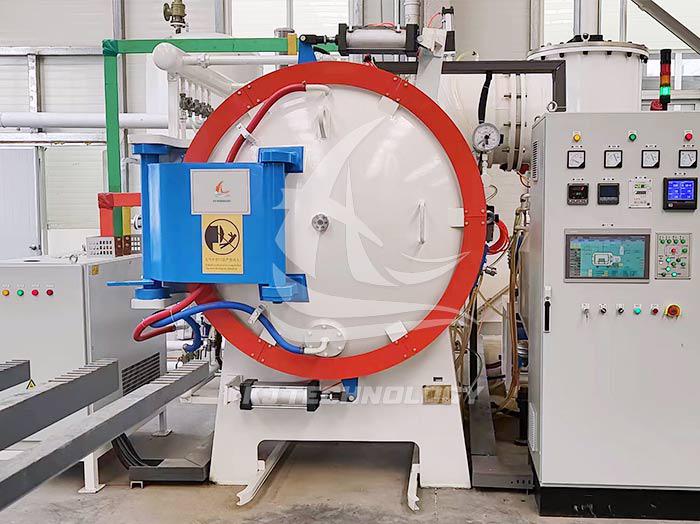
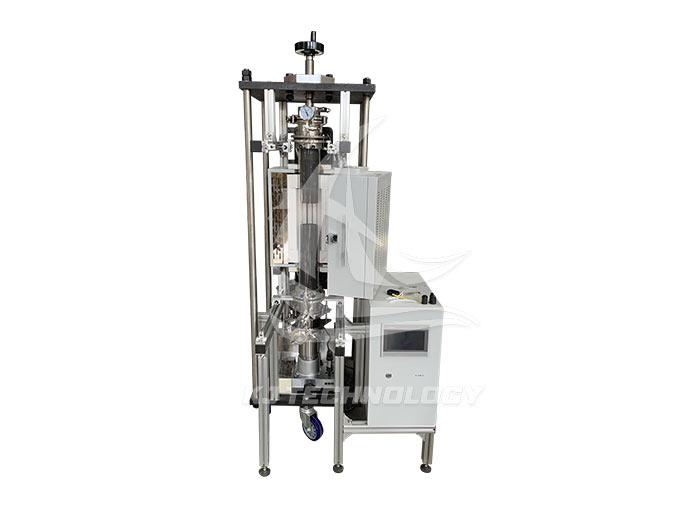
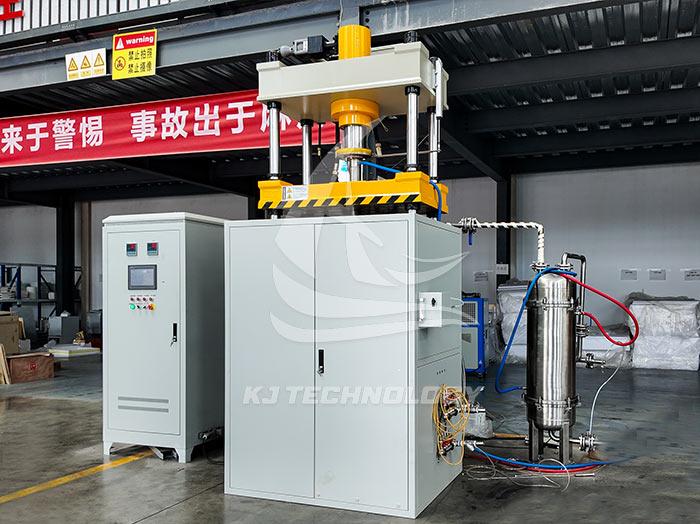
Hard alloy vacuum brazing furnace is a specialized equipment for brazing hard alloy and other metal materials in a vacuum environment. The following provides a detailed introduction from four aspects: working principle, technical characteristics, application fields, typical manufacturers, and product parameters:
1. Working principle
Vacuum environment creation: The air inside the furnace is extracted by a vacuum pump (such as a mechanical pump, Roots pump, diffusion pump, etc.) to achieve a certain degree of vacuum (usually the cold state limit vacuum degree can reach 5.0 × 10 ⁻⁴ Pa or more), in order to reduce or avoid oxidation and pollution of metal materials during brazing process.
Heating process: In a vacuum environment, the metal material to be brazed is heated to above the melting point of the brazing material through resistance heating, induction heating, or radiation heating, so that the brazing material melts and fills the gap between the parts to be connected.
Insulation and cooling: After the brazing material melts, maintain a certain temperature and time to allow the brazing material to fully diffuse and bond with the base material. Subsequently, the connecting parts are made to achieve the predetermined strength and performance through natural cooling or forced cooling.
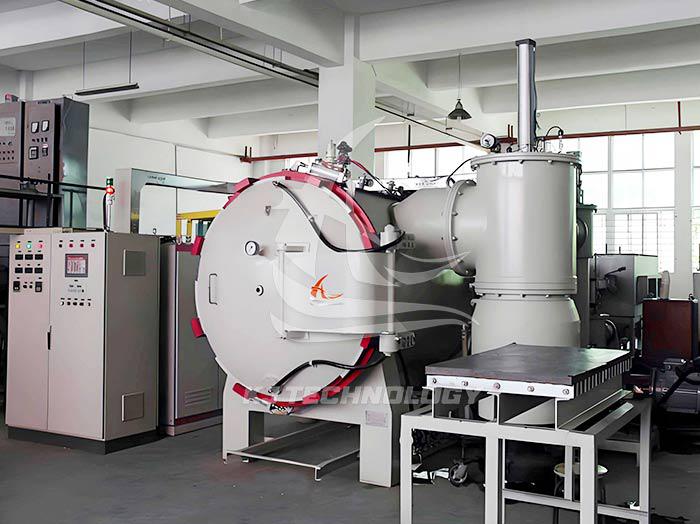
Industrial metal vacuum brazing furnace (click on the picture to view product details)
2. Technical features
High welding quality: The vacuum environment avoids metal oxidation and contamination, greatly improving the strength and toughness of the welded joint. Meanwhile, due to the absence of other gases during the welding process, the sealing and corrosion resistance of the welding are significantly enhanced.
Energy saving and efficient: The heating method can quickly raise the temperature, making the entire welding process faster and reducing energy consumption. Meanwhile, the efficient heating system shortens the process time and improves production efficiency.
Multifunctionality: Suitable for welding various materials, including stainless steel, aluminum alloy, titanium alloy, hard alloy, etc. It can handle workpieces of different shapes and sizes, meeting the complex welding requirements in fields such as aerospace, medical equipment, automotive, and electronic devices.
Mechanical performance improvement: The welded joints formed during vacuum brazing often have a more uniform and dense microstructure, so the welded workpiece exhibits better mechanical properties under extreme conditions such as high temperature and high pressure. In addition, vacuum brazing can also reduce the width of the heat affected zone, thereby reducing the deformation and residual stress of the base material.
High degree of automation: The integration of PLC control system and touch screen operation interface significantly improves the automation level of the equipment, making it easy to operate and monitor.
3. Application Fields
Tool manufacturing: used for vacuum brazing of PCD diamond tools and hard alloy tools to maintain tool sharpness and service life.
Aerospace: Precision brazing for materials such as titanium alloys and high-temperature alloys, with equipment vacuum degree ≤ 10 ⁻ ³ Pa and joint strength of over 90% of the base material. It has been applied in the manufacturing of key components such as engine casings and radar grid antennas.
Electronic packaging: Vacuum soldering of semiconductor devices and sensors to avoid contamination and thermal stress damage.
Medical device: Stainless steel/titanium alloy implant brazing, compliant with biocompatibility standards.
New energy/semiconductor: Heat sinks, power module brazing to improve thermal conductivity efficiency and structural stability.