Selection of Silicon Nitride Vacuum Sintering Furnace
 01-29-2026 Author: KJ technology
When choosing a vacuum furnace for silicon nitride sintering, it is necessary to comprehensively consider four dimensions: core performance, brand strength, customization ability, and after-sales service. Let's take a detailed look below!
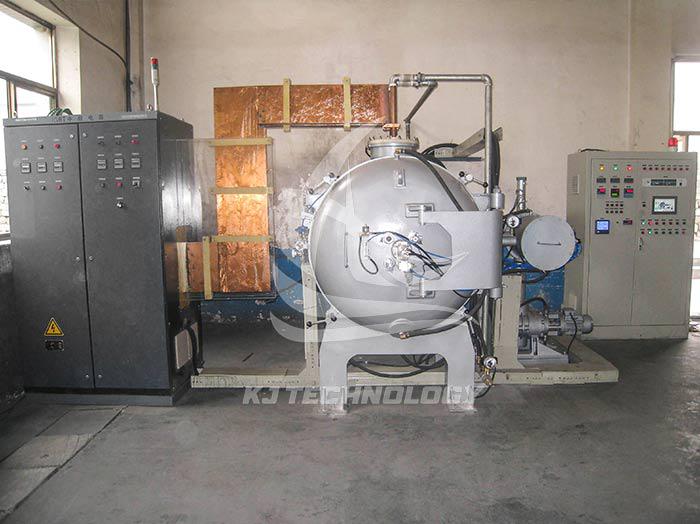
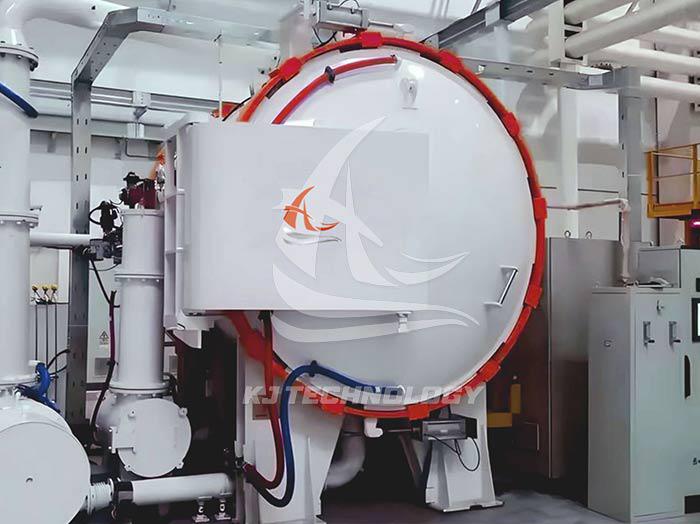
Commonly used silicon nitride sintering vacuum furnace (click on the image to view product details)
1. Clarify core performance requirements
Temperature range: The sintering temperature of silicon nitride is usually between 1550 ℃ and 2300 ℃, and the vacuum furnace with the highest temperature covering the sintering requirements should be selected.
Vacuum degree: The ultimate vacuum degree needs to reach the level of 1-100Pa to ensure that oxidation and contamination are avoided during the sintering process.
Temperature field uniformity: Temperature field uniformity directly affects sintering quality, and a vacuum furnace with temperature field uniformity between ± 5 ℃ and ± 10 ℃ should be selected.
Heating and cooling speed: The heating speed should be fast and stable, and the cooling speed should be controllable to avoid material cracking caused by thermal stress.
Process gas support: If nitrogen, argon or other process gases need to be introduced during the sintering process, a vacuum furnace that supports the introduction of process gases should be selected.
2. Examine the brand's R&D strength and quality control
Technology accumulation: select a brand with independent research and development team and patented technology to ensure the progressiveness and reliability of equipment technology.
Quality certification: Choose brands that implement strict international quality certification systems (such as ISO9001) to ensure stable equipment quality.
Industry reputation: Refer to user reviews and cases within the industry to choose brands with good reputation.
3. Balancing customization capability and cost-effectiveness
Customized service: Select brands that can provide customized services based on the size, shape, and process requirements of the sintered materials.
Cost effectiveness: Choose equipment with reasonable prices, low energy consumption, and low maintenance costs while meeting performance requirements.
4. Emphasize after-sales service and technical support
Installation and debugging: Choose a brand that can provide timely installation and debugging services to ensure that the equipment is quickly put into use.
Operation training: Choose a brand that can provide operation training services to ensure that operators are proficient in using the equipment.
Technical consulting: Choose a brand that can provide long-term technical consulting services to solve problems encountered during use.
Spare parts supply: Choose a brand that can provide timely spare parts supply services to ensure that equipment failures can be quickly repaired.