Can Carbon Tube Vacuum Furnace Process Ceramic Materials?
 11-25-2025 Author: KJ technology
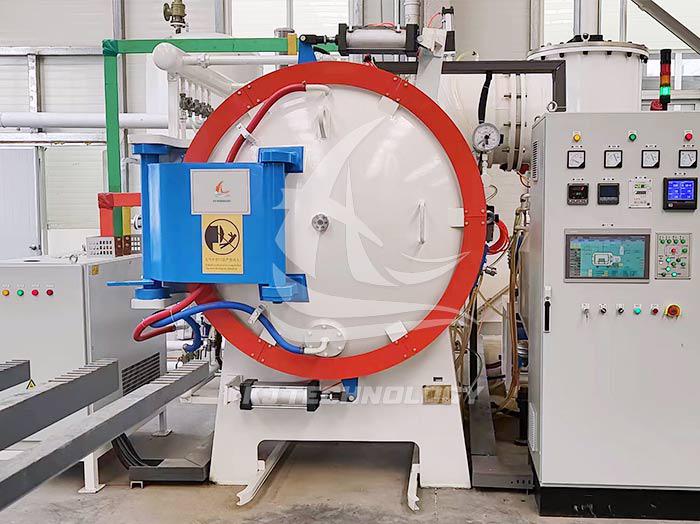
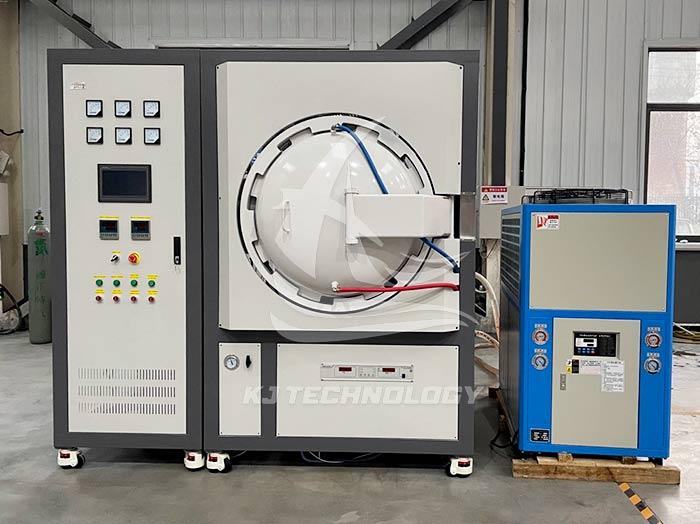
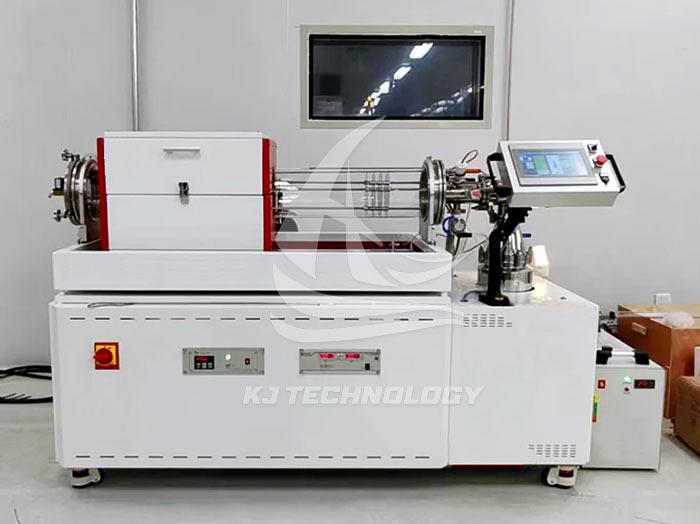
Carbon tube vacuum furnace can process ceramic materials and has significant advantages in the field of ceramic material processing, which are reflected in the following aspects:
1. High temperature sintering capability
Ultra high temperature range: The maximum working temperature of carbon tube vacuum furnace can reach 2000 ℃ to 2200 ℃, or even higher, which can meet the sintering needs of ceramic materials at high temperatures.
Uniform thermal field: The carbon tube heating element is designed with a circular furnace body to form a uniformly radiating thermal field, ensuring that all parts of the ceramic material are heated evenly during the sintering process, reducing the risk of cracking and deformation.
2. Pure vacuum environment
Deep vacuum degree: The carbon tube vacuum furnace can reduce the pressure inside the furnace to an extremely low level through an efficient vacuum system, effectively eliminating air, moisture, and impurities, and avoiding oxidation, decarburization, or pollution of ceramic materials at high temperatures.
Inert gas protection: supports the filling of inert gases such as argon and nitrogen to create a protective atmosphere, further suppressing the reaction between ceramic materials and the environment, and ensuring the purity of the sintering process.
3. Process flexibility
Multi stage programming control: The carbon tube vacuum furnace supports programming control of multiple parameters such as temperature, time, and vacuum degree, and can preset complex process curves to meet the personalized sintering needs of different ceramic materials.
Multiple sintering methods: It can be sintered in a vacuum environment or pressurized with reaction gas to meet the process requirements of different ceramic materials.
4. Application examples
Functional ceramics: Carbon tube vacuum furnaces are widely used for high-temperature sintering of functional ceramics such as alumina, silicon nitride, and silicon carbide, improving the density and mechanical properties of the materials.
Optical ceramics: Support sintering treatment of optical ceramics to ensure that the optical properties of the material meet the requirements.
Ceramic composite materials: used for high-temperature treatment of carbon/ceramic composite materials, optimizing the internal structure of materials, improving heat resistance and mechanical properties.
Ceramic material purification: In the purification treatment of rare earth elements and their oxides, carbon tube vacuum furnace also plays an important role, removing impurities and improving material purity through high-temperature vacuum environment.