Can Carbon Tube Vacuum Furnace be used for coating?
 11-25-2025 Author: KJ technology
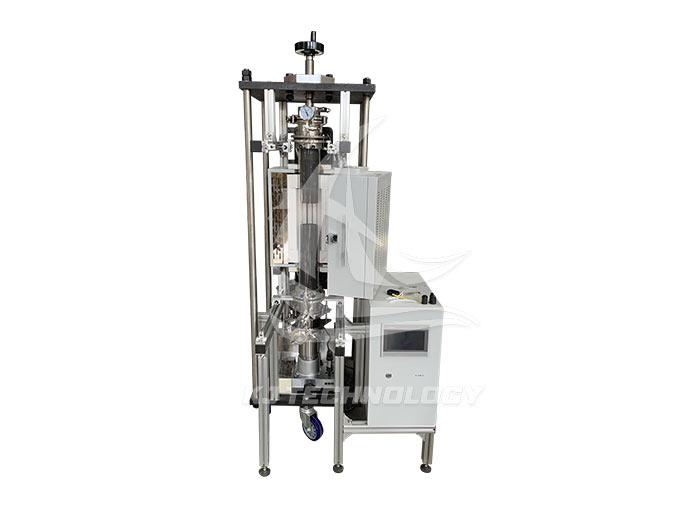
Carbon tube vacuum furnace can be used for coating under specific conditions, but it is not its core function and needs to be comprehensively judged based on equipment configuration and process requirements. The following analysis will be conducted from four aspects: device characteristics, coating principles, application scenarios, and limiting conditions:
1. Equipment characteristics support the basic conditions for coating
Vacuum environment: The carbon tube vacuum furnace uses an efficient vacuum system (pressure can be reduced to 10 ⁻ ² to 10 ⁻ ³ Pa) to remove air, moisture, and impurities, providing a pure environment for coating and avoiding oxidation or pollution. This is a necessary condition for coating processes such as chemical vapor deposition (CVD).
High temperature capability: Its maximum working temperature can reach 2000 ℃ to 2200 ℃, which can meet the high-temperature coating requirements of materials such as metals and ceramics. For example, in semiconductor manufacturing, single crystal silicon growth needs to be carried out in a vacuum environment of 2000 ℃, and a carbon tube vacuum furnace can provide a stable high-temperature field.
Inert gas protection: supports the filling of inert gases such as argon and nitrogen to create a protective atmosphere, suppress the reaction between materials and the environment, and is suitable for oxidation sensitive coating processes.
2. Coating principle and equipment adaptability
Chemical Vapor Deposition (CVD): Deposition of a thin film on the surface of a substrate by decomposing or reacting gaseous precursors at high temperatures. The high temperature and vacuum environment of carbon tube vacuum furnace are fully compatible with CVD process. For example, depositing silicon carbide (SiC) coating on the surface of carbon/carbon composite materials can significantly improve the material's oxidation resistance and high temperature resistance.
3. Typical application scenarios
Semiconductor manufacturing: used for single crystal silicon growth or silicon wafer surface coating, depositing silicon nitride (Si ∝ N ₄) or silicon oxide (SiO ₂) thin films through CVD process to improve device performance and reliability.
Optical material coating: Deposition of anti reflective or reflective film on the surface of optical lenses, using the uniform thermal field of carbon tube vacuum furnace to ensure the consistency of film thickness and refractive index.
Carbon/carbon composite material processing: Deposition of silicon carbide coating on the surface of the material through CVD process to form a dense protective layer, extending the service life of the material in high-temperature oxidation environment.
4. Limitations and Precautions
Equipment configuration requirements: Standard carbon tube vacuum furnaces require additional coating dedicated devices (such as evaporation sources, sputtering targets, gas distribution systems, etc.), which may increase equipment costs and complexity.
Process control difficulty: The coating process is sensitive to parameters such as vacuum degree, temperature, and gas flow rate, and requires precise control to avoid problems such as film peeling, cracking, or component segregation. For example, when CVD deposits SiC coatings, temperature fluctuations exceeding ± 10 ℃ may lead to a decrease in coating crystallinity.
Material compatibility: The thermal expansion coefficients of the substrate and coating material need to match, otherwise stress may occur at high temperatures, leading to film cracking. For example, when depositing ceramic coatings on metal substrates, stress relief needs to be achieved through gradient coating or intermediate layer design.