What Temperature Range Does Silicon Carbide Reaction Sintering Need?
 10-21-2026 Author: KJ technology
Reaction bonded silicon carbide (RBSiC, also known as reaction sintered SiC) is widely used for optical mirrors, aerospace structural parts, wear-resistant nozzles, and semiconductor components. The sintering temperature is the most critical parameter that directly controls silicon melting, liquid infiltration, carbon-silicon reaction, final density and mechanical performance. Many engineers and lab researchers ask for the accurate temperature window when selecting a silicon carbide reaction sintering furnace.
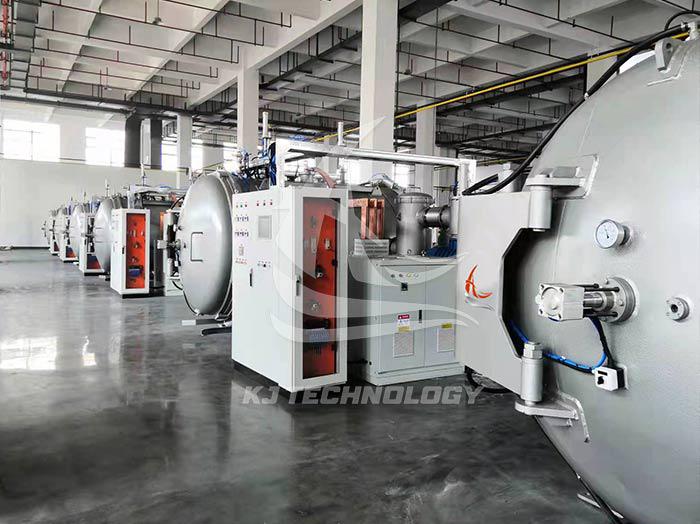
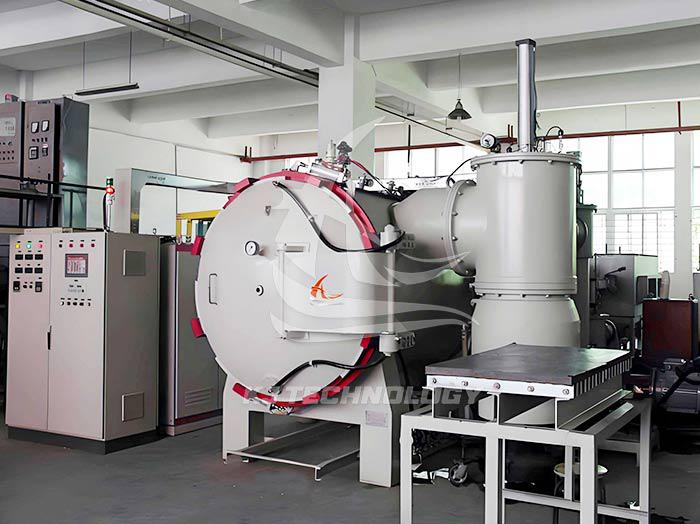
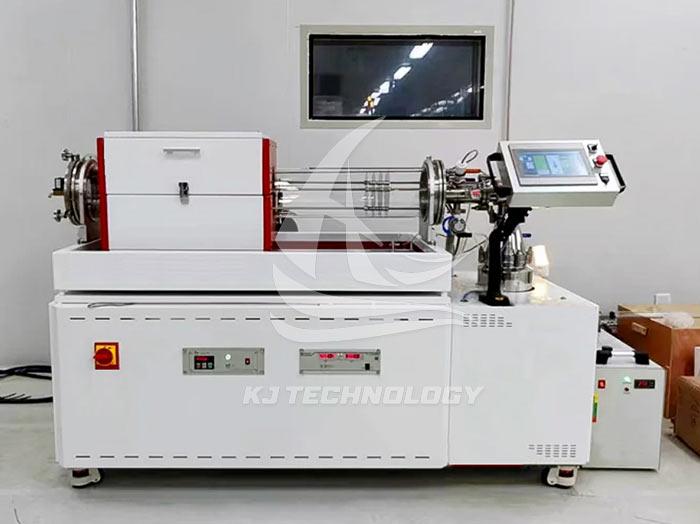
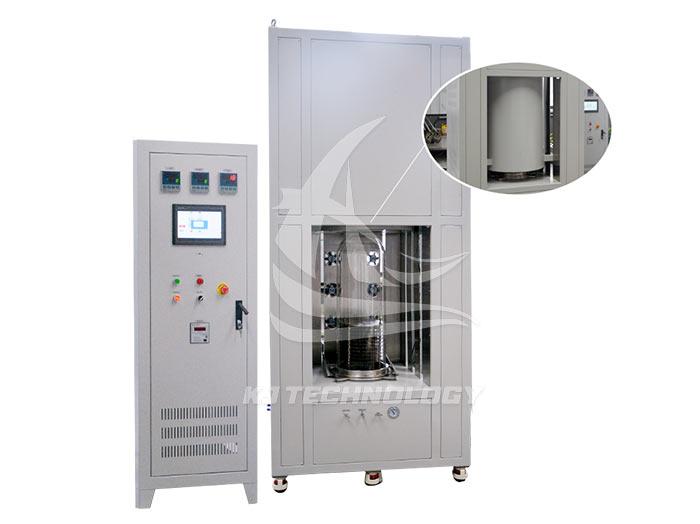
Commonly used silicon carbide sintering furnace (click on the image to view product details)
Standard Temperature Window for SiC Reaction Sintering
The core reaction sintering range for RBSiC is **1400°C to 1600°C**, with the most common production setpoint at 1450°C – 1550°C.
At this temperature interval, solid silicon turns into molten silicon, penetrates the porous carbon-containing SiC green body.
- Below 1400°C: Silicon cannot fully melt, infiltration is insufficient, incomplete reaction leads to low density and poor strength.
- 1450–1550°C: The stable working zone for mass production, consistent infiltration, controllable free silicon residue, ideal for most standard RBSiC ceramic parts.
- 1550–1600°C: Applied for high-density, high-purity optical-grade SiC mirrors and precision components, requiring precise temperature holding and stable vacuum atmosphere control.
- Above 1600°C: Excess silicon volatilization, abnormal grain growth, surface defects and performance degradation usually occur, so this range is rarely used for standard reaction sintering.
Important note: This temperature range is very different from pressureless sintered SiC, which normally requires temperatures above 2000°C. This lower-temperature feature is one of the biggest advantages of reaction sintering technology, cutting energy consumption significantly.
Full Multi-Stage Temperature Curve Breakdown
A complete RBSiC sintering cycle includes several separate heating stages, not only the peak infiltration temperature:
1. Binder burnout stage (200°C – 800°C)
Slow heating to decompose organic binders inside the green body. Fast heating will cause cracking, bubbling or blistering on the workpiece.
2. Carbonization pre-treatment (800°C – 1350°C)
Remove residual volatile impurities under vacuum or argon inert atmosphere, stabilize the carbon framework ready for silicon infiltration.
3. Reaction infiltration & holding (1400°C – 1600°C)
The key sintering stage. Holding time is matched with part thickness and porosity; thicker workpieces require longer dwell time.
4. Controlled cooling stage
Slow cooling prevents thermal shock cracks in the SiC ceramic body and graphite furnace hot zone.
How Atmosphere Affects the Required Sintering Temperature
Reaction sintering of silicon carbide is almost always performed in high vacuum or flowing argon inert atmosphere:
- Vacuum environment: Promotes silicon infiltration at the lower end of the temperature range (1400–1500°C), reduces oxidation risk and volatile impurity residue. This is the mainstream setup for industrial RBSiC furnaces.
- Argon protective atmosphere: Used for special formulations. It slightly raises the effective infiltration temperature, and needs stable gas flow control to avoid oxygen contamination.
- Air or oxidizing atmosphere: Not allowed at all. Silicon and carbon will burn before the target reaction can finish.
Furnace Selection Tips Based On Sintering Temperature
When sourcing a silicon carbide reaction sintering furnace:
1. Choose a furnace rated with a maximum temperature 100–150°C higher than your target sintering temperature. If your process runs at 1550°C, select a furnace supporting up to 1700°C for stable long-term operation.
2. Prioritize graphite heating elements and graphite thermal field, which match the vacuum high-temperature environment of RBSiC sintering.
3. Confirm the temperature control accuracy and uniformity. Small temperature deviation across the hot zone directly causes inconsistent infiltration between batches.
4. If you produce optical-grade SiC mirrors, pick a furnace with precise vacuum control and programmable multi-segment temperature curve function.
FAQ
Q: Can I run RBSiC sintering at 1350°C?
A: It is possible only for special low-carbon, high-porosity formula. Most standard green bodies cannot get full silicon infiltration at 1350°C, leading to unqualified products.
Q: What happens if the temperature exceeds 1600°C during reaction sintering?
A: Molten silicon evaporates heavily. Excess free silicon loss creates voids, reduces density, and may contaminate the furnace chamber and graphite insulation.
Q: Is reaction sintering the same as pressureless sintering for SiC?
A: No. Pressureless sintered SiC requires over 2000°C, while RBSiC completes densification at 1400–1600°C via silicon infiltration reaction.
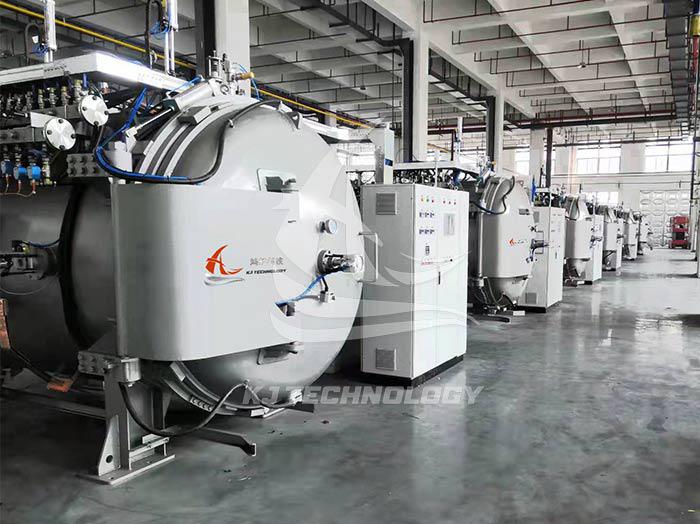
Commonly used silicon carbide sintering furnace (click on the image to view product details)
The standard working temperature range for silicon carbide reaction sintering is 1400–1600°C, and the preferred production window is 1450–1550°C, operating in vacuum or argon atmosphere. The peak temperature, holding duration, heating rate and vacuum level must be adjusted according to your green body formulation, part size and final performance requirements.
If standard furnace models cannot match your custom temperature profile or chamber size, custom silicon carbide reaction sintering furnaces are available for laboratory R&D and mass production lines.