Key Parameters for Sourcing Vertical Graphite Vacuum Carbon Tube Furnace
 10-20-2026 Author: KJ technology
Vertical graphite vacuum carbon tube furnace is an ultra-high temperature thermal processing equipment adopting graphite carbon tube as heating element. It is widely used for graphitization, sintering and annealing of carbon-carbon composites, advanced ceramics, powder metallurgy and new energy materials. When purchasing this furnace, buyers need to evaluate multiple core parameters to match lab research or industrial mass production requirements. Below are the critical factors you must check before placing an order.
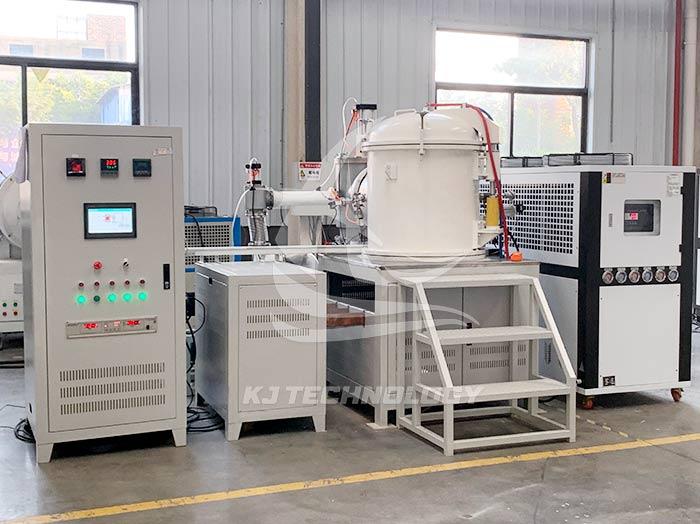
Vertical graphite carbon tube furnace (click on the image to view product details)
1. Temperature Specifications
Temperature is the primary index. Do not only focus on the peak maximum temperature.
- Maximum temperature vs continuous working temperature: In vacuum conditions, graphite sublimates easily at ultra-high temperature. Usually the continuous working temperature should be 100~200℃ lower than the rated peak temperature to extend graphite tube service life. For example, a furnace marked for 2200℃ peak can run stably at 2000℃ continuously.
- Temperature uniformity in hot zone: It directly decides product consistency. For most sintering and graphitization processes, temperature uniformity within ±5~±10℃ is recommended.
- Heating & cooling rate: Confirm adjustable ramp rate. Typical range is 0~10℃/min. Some custom models support faster heating or controlled slow cooling to prevent material cracking.
- Temperature measurement method: At ultra-high temperature, W-Re thermocouple or infrared pyrometer is required, standard K/S type thermocouples cannot work above 1800℃.
2. Vacuum Performance & Leak Rate
Vacuum performance determines oxygen content inside chamber and avoids workpiece oxidation.
- Ultimate vacuum: Common lab and industrial models can reach 10⁻³ Pa or higher. Choose vacuum level according to your material requirements.
- Pressure rise rate (leak rate): This is a key indicator of sealing quality. Low pressure rise means stable low-oxygen environment during long-time heat preservation.
- Vacuum pumping system: Confirm pump combination: mechanical pump + roots pump + diffusion pump or molecular pump set. Different pump configurations influence ultimate vacuum and pumping speed.
3. Hot Zone & Chamber Size
The vertical structure loads samples from top or bottom. The usable hot zone dimension must fit your sample size and batch capacity.
- Inner diameter and effective heated length of graphite carbon tube. Leave enough space for sample holder and thermal insulation shielding.
- Graphite thermal shielding structure: Multi-layer graphite felt shielding reduces heat loss and protects the outer water-cooled chamber shell. High quality graphite shielding will greatly reduce power consumption.
- Water cooling system: The furnace shell, flanges and electrodes rely on circulating water cooling. Check water pressure requirement and over-temperature protection interlock.
4. Inert Gas & Atmosphere Control
Many processes require vacuum + inert gas (argon, nitrogen) switching.
- Multi-channel gas inlet system, mass flow controller (MFC) for precise gas flow adjustment.
- Pressure interlock protection: auto cut-off heating when abnormal pressure appears.
- Confirm gas compatibility: some carbon materials prefer argon instead of nitrogen at ultra-high temperature.
5. Control System & Safety Interlock
Most modern vertical graphite vacuum carbon tube furnaces use PLC + touch screen control.
- Support saving multiple custom temperature curves, automatic run, record temperature and pressure data.
- Essential safety protection: water flow alarm, over-temperature protection, vacuum interlock, power failure protection. These features prevent damage to graphite tube and workpieces.
6. Customization, After-sales & Spare Parts
Graphite carbon tube and graphite felt are consumables. Before purchase:
1. Confirm whether the manufacturer can customize hot zone size, power, atmosphere system according to your process.
2. Check the lead time of spare parts: graphite carbon tube, graphite insulation, sealing rings.
3. Verify global technical support, remote debugging and on-site installation service.
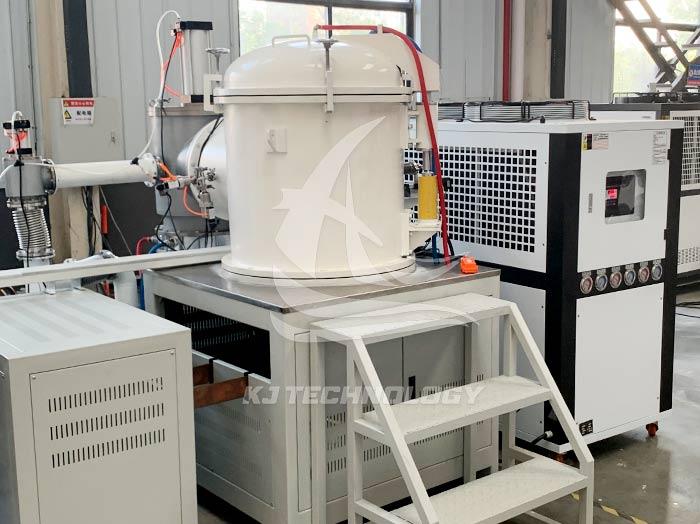
Vertical graphite carbon tube furnace (click on the image to view product details)
Conclusion
Sourcing vertical graphite vacuum carbon tube furnace is not only about comparing maximum temperature. Buyers should evaluate continuous working temperature, hot zone uniformity, vacuum leak rate, gas control and safety interlock. Meanwhile, consider consumable supply and after-sales service to keep stable long-term operation for material sintering and graphitization.
FAQ
Q: What materials can be processed by vertical graphite vacuum carbon tube furnace?
A: It is suitable for carbon fiber composite, graphite purification, ceramic sintering, powder metallurgy hard alloy, and anode material heat treatment for lithium battery.
Q: Why continuous working temperature is lower than peak temperature?
A: Graphite will slowly sublimate under high vacuum and ultra-high temperature. Long time operation near peak temperature will shorten the service life of graphite carbon tube and shielding parts.