Silicon‑Nitride Sintering Furnace for Semiconductor Substrates: Key Selection Guidelines for High‑Purity Oxygen‑Free and Low‑Impurity Sintering
 08-13-2026 Author: KJ technology
High‑thermal‑conductivity silicon‑nitride (Si₃N₄) ceramic substrates are core thermal‑conductive carriers for IGBT, power semiconductor chips and high‑density packaging. Lattice oxygen, metallic contaminants and grain‑boundary glassy impurities will severely scatter phonon transmission, cut down thermal conductivity and bring electrical leakage risk. Only an oxygen‑free, ultra‑clean sintering environment can manufacture qualified semiconductor‑grade silicon‑nitride plates. This article breaks down process requirements, core hardware indicators, furnace‑type comparison and practical buying tips of silicon‑nitride sintering furnaces, assisting semiconductor material manufacturers to pick suitable heating‑treatment equipment.
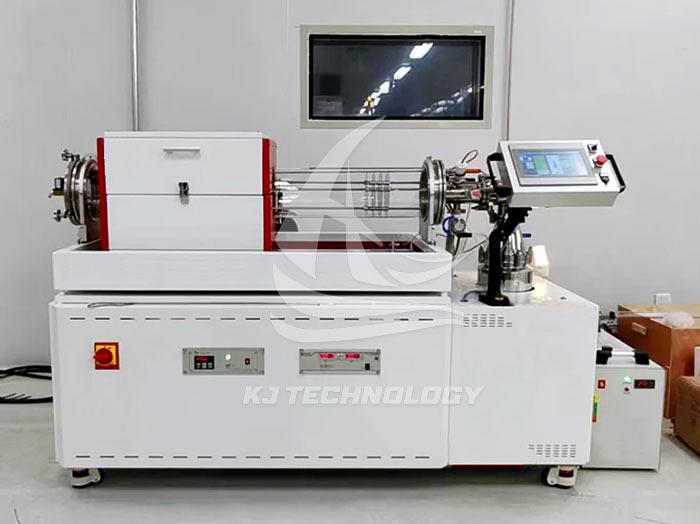
Small silicon nitride sintering furnace (click on the picture to view product details)
1. Why Oxygen and Impurities Ruin Silicon‑Nitride Semiconductor Substrates
Silicon‑nitride gains its excellent heat‑conducting property from intact β‑Si₃N₄ crystal grains. Oxygen is the dominant harmful contaminant in sintering workflows.
Residual oxygen reacts with silicon‑nitride and generates silica‑rich amorphous grain‑boundary layers. These amorphous films block phonon movement and drop thermal conductivity obviously. Top‑tier power substrates demand lattice‑oxygen content lower than 0.2 wt% after sintering.
External metallic impurities from furnace‑wall shedding, heating‑element volatilization and air‑leakage contamination introduce leakage channels and reduce insulation resistance.
Uneven oxygen partial pressure inside the cavity causes inconsistent grain‑boundary composition, non‑uniform density and batch‑to‑batch performance deviation.
For that reason, the selected sintering furnace must build a stable high‑purity nitrogen atmosphere, restrain air ingress and minimize volatile pollutants from internal furnace components.
2. Essential Environmental Specifications for Oxygen‑Free Low‑Impurity Sintering
Before comparing hardware configurations, confirm your critical process benchmarks:
Oxygen partial pressure: Keep residual oxygen concentration under 10 ppm throughout the whole heating‑up, soaking and cooling cycle.
Ultimate vacuum: Reach 10⁻³ Pa or better for pre‑sinter vacuum degassing, to pump‑out moisture and adsorbed oxygen from substrate powder compacts.
Furnace chamber leakage rate: The leakage rate shall not exceed 6 Pa/h. High air‑leakage will continuously import oxygen‑rich ambient air during long‑time high‑temperature soaking.
Working atmosphere: High‑purity 99.999% nitrogen; adopt pressure‑type sintering (0.3–0.5 MPa nitrogen pressure) for large‑size thick substrates to accomplish full densification.
3. Core Component Selection Checklist When Purchasing a Silicon‑Nitride Sintering Furnace
(1) High‑temperature heating assembly
The common sintering temperature range for semiconductor‑grade Si₃N₄ substrates falls between 1600 ℃‑1900 ℃.
Graphite heating plates with molybdenum heat‑shield screens work best. Molybdenum screens block graphite volatile particles and stop carbon impurities from polluting ceramic workpieces.
Stay away from ordinary silicon‑molybdenum heating elements for long‑run high‑purity production, since volatile oxide contaminants will precipitate onto substrates above 1650℃.
(2) Sealing structure and gas delivery system
Use all‑metal high‑temperature sealing components and water‑cooled furnace doors. Rubber seals are not fit for repeated high‑temperature circulation.
Deploy mass‑flow controllers rather than floating‑ball flowmeters for precise nitrogen‑gas flow regulation. Install online oxygen detectors for real‑time atmosphere monitoring.
Configure pre‑heating and gas‑purifying filters to remove moisture, oxygen and particulate pollutants from incoming nitrogen.
(3) Temperature‑control system and temperature uniformity
Uneven temperature distribution creates inconsistent grain growth and local impurity enrichment.
Select multi‑zone independent PID temperature control. The temperature deviation of the effective loading zone needs to stay within ±1 ℃.
Support 30+ segments of programmable heating‑rate, soaking‑time and cooling‑rate settings. A slow ramp‑up speed (2–5℃/min) prevents thermal shock cracking on large‑area thin substrates.
Equip built‑in data logging to archive every sintering parameter for semiconductor‑industry traceability requirements.
(4)Inner‑chamber lining materials
Pick low‑volatility high‑purity graphite or boron‑nitride furnace liners. Avoid cheap insulating fibre materials that shed dust and introduce foreign impurities. Removable liner trays also simplify cleaning between batches.
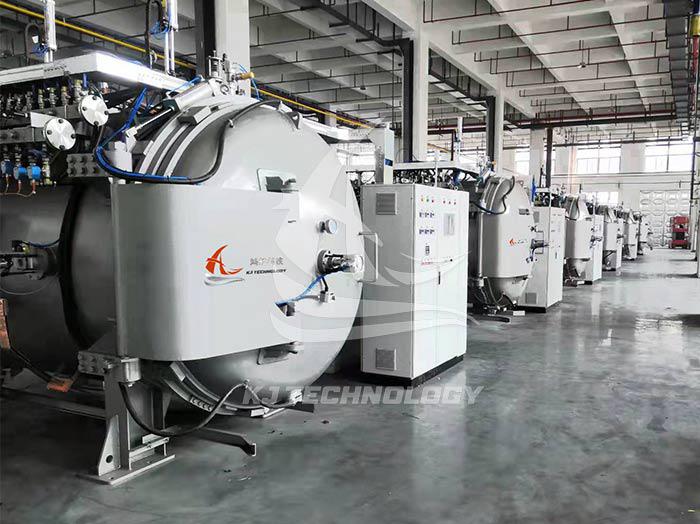
4. Box‑type atmosphere sintering furnace
Suitable for mass‑production of large‑format silicon‑nitride substrates. It possesses bigger loading space, multi‑zone temperature control and customizable pressurised‑atmosphere structure. It is the mainstream option for industrial‑scale semiconductor substrate factories.
5. Common Pitfalls and Practical Buying Advice
Do not merely focus on the maximum furnace temperature. Reserve 50–100 ℃ of temperature margin above your working sintering temperature for stable long‑time operation.
If you produce high‑thermal‑conductivity substrates above 100 W/m·K, a molybdenum radiation‑shield assembly becomes mandatory to cut graphite‑derived carbon contamination.
Pre‑sinter vacuum degassing cannot be skipped. Always choose a furnace fitted with molecular‑pump vacuum sets instead of simple mechanical‑pump units.
Prioritise equipment that supports atmosphere switching, automatic data‑recording and easy‑to‑disassemble inner‑chamber parts for routine decontamination.
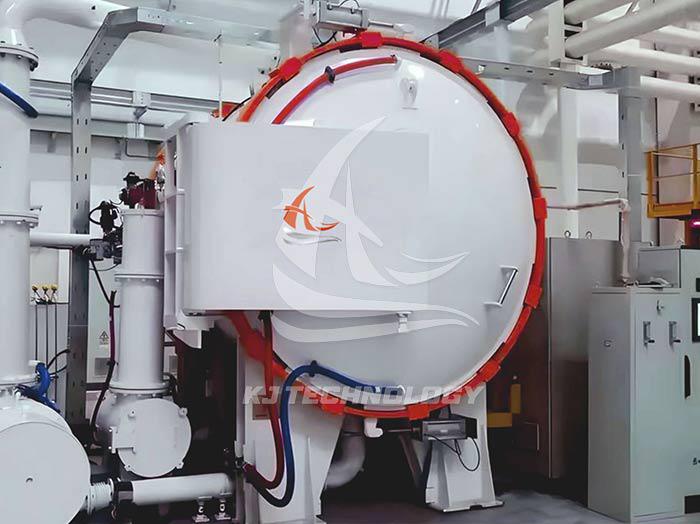
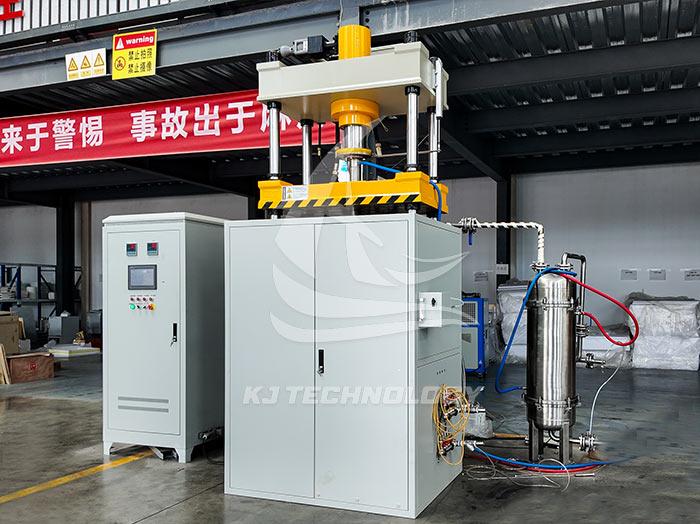
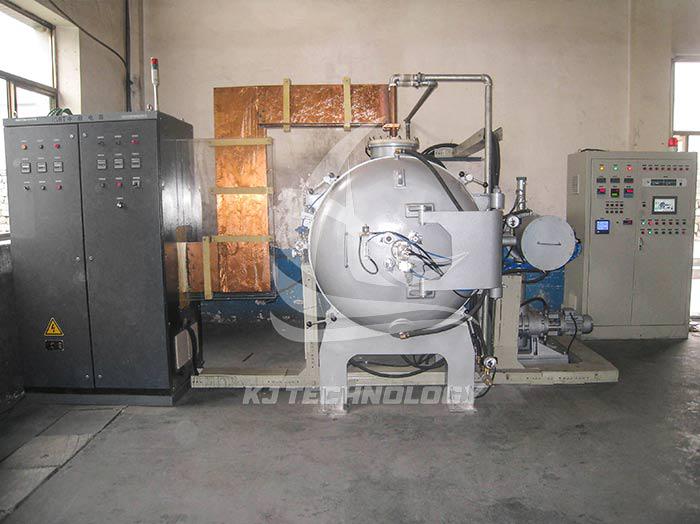
Industrial silicon nitride sintering furnace (click on the picture to view product details)
6. Conclusion
Manufacturing low‑impurity silicon‑nitride semiconductor substrates hinges entirely on an oxygen‑free, contaminant‑free high‑temperature sintering environment. When shopping for a sintering furnace, evaluate vacuum capability, sealing performance, heating‑element layout, multi‑zone temperature uniformity and high‑purity gas‑supply system first. Custom‑built box‑type atmosphere furnaces with molybdenum heat shields satisfy large‑batch industrial production demands, while tubular furnaces serve laboratory material‑development workflows. Proper furnace selection stabilises substrate thermal conductivity, insulation property and batch consistency for power‑semiconductor packaging applications.