How to Choose a Titanium Alloy Sintering Furnace: 5 Key Parameters
 06-02-2026 Author: KJ technology
Titanium alloy components are widely used in aerospace parts, medical implants, new energy equipment and precision machinery. Vacuum sintering is the mainstream forming process for titanium alloy powder metallurgy, and selecting a qualified titanium alloy sintering furnace directly determines finished product density, dimensional accuracy and production yield. Many purchasers struggle with improper parameter configuration leading to product oxidation, insufficient densification and excessive energy consumption. This article sorts out five core decisive parameters to help buyers pick a suitable titanium alloy sintering furnace for lab R&D and mass industrial production.
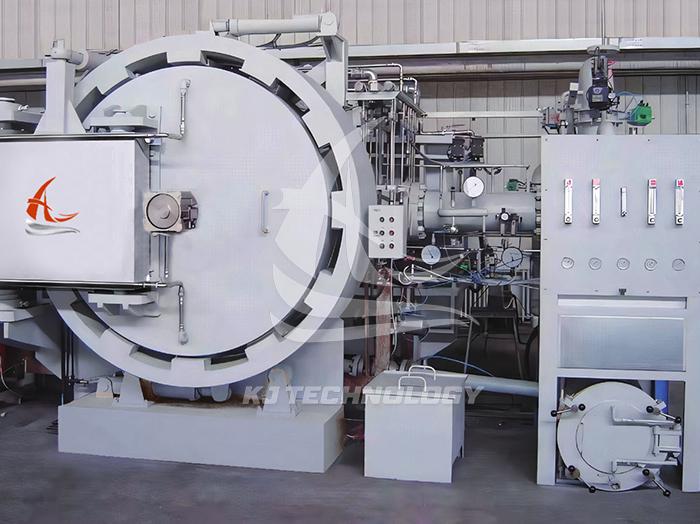
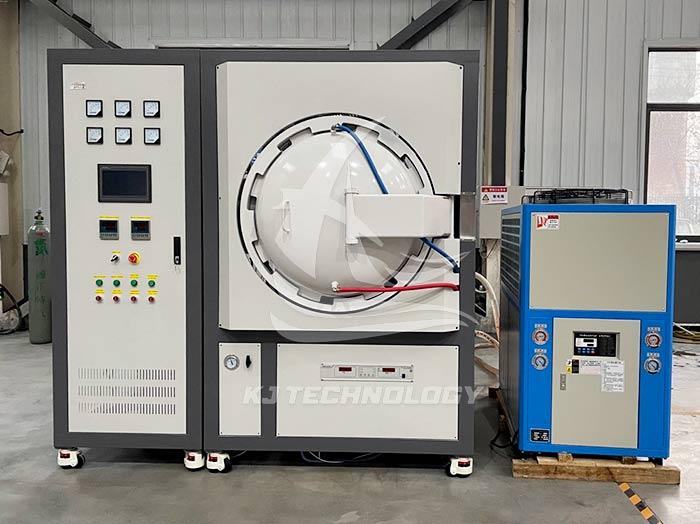
Commonly used titanium alloy sintering furnaces (click on the image to view product details)
1. Ultimate Vacuum Degree: Prevent Titanium Oxidation from Source
Titanium is an active metal that reacts rapidly with oxygen, nitrogen and hydrogen under high temperature, resulting in surface brittleness, black discoloration and reduced mechanical performance. Vacuum level becomes the first inspection indicator during furnace selection.
Lab small-batch production: Ultimate vacuum ≥1×10⁻³ Pa, suitable for small sample sintering of titanium alloy prototypes.
Industrial mass production for aerospace & medical titanium parts: Required high vacuum of 1×10⁻⁴ Pa ~ 5×10⁻⁵ Pa with low leakage rate below 0.5 Pa/h, effectively isolate impurity gas to avoid interstitial element contamination.
Optional configuration: Equipped with mechanical pump + roots pump + molecular pump combined pumping system for fast vacuum extraction and stable long-term operation.
2. Working Temperature & Temperature Uniformity: Guarantee Consistent Sintering Density
Titanium alloy standard sintering temperature ranges from 1150℃ to 1350℃, different titanium grades need targeted temperature control. Temperature uniformity across effective hot zone directly decides batch consistency.
Maximum design temperature: Select furnace with rated peak temperature 10%~15% higher than actual sintering requirement to reserve temperature adjustment margin, common rated temperature 1400℃~1600℃ for titanium sintering.
Temperature uniformity standard: ±3℃ for high-end medical implant and aerospace titanium parts; ±5℃ for general industrial titanium structural parts. Multi-section independent PID temperature control is mandatory to eliminate cold and hot spots inside hot zone.
Heating elements: Molybdenum or tungsten heating components are preferred for high-purity titanium sintering; graphite heating is only available for low-standard common titanium alloy to avoid carbon carburization.
3. Hot Zone Structure & Material: Control Contamination Risk
Hot zone is the core cavity of sintering furnace, and its material selection determines purity of sintered titanium workpieces. Two mainstream hot zone solutions for titanium sintering:
All-metal hot zone (molybdenum lining): Zero carbon pollution, ideal for medical grade titanium alloy, implantable titanium components and high-performance aerospace titanium powder parts, long service life but higher procurement cost.
Graphite hot zone with barrier coating: Cost-effective for ordinary industrial titanium spare parts, suitable for non-corrosion-critical structural titanium products, regular maintenance is needed to prevent graphite powder falling and carburizing.
Hot zone inner space should reserve 15% extra loading space beyond maximum workpiece size to ensure smooth hot air circulation and uniform heating.
4. Inert Gas Quenching System: Optimize Post-Sintering Metallographic Structure
Most titanium alloy products need controlled cooling after high-temperature sintering to optimize internal microstructure, hardness and toughness. High-pressure inert gas quenching becomes a necessary configuration for modern titanium sintering furnace.
Common quenching medium: High-purity argon or nitrogen, argon is preferred for high-end titanium to avoid nitridation.
Quenching pressure selection: 2~5 bar for conventional titanium parts; 8~20 bar high-pressure gas quenching for thin-wall precision titanium components requiring rapid cooling.
Furnace with independent circulating cooling fan ensures uniform airflow and avoids workpiece deformation caused by uneven cooling speed.
5. Effective Loading Capacity & Automation Configuration: Match Production Scale
Buyers should confirm daily output to define furnace effective hearth size and loading tonnage, classified into three application scenarios:
Laboratory R&D: Small furnace with 5~50kg single batch load, compact structure, flexible parameter adjustment for formula test.
Pilot production: 100~500kg per batch, semi-automatic feeding and temperature curve storage function.
Large-scale industrial production: Over 800kg single load, equipped with automatic loading & unloading, remote data monitoring and full-process production data recording to meet ISO and aerospace industry quality traceability requirements.
Industry 4.0 intelligent configuration including real-time vacuum, temperature and pressure online monitoring is a mainstream upgrade option in 2026, greatly reducing manual operation error.
Comprehensive Parameter Comparison Table of Titanium Alloy Sintering Furnace
| Parameter Item | Medical/Aerospace Grade Furnace | General Industrial Grade Furnace | Lab R&D Furnace |
| Ultimate Vacuum | ≤5×10⁻⁴ Pa | 1×10⁻³~5×10⁻³ Pa | 1×10⁻³ Pa |
| Temperature Uniformity | ±3℃ | ±5℃ | ±5℃ |
| Hot Zone Material | Molybdenum all-metal | Coated graphite | Small graphite hot zone |
| Quenching Pressure | 5~20bar Argon | 2~5bar Nitrogen | Optional low-pressure quench |
| Single Batch Load | 50~1500kg | 100~1000kg | 5~50kg |
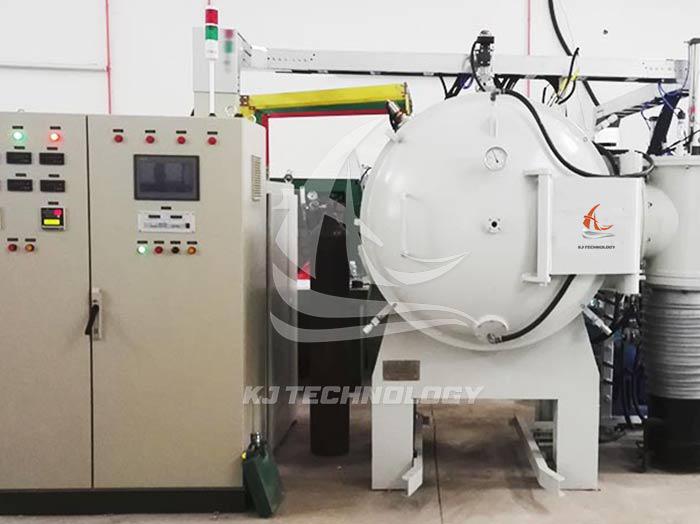
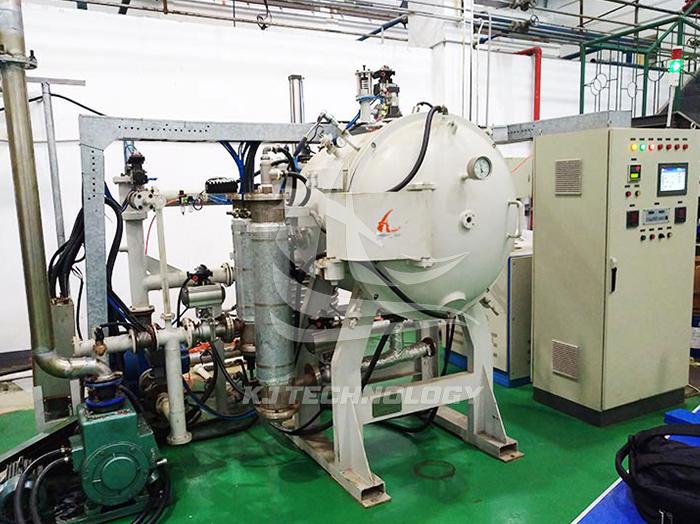
Industrial titanium alloy sintering furnace (click on the picture to view product details)
Final Selection Tips
Prioritize all-metal molybdenum hot zone + ultrahigh vacuum design if producing medical titanium implants and aerospace precision titanium alloy;
Choose coated graphite hot zone and medium vacuum to control cost for regular mechanical titanium structural parts;
Avoid over-configuring high-end parameters for small R&D batches to save unnecessary equipment investment.
Proper parameter matching balances production quality, running cost and equipment investment, which is the core principle of selecting titanium alloy sintering furnace.