How to Choose a High-Temperature Vacuum Brazing Furnace in 2026?
 06-01-2026 Author: KJ technology
In advanced manufacturing—especially aerospace, new energy vehicles, power electronics, and medical devices—high-temperature vacuum brazing furnaces are irreplaceable for producing high-strength, contamination-free joints. By 2026, evolving material demands, stricter quality standards, and smarter automation have made furnace selection more nuanced than ever. This guide walks you through core criteria, technical parameters, hot-zone types, and cost vs. value tradeoffs to help you pick the optimal furnace for your application.
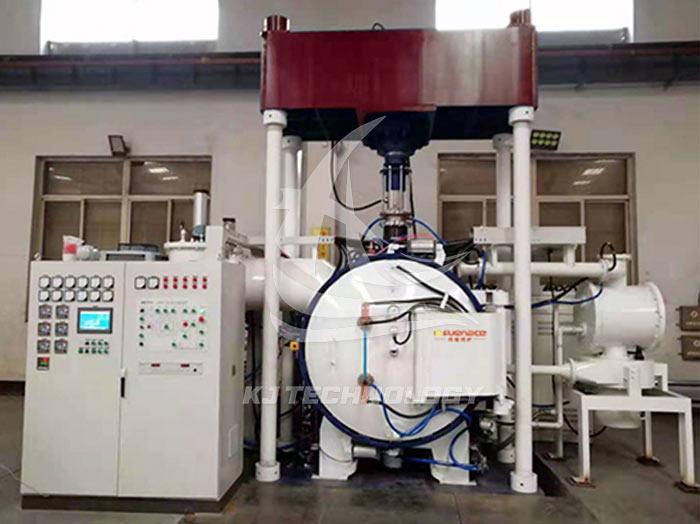
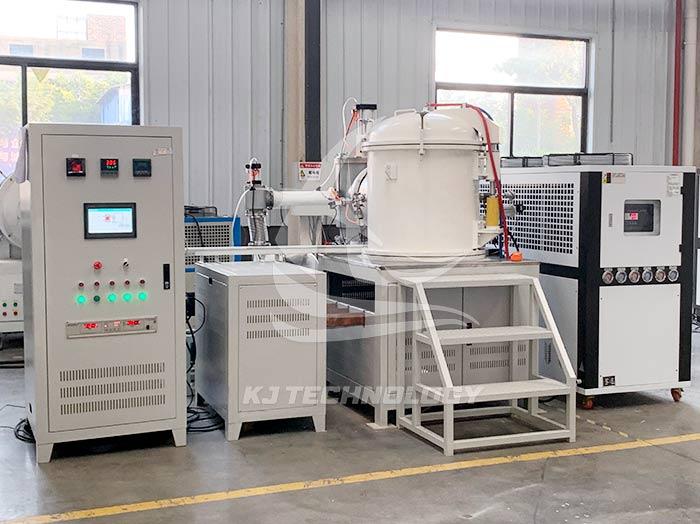
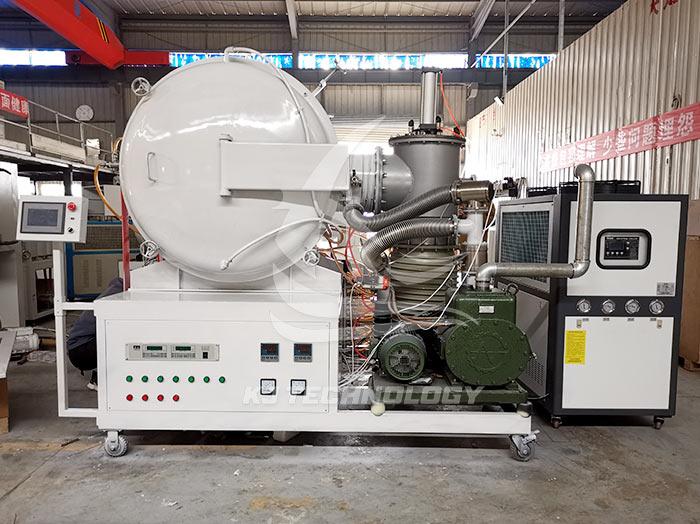
Commonly used vacuum brazing furnaces (click on the image to view product details)
1. Start with Your Brazing Requirements: Match Furnace to Application
Before comparing specs, define your material, maximum workpiece size, production volume, and quality standards—these dictate every technical choice.
1.1 Material & Temperature Range
Different metals and fillers demand specific temperature windows:
Aluminum alloys: 550–620°C (low-temperature, ≤750°C hot-wall furnaces)
Copper/brass: 700–900°C (mid-range)
Stainless steel/nickel-based superalloys: 900–1,200°C (high-temperature)
Titanium/ceramics: 1,200–1,600°C (ultra-high temperature; all-metal hot zones required)
Key rule: Choose a furnace with a 20% temperature buffer above your peak process temp (e.g., 1,350°C furnace for 1,100°C brazing).
1.2 Workpiece Size & Batch Volume
Effective Heating Zone (EHZ): Select an EHZ 10–20% larger than your maximum part to ensure uniform heating and loading flexibility. Common sizes: 600×400×400mm (200kg load) to 1,200×800×800mm (1,000kg load).
Production Scale:
R&D/low-volume: Batch-type (single-chamber) furnaces (flexible, lower cost)
High-volume (24/7): Continuous/multi-chamber furnaces (higher throughput, automated loading/unloading)
Mixed production: Semi-continuous designs (balance of flexibility and efficiency)
1.3 Quality & Industry Standards
Aerospace (NADCAP): Require ≤±3°C temperature uniformity, 10⁻⁴ Pa ultra-high vacuum, and all-metal hot zones (no carbon contamination).
Medical implants: Titanium/CoCr alloys demand carbon-free environments (molybdenum/tungsten hot zones).
General industrial (heat exchangers, EV battery cool plates): ±5°C uniformity, 10⁻³ Pa vacuum, and graphite hot zones are sufficient.
2. Core Technical Parameters: Non-Negotiables for Performance
2.1 Vacuum System: Critical for Clean, Oxidation-Free Joints
Vacuum level directly impacts joint purity and post-processing needs:
Low vacuum (10⁻¹–10⁻² Pa): Aluminum brazing only
High vacuum (10⁻³ Pa): Standard for stainless steel, copper, and general industrial use
Key specs to verify:
Ultimate vacuum: Minimum achievable pressure (lower = cleaner)
Leak rate (pressure rise rate): ≤0.5 Pa/h (indicates tight sealing; critical for consistent vacuum)
Pump configuration: Mechanical pump + roots pump + molecular pump (standard for high vacuum; faster pump-down and stable pressure)
2.2 Temperature Uniformity & Control: Ensure Consistent Joint Quality
Poor uniformity causes weak joints, porosity, or warping—the #1 cause of production scrap.
Uniformity tolerance: ±3°C (premium) or ±5°C (standard) at full load across the entire EHZ.
Control precision: ±1°C with PLC-based multi-segment programming (store 50+ recipes for quick changeovers).
Heating elements:
Graphite: Low cost, high temp (up to 2,400°C), high thermal mass (slower cool-down; good for stress relief)
Molybdenum/tungsten: Carbon-free, faster cool-down (lower thermal mass), up to 1,600°C (mandatory for Ti/medical parts)
2.3 Hot-Zone Design: Hot Wall vs. Cold Wall
This is the most critical structural choice for high-temperature brazing:
| Feature | Hot-Wall Furnace | Cold-Wall Furnace |
| Heating element location | Outside sealed retort | Inside vacuum chamber (surrounds workload) |
| Max temperature | ≤750°C (aluminum only) | ≥1,200°C (stainless steel, Ti, superalloys) |
| Cooling rate | Slow | Fast (water-cooled vessel; high-pressure gas quenching) |
| Cost | Lower | Higher (complex design, water cooling) |
| Best for | Low-temp aluminum brazing | High-volume, high-temp industrial/aerospace |
2026 trend: 90% of industrial buyers select cold-wall furnaces for their versatility and ability to handle high-temperature materials.
2.4 Quenching System: Balance Speed & Metallurgical Quality
Cooling rate defines joint hardness, microstructure, and production cycle time:
High-Pressure Gas Quenching (HPGQ): Industry standard (nitrogen, argon, or helium; 2–20 bar pressure).
Nitrogen: Low cost, moderate cool rate (general industrial)
Helium: 30% faster cooling than nitrogen (premium; aerospace/EV high-throughput)
Avoid oil quenching: Risk of contamination; not compatible with vacuum environments.
3. Hot-Zone Material: Graphite vs. All-Metal (Molybdenum/Tungsten)
The hot zone is the furnace’s "heart"—its material determines contamination risk, max temp, and maintenance cost.
Graphite Hot Zones (Standard Industrial)
Pros: Low cost, high temp resistance (2,400°C), durable, easy to replace
Cons: Carbon contamination risk (causes carburization in Ti/stainless steel; ruins corrosion resistance)
Best for: Non-critical parts (copper, low-grade stainless steel), cost-sensitive buyers
All-Metal Hot Zones (Premium/Aerospace)
Pros: Zero carbon contamination, faster cool-down, longer service life in high-purity applications
Cons: 2–3x higher upfront cost, lower max temp (1,600°C)
Best for: Titanium, medical implants, aerospace components, and high-purity semiconductors
4. Automation & Smart Features (2026 Must-Haves)
Modern furnaces integrate Industry 4.0 capabilities to reduce labor, improve repeatability, and enable quality traceability:
PLC + HMI control: Touchscreen interface with recipe storage, real-time monitoring, and alarm logs.
Data logging & traceability: Record temperature, vacuum, and pressure data for every batch (critical for NADCAP/ISO compliance).
Remote monitoring & diagnostics: Access furnace status via cloud; troubleshoot issues without on-site technicians (reduces downtime by 30%).
Automatic loading/unloading: For high-volume lines (reduces labor costs and human error).
5. Cost Analysis: Lifecycle Value
Energy efficiency: Look for multi-layer insulation (reduces heat loss by 40% vs. single-layer).
Maintenance cost: Graphite hot zones need replacement every 1–2 years; all-metal zones last 5–10 years.
Downtime cost: Prioritize furnaces with modular design (quick part replacement) and 24/7 supplier support.
6. Supplier Selection: Key Due Diligence
Verify expertise: Choose suppliers with 5+ years of vacuum brazing furnace experience and proven industry case studies (aerospace/EV/medical).
Request factory acceptance test (FAT): Witness full-load temperature uniformity and vacuum leak rate tests before shipment.
Evaluate after-sales: Ensure 12-month warranty, spare parts inventory, and local technical support (24-hour response).
7. Final 2026 Selection Checklist
✅ Temperature range: Matches your filler melting point + 20% buffer
✅ Vacuum level: 10⁻³ Pa (standard) or 10⁻⁴ Pa (premium)
✅ Temperature uniformity: ±3°C (aerospace) or ±5°C (industrial)
✅ Hot zone: Graphite (cost) or all-metal (no carbon contamination)
✅ Quenching: High-pressure gas (nitrogen/helium)
✅ Automation: PLC control, data logging, remote monitoring
✅ Supplier: Experienced, certified, and with local support
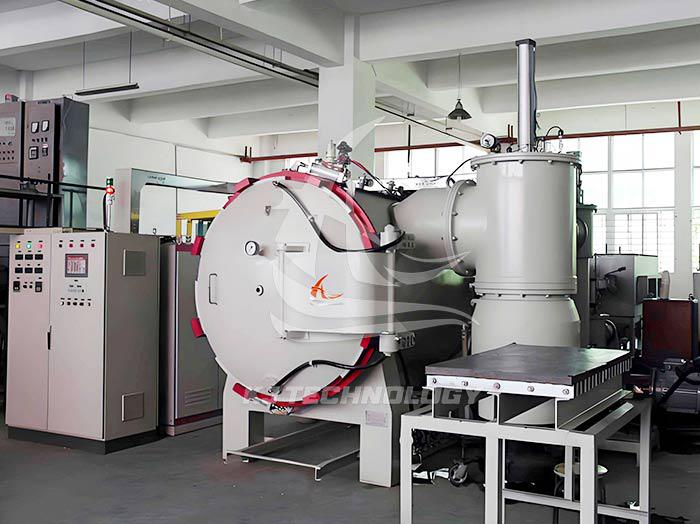
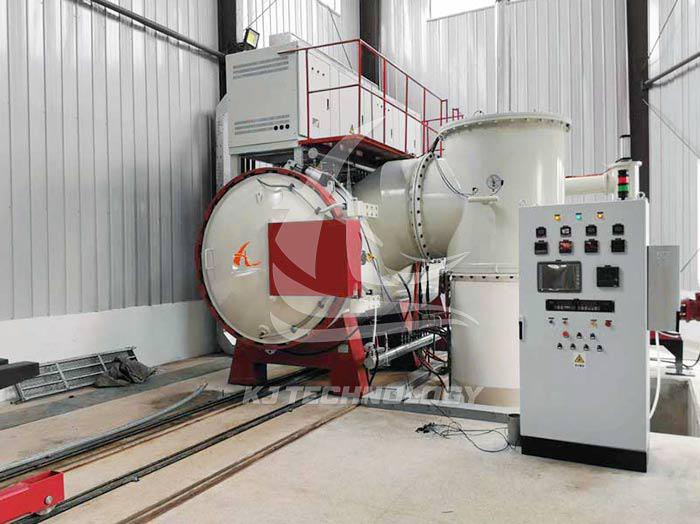
Customized vacuum brazing furnace (click on the image to view product details)
Conclusion
In 2026, the best high-temperature vacuum brazing furnace is not the most expensive one—it’s the one that matches your material, volume, and quality needs while balancing upfront cost and long-term reliability. For most industrial buyers, a cold-wall furnace with graphite hot zone, ±5°C uniformity, 10⁻³ Pa vacuum, and HPGQ delivers optimal value. For aerospace/medical applications, upgrade to an all-metal hot zone and 10⁻⁴ Pa vacuum to eliminate contamination risks.