Application fields of vertical graphite vacuum carbon tube furnace
 01-20-2026 Author: KJ technology
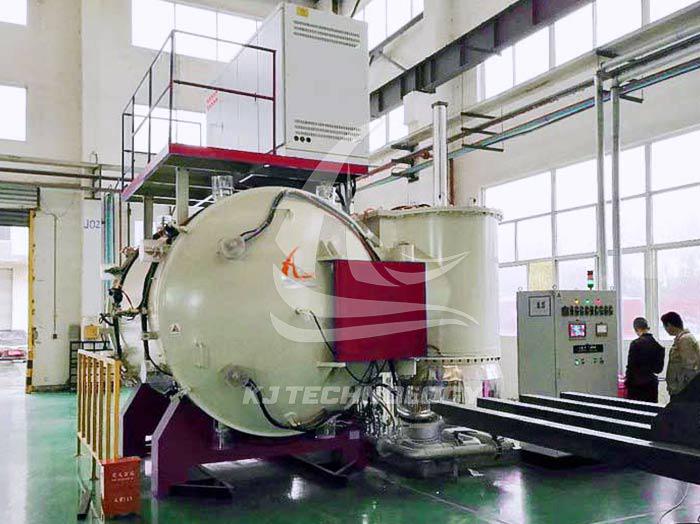
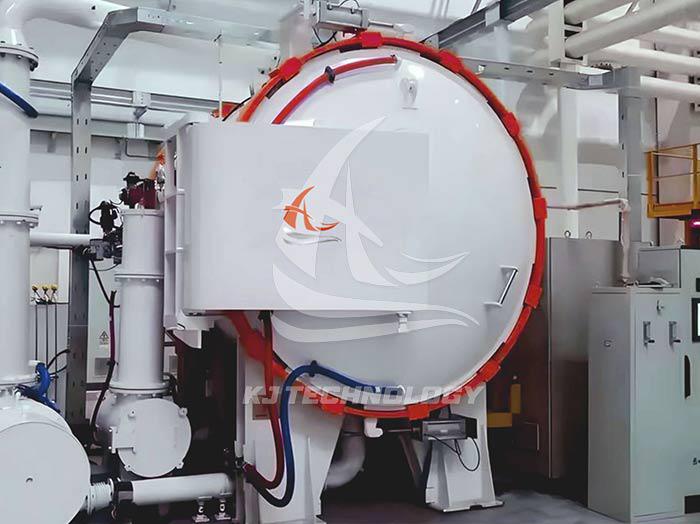
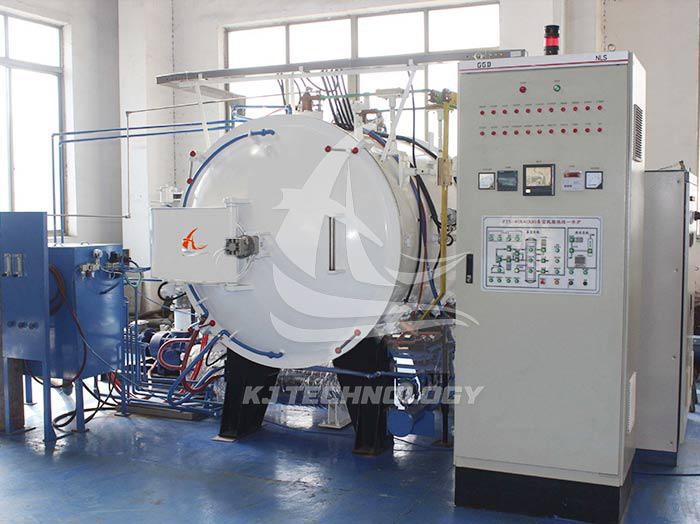
The vertical graphite vacuum carbon tube furnace uses graphite as the heating element and can achieve a high temperature environment of 2000 ℃ -2300 ℃ under high vacuum or protective atmosphere. It has a wide range of applications and strong professionalism, covering the following directions:
1. Preparation of inorganic non-metallic materials
ceramic materials
Used for vacuum sintering of high-performance ceramics such as silicon carbide, zirconia, alumina, etc., by eliminating internal pores to improve density, enhance material mechanical strength, high temperature resistance, and corrosion resistance.
Typical applications: Manufacturing of precision components such as ceramic seals, ceramic bearings, and ceramic cutting tools.
Crystal materials
Annealing treatment of sapphire (alumina single crystal) to eliminate lattice defects and improve optical performance, used in LED substrates, optical windows and other fields.
The purification of rare earth elements and their oxides involves removing impurities through high-temperature vacuum environment, improving material purity, and meeting the needs of high-end fields such as semiconductors and lasers.
2. Metal material processing
cemented carbide
The vacuum sintering of tungsten cobalt and tungsten titanium cobalt hard alloys prevents metal oxidation at high temperatures, ensuring the hardness and wear resistance of the alloys, and is widely used in cutting tools and mold manufacturing.
Special metals
Heat treatment of titanium alloys, nickel based high-temperature alloys, and other materials under vacuum or inert atmosphere improves the microstructure of the materials, enhances high-temperature strength and fatigue resistance, and is used in the aerospace and energy fields.

3. Research and development of new energy and new materials
Lithium battery materials
The vacuum heat treatment of positive and negative electrode materials (such as lithium cobalt oxide and graphite negative electrode) optimizes the crystal structure of the materials, improves the energy density and cycle life of the battery.
nanomaterials
The preparation of nanomaterials such as carbon nanotubes and graphene achieves controllable growth of materials through precise control of vacuum degree and temperature, promoting innovation in fields such as electronics and composite materials.
Catalyst materials
The sintering and activation of catalyst supports, such as the preparation of alumina and silica supports, can enhance the specific surface area and activity of catalysts, which are used in the fields of chemical engineering and environmental protection.
4. Research and pilot production
laboratory research
Universities and research institutes are used for fundamental research in materials science, such as exploring high-temperature phase transitions and crystal growth mechanisms, to provide theoretical support for the development of new materials.
Pilot batch production
Suitable for small-scale industrial testing, verifying the feasibility of material preparation processes, reducing large-scale production risks, and accelerating the transformation of scientific research achievements.
5. Other fields
optical material
Annealing and heat treatment of optical glass and crystal materials to eliminate internal stress and improve optical uniformity, used in precision optical instrument manufacturing.
semiconductor material
Annealing and sintering of silicon chips and compound semiconductors (such as gallium arsenide) improve chip quality and enhance the performance and stability of semiconductor devices.