What materials can be brazed in a customized high vacuum brazing electric furnace?
 10-13-2025 Author: KJ technology
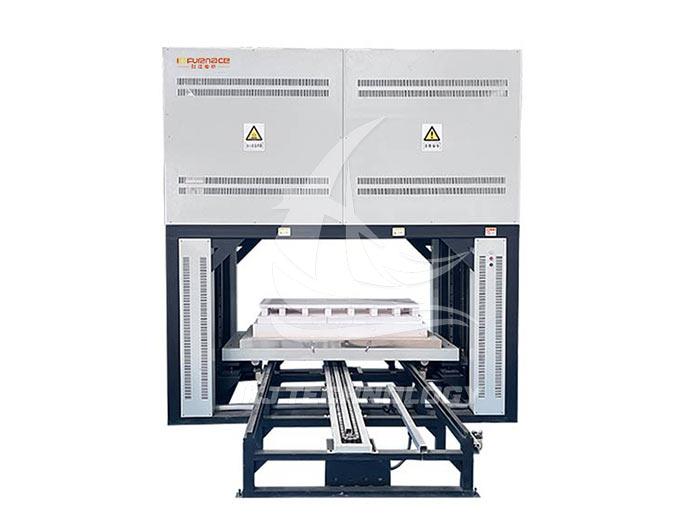
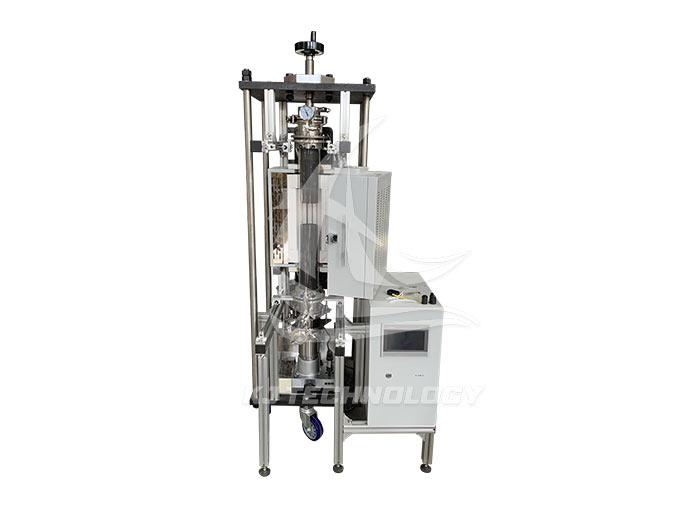
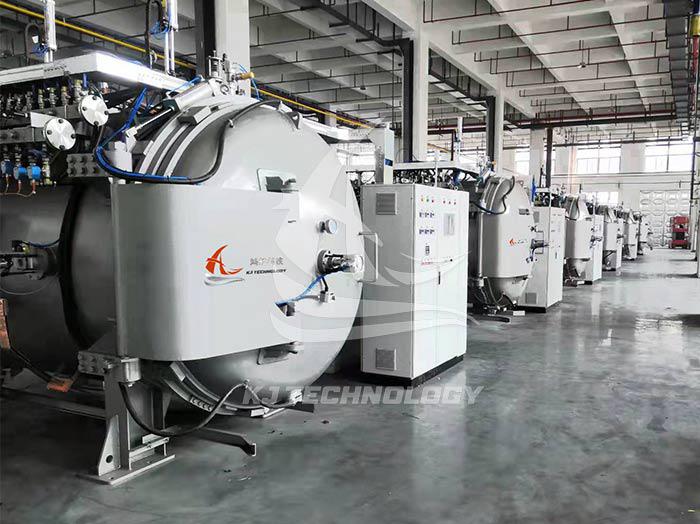
Customized high vacuum brazing electric furnaces, with their high vacuum environment (maximum vacuum degree up to 5.0 × 10 ⁻⁴ Pa) and precise temperature control capability (adjustable from 100 ℃ to 2300 ℃), are capable of brazing various metals and alloy materials, especially suitable for scenarios that are sensitive to oxidation, require pollution avoidance, or demand high-quality connections. The following are the main material categories and typical applications that can be brazed:
1. Nonferrous metals and their alloys
Copper and copper alloys
Application: Electronic component connection, welding of heat dissipation components for power equipment.
Advantages: High vacuum environment can prevent copper oxidation, and brazed joints have excellent conductivity.
Solder selection: Silver based solder (such as Ag Cu Ti), with low melting point and good fluidity.
Aluminum and aluminum alloys
Application: Aerospace structural components, automotive heat exchangers.
Challenge: Aluminum surfaces are prone to forming oxide films, which require high vacuum or active brazing materials (such as Al Si Mg) to destroy the oxide layer.
Process key points: Control the oxygen partial pressure inside the furnace to prevent aluminum from re oxidation.
Titanium and titanium alloys
Applications: Aircraft engine blades, biomedical implants.
Advantages: High vacuum environment inhibits the reaction between titanium and oxygen/nitrogen, avoiding joint embrittlement.
Solder selection: Titanium based solder (such as Ti Zr Ni) has good compatibility with the base material.
2. Black metal and its alloys
stainless steel
Application: Food processing equipment, chemical containers.
Advantages: High vacuum can reduce chromium oxidation and maintain the corrosion resistance of stainless steel.
Solder selection: Nickel based solder (such as Ni-Cr-B-Si), suitable for high-temperature service environments.
High temperature alloys (such as nickel based and cobalt based alloys)
Application: Gas turbine blades, aviation engine combustion chambers.
Challenge: The base material has a high melting point and requires the use of high melting point brazing materials (such as BNi-2).
Key points of the process: Accurately control the heating rate to avoid cracking caused by thermal stress.
tool steel
Application: Mold repair, tool manufacturing.
Advantages: High vacuum can reduce carbide precipitation, maintain the hardness and wear resistance of steel.
Solder selection: Copper based solder (such as Cu Mn Ni), suitable for low-temperature brazing.
3. Combination of heterogeneous materials
Ceramic metal connection
Application: Electronic packaging, sensor manufacturing.
Technical key: Use active brazing materials (such as Ag Cu Ti) to form chemical bonds through the reaction between Ti and ceramics.
Typical combination: Al ₂ O ∝ ceramic and Kovar alloy (Kovar alloy).
Metal Matrix Composite Materials (MMC)
Application: Lightweight structural components for aerospace.
Challenge: Enhancing phases (such as SiC particles) may affect the wetting properties of solder materials.
Solution: Optimize the composition of the brazing material (such as adding a small amount of Si), or use pre coating technology.
Refractory metals and ordinary metals
Applications: nuclear reactor components, rocket nozzles.
Typical combination: Molybdenum (Mo) and stainless steel, requiring the use of high-temperature brazing materials (such as Ni-P).
4. Special material system
Active metals (such as zirconium, niobium)
Applications: nuclear fuel cladding, chemical processing equipment.
Advantages: High vacuum can avoid the reaction between active metals and oxygen, nitrogen, and maintain material properties.
Solder selection: Solder that is homogeneous to the base material (such as zirconium based solder).
Precious metals (such as gold and platinum)
Applications: Jewelry manufacturing, precision instruments.
Advantages: High vacuum can reduce the oxidation loss of precious metals and lower production costs.
Process key points: Control the atmosphere inside the furnace to avoid impurity contamination.
5. Suggestions for material selection and process optimization
Compatibility of base material
Ensure that the brazing material matches the base material in terms of thermal expansion coefficient, melting point, etc., to avoid cracking caused by thermal stress.
For example, when brazing titanium alloys, titanium based brazing materials are preferred over silver based brazing materials.
Wettability of solder material
Improve wettability by surface treatment (such as sandblasting, chemical cleaning) or adding active elements (such as Ti, Zr).
For example, when brazing Al ₂ O ∝ ceramics, an active brazing material containing Ti is required.
Process parameter control
Temperature: Set the heating curve based on the melting point of the brazing material to avoid overheating and causing grain growth in the base material.
Time: Extending the insulation time can promote the full filling of gaps with brazing materials, but it is necessary to prevent excessive softening of the base material.
Vacuum degree: A high vacuum environment can reduce gas impurities, but it is necessary to balance the pumping time and production efficiency.
post-processing
Annealing treatment may be required after brazing to eliminate residual stress and improve joint strength.
For example, after brazing high-temperature alloys, aging treatment is carried out at 800-900 ℃.