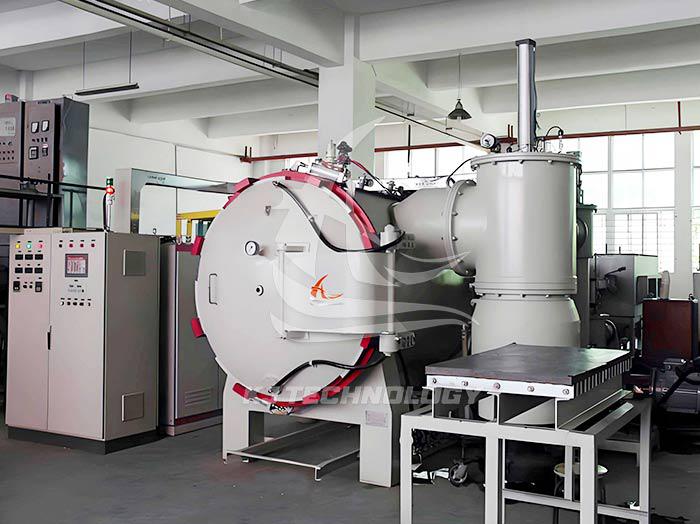
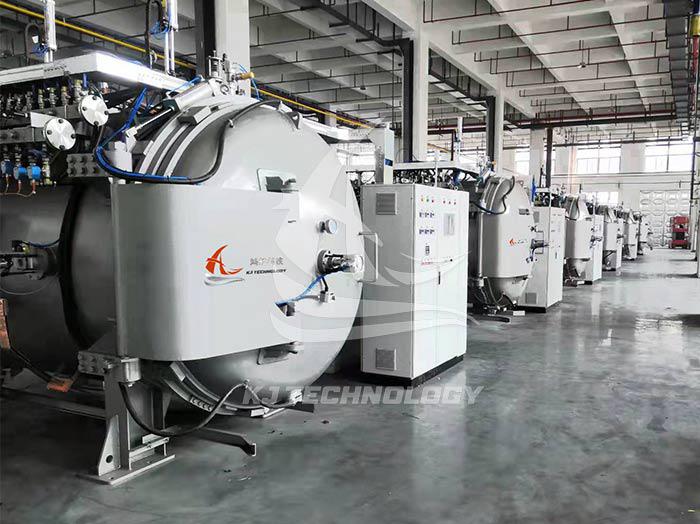
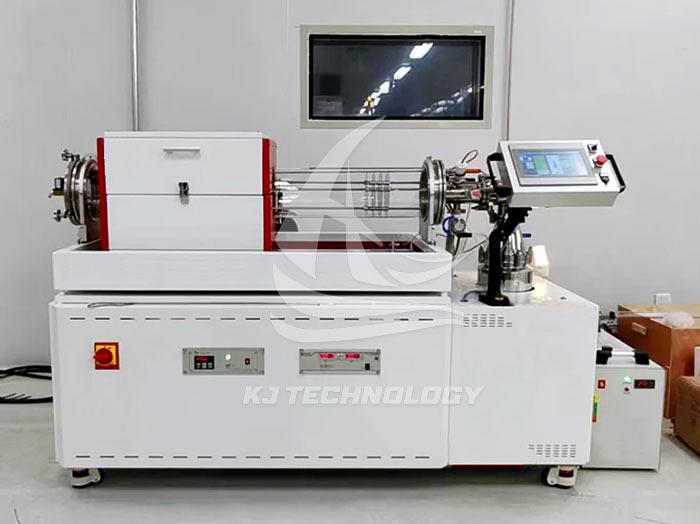
Customized high vacuum brazing electric furnace
 10-13-2025 Author: KJ technology
If you need to customize a high vacuum brazing electric furnace, you need to consider the vacuum system, heating and temperature control, furnace structure, automation control, and safety design comprehensively, and choose a supplier with strong technical strength and complete after-sales service based on application scenarios and budget. The following is a detailed introduction to customized high vacuum brazing electric furnaces:
1. Core components and performance indicators
vacuum system
Main pump configuration: The diffusion pump has a high pumping speed and simple maintenance, but there is a risk of oil vapor pollution; Molecular pumps are clean and oil-free, capable of achieving higher vacuum levels, and are the mainstream choice for modern high-performance equipment.
Vacuum degree requirement: The cold state ultimate vacuum degree should reach 5.0 × 10 ⁻ ³ Pa or above to ensure the purity of the welding environment and avoid oxidation reactions.
Vacuum measurement: equipped with resistance gauge (low vacuum) and ionization gauge (high vacuum), real-time monitoring and display of the vacuum degree inside the furnace.
Heating and temperature control system
Heating element: Using molybdenum screen or graphite heater, it is resistant to high temperature and corrosion, ensuring uniform heating.
Temperature control: A high-precision temperature control system (such as a programmable temperature controller) is required to achieve wide temperature range control (100 ℃ to 2300 ℃) and meet the requirements of different material brazing processes.
Temperature uniformity: Through multi-point temperature measurement evaluation, ensure the consistency of welding quality.
Furnace structure
Effective workspace: Customized according to the maximum size and shape of the workpiece, leaving enough operating space and ensuring that the furnace's load-bearing capacity is greater than the total weight of the workpiece, fixture, and tray.
Material and insulation performance: High performance insulation materials are selected to reduce heat loss and energy consumption.
2. Automation and Security Design
Automated control system
Integrate PLC (Programmable Logic Controller) and touch screen (Human Machine Interface HMI) to achieve automatic temperature control, automatic inflation and deflation functions, and improve operational efficiency.
Support multiple programmable temperature curve settings to meet complex process requirements.
Safety protection measures
Interlocking protection: functions such as over temperature power-off, over pressure alarm, water cut-off delay shutdown, etc., ensure operational safety.
Emergency shutdown device: Quickly shut down in case of abnormal conditions to prevent the accident from escalating.
Cooling system: The independent circulating cooling system provides heat dissipation guarantee for components such as furnace shell, electrodes, vacuum pump, etc., to prevent equipment overheating.
3. Application Fields and Customization Requirements
aerospace
Welding high-precision and highly active materials (such as titanium alloys and heat-resistant alloys) to ensure the integrity and connection quality of aircraft components.
Customization requirements: high vacuum degree, wide temperature range control, modular design.
electronics industry
Welding small electronic components to avoid oxidation and contamination, improve welding stability and reliability.
Customization requirements: anaerobic environment, micro welding capability, high-precision temperature control.
new energy industry
Connect the battery electrodes and wires to ensure high efficiency and stability of the battery.
Customization requirements: efficient connection technology, corrosion-resistant materials, and large-scale production capacity.
4. Customization process and selection suggestions
Requirements Analysis
Clearly define the dimensions, shape, weight, and load-bearing requirements of the workpiece.
Determine the melting point, process temperature, and vacuum requirements of brazing materials.
Evaluate the degree of automation, safety performance, and budget scope.
supplier selection
Technical strength: Choose suppliers with integrated capabilities in vacuum technology, heating technology, and temperature measurement and control technology.
After sales service: Priority should be given to suppliers who provide installation, debugging, technical training, and long-term maintenance services.
Cost effectiveness: comprehensively compare equipment performance, price, and operating costs to avoid blindly pursuing high or low prices.
Non standard customization options
Furnace type selection: Choose vertical, horizontal, top opening or bottom opening structures according to process requirements.
Function extension: Supports customized functions such as multi-channel protective gas inlet and forced cooling (gas quenching).
Case reference: Understand the usage of suppliers among other users, including welding quality, equipment stability, and after-sales service.