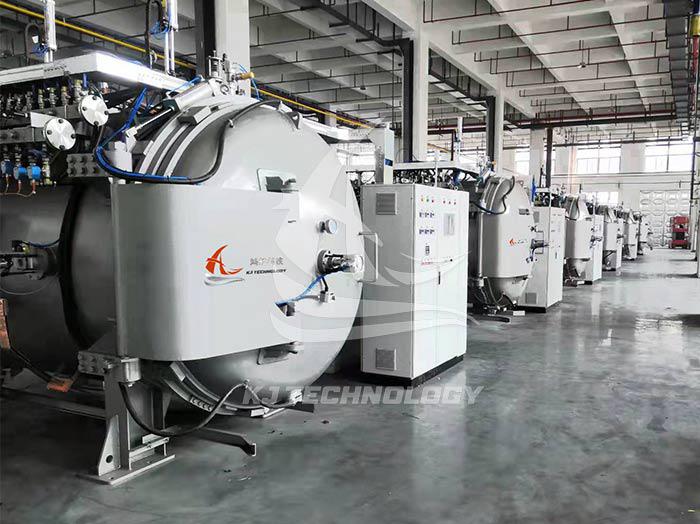
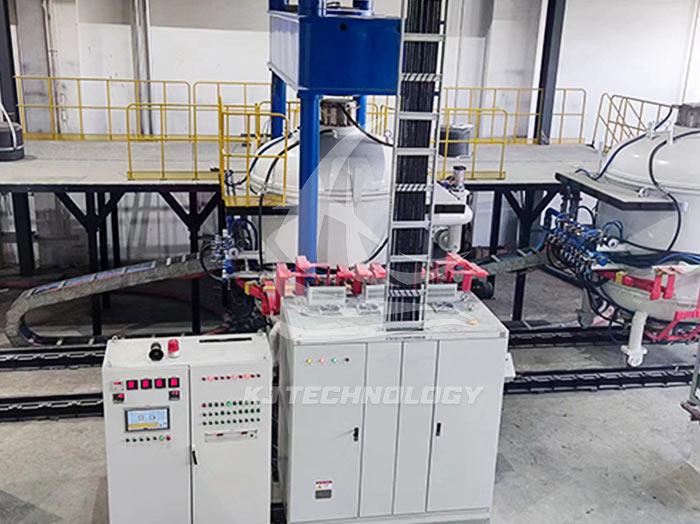
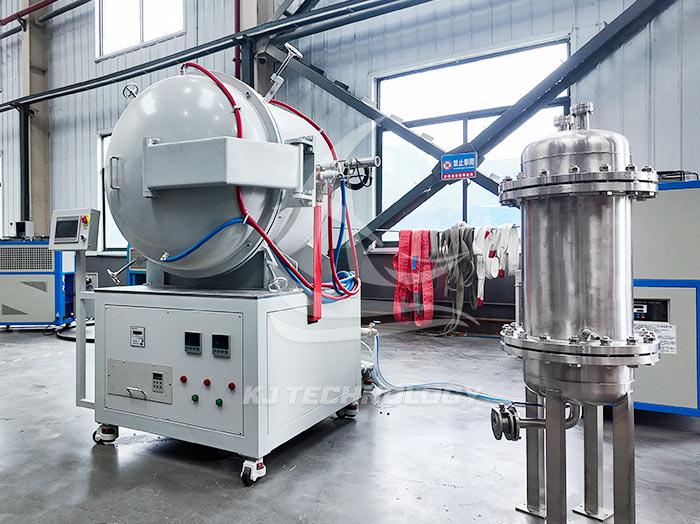
What Factors to Consider When Sourcing Industrial Vacuum Gas Quenching Furnace?
 10-13-2026 Author: KJ technology
Industrial vacuum gas quenching furnaces are widely used for hardening, annealing and tempering of mold steel, high‑speed steel, alloy steel and aerospace precision components. Compared with traditional oil quenching equipment, vacuum gas quenching delivers low‑distortion parts, clean surface quality and environmentally‑friendly operation, which makes it the preferred solution for modern heat‑treatment workshops.
However, many buyers face confusion when sourcing vacuum gas quenching furnaces. Different process requirements, workpiece materials and production capacity will completely change your equipment configuration. Choosing inappropriate specifications will lead to unstable hardness, large part deformation, frequent equipment failure and higher long‑term operating costs. Below we break down the most critical factors you need to evaluate before purchasing an industrial vacuum gas quenching furnace.
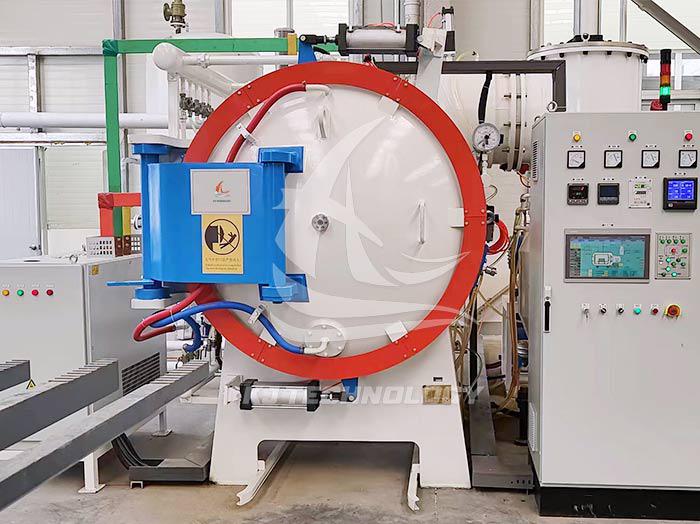
A commonly used vacuum gas quenching furnace (click on the image to view product details)
1. Temperature Performance: Max Temperature and Temperature Uniformity
Temperature is the most fundamental index for vacuum gas quenching furnaces. You should distinguish between maximum peak temperature and long‑term continuous working temperature. Many suppliers mark a high peak temperature, but the actual long‑time running temperature should be 50‑100℃ lower than the peak value for stable service life.
Temperature uniformity directly determines consistent metallurgical results across the whole batch. For industrial production, temperature uniformity within ±5℃ inside the effective hot zone is a standard benchmark, especially for aerospace and tool steel production that follows AMS 2750 standards. Poor temperature uniformity causes inconsistent hardness among workpieces and high reject rates.
Heating element and insulation material also deserve attention. Graphite insulation is popular for high‑pressure gas quenching applications for its shock resistance under rapid gas cooling cycles.
2. Vacuum System Performance
The vacuum system prevents workpiece oxidation and decarburization during heating. Two core indicators should be checked: ultimate vacuum degree and pressure rise rate (leak rate).
For most mold steel quenching, high vacuum of 1×10⁻³ Pa or better is recommended. Pressure rise rate reflects the sealing quality of furnace chamber. A high leak rate will pollute workpieces, generate surface discoloration and shorten pump service life.
Select pumping groups according to your materials. Ordinary tool steel can adopt standard rotary vane and diffusion pump configuration; titanium alloy and high‑purity material processing require enhanced vacuum pumping capacity.
3. Gas Quenching System: Pressure, Cooling Rate and Quench Gas
The gas quenching unit is the core difference among different vacuum furnaces. Quench pressure ranges from 2 bar, 6 bar, 10 bar up to 20 bar ultra‑high pressure for special heavy‑section workpieces.
- 2‑6 bar: Suitable for small thin mold parts, low‑alloy steel
- 6‑10 bar: Widely used for die steel, high‑speed steel general‑duty quenching
- 10 bar and above: For heavy‑section components, titanium alloy requiring fast cooling and minimal distortion
Nitrogen is the most cost‑effective quenching gas. Helium provides much higher cooling efficiency but brings higher running cost. Some projects use nitrogen‑helium mixed gas to balance cooling performance and gas consumption. Besides pressure, pay attention to blower power and heat‑exchanger design. Even with high nominal pressure, insufficient blower and heat exchanger will fail to reach actual required cooling speed.
4. Working Chamber Size, Load Capacity and Furnace Type
Define your real effective hot zone dimension instead of outer vessel size. Many purchasers only compare outer chamber size and ignore usable heating space, resulting in workpieces cannot be fully loaded within uniform temperature zone.
Confirm maximum loading weight per batch, workpiece maximum section size and daily production throughput. Furnace types mainly include single‑chamber and double‑chamber structure. Single‑chamber furnaces feature lower investment for medium‑low volume production. Double‑chamber furnaces separate heating chamber and quenching chamber, shortening cycle time and improving mass‑production efficiency for large‑batch heat‑treatment workshops.
5. Control System, Data Logging and Remote Function
Modern industrial vacuum gas quenching furnaces adopt PLC‑based automatic control systems. For traceable industrial heat‑treatment, the system must support full‑process data recording: temperature curve, vacuum value, quenching pressure, running time and alarm logs.
If you serve aerospace or automotive clients, data traceability is mandatory for audit documents. Optional remote diagnosis function helps engineers quickly locate faults and reduce on‑site maintenance downtime. Confirm whether the system supports custom process recipe storage for repeated production jobs.
6. Utility Conditions and Safety Design
Before placing orders, evaluate your workshop supporting utilities: circulating cooling water flow and pressure, compressed air, power capacity and gas supply pipeline. High‑pressure gas quenching furnaces consume large cooling water during quenching stage; insufficient water supply will limit actual quenching performance.
Safety features cannot be ignored: over‑temperature protection, over‑pressure relief device, interlock protection for door opening, fault alarm and emergency stop function. For export projects, confirm CE, ISO or other local compliance requirements.
7. Customization Capability, After‑sales Service and Total Cost
Not all production processes can be satisfied by standard off‑the‑shelf furnaces. Many mold, new‑material and aerospace projects need non‑standard customization: special hot‑zone layout, multi‑gas mixing function, modified load structure, etc. Choose manufacturers with proven customization experience.
Don’t only focus on initial purchase price. Calculate total cost of ownership including spare‑part price, power consumption, gas consumption and after‑sales response speed. Long delivery distance means fast on‑site service is critical to avoid long‑time production shutdown. Ask vendors about spare‑parts supply cycle and local technical support resources.
Final Checklist Before RFQ
Before sending inquiry to furnace suppliers, sort out your key process information:
1. Workpiece material, maximum section dimension and single‑batch load weight
2. Target metallurgical requirement: hardness, allowable deformation, surface quality
3. Required maximum temperature and vacuum level
4. Expected quenching pressure and available quenching gas
5. Daily production capacity and cycle‑time requirement
6. Workshop utility condition and certification standard requirements
Conclusion
Sourcing an industrial vacuum gas quenching furnace is not simply comparing nominal parameters on brochures. You need to match temperature, vacuum performance, gas quenching capability and chamber configuration with your real‑world workpiece and production workflow. A well‑selected vacuum gas quenching furnace will bring stable product quality, lower reject rate and higher production efficiency for your heat‑treatment plant.
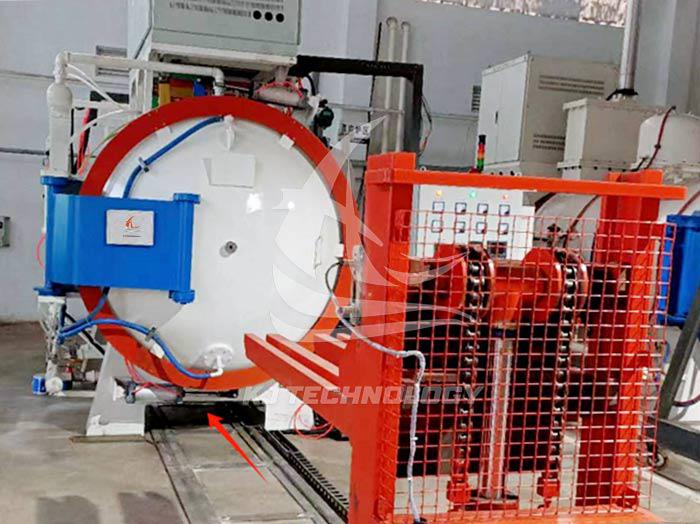
Industrial vacuum gas quenching furnace (click on the picture to view product details)
If you are looking for custom vacuum gas quenching furnace solutions, contact our technical team for detailed quotation and process consultation.