How to Choose a High-Temperature Atmosphere Brazing Furnace? 2026 Selection Guide | 7 Indispensable Parameters
 06-08-2026 Author: KJ technology
In 2026, the global high-temperature atmosphere brazing furnace market is evolving rapidly, driven by aerospace, new energy vehicles, electronics, and refrigeration industries. A reliable furnace directly determines joint quality, production efficiency, and long-term cost savings.
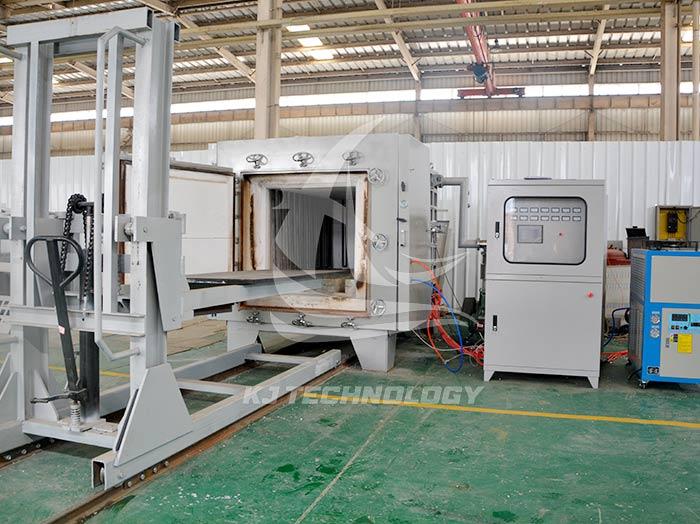
Customized industrial atmosphere brazing furnace (click on the image to view product details)
Many buyers focus only on price or maximum temperature, ignoring core parameters that lead to oxidation, porosity, weak joints, or frequent downtime. This guide breaks down the 7 non-negotiable parameters to help you select the ideal furnace without pitfalls.
1. Temperature Range & Uniformity (Most Critical for Quality)
Temperature performance defines the upper limit of your brazing process and consistency across workpieces.
Maximum Working Temperature:
Aluminum/Copper brazing: ≥700℃
Stainless steel/Alloy brazing: ≥1000℃
Aerospace/High-precision: ≥1250℃ (SiC/MoSi₂ heating elements)
Temperature Uniformity (Key Metric):
Standard: ±3℃ (industrial)
Precision: ±1℃ (aerospace/medical)
Poor uniformity causes uneven filler melting, weak joints, or workpiece warpage.
Heating Rate: 1–5℃/min (adjustable) to avoid thermal stress cracking.
Why it matters: Even a ±5℃ deviation can reduce joint strength by 20%+ and increase defect rates.
2. Atmosphere System Purity & Stability (Anti-Oxidation Core)
Atmosphere control prevents oxidation, ensures bright solder joints, and eliminates porosity.
Atmosphere Type Compatibility:
Inert: N₂ (99.999% purity, dew point ≤-40℃), Ar
Reducing: Dissociated ammonia (75%H₂+25%N₂), H₂ (explosion-proof required)
Oxygen Content:
General: ≤100ppm
Precision: ≤10ppm (critical for stainless steel/H₂ brazing)
Dew Point: ≤-40℃ (standard), ≤-60℃ (high-precision) to avoid moisture-induced porosity
Pressure Control: Maintain +5~+20Pa positive pressure to prevent air ingress.
Must-have components: Stainless steel gas lines, solenoid valves, MFC (mass flow controllers), oxygen/dew point analyzers.
3. Furnace Type & Production Capacity (Match Your Output)
Choose batch or continuous based on production volume and workpiece size.
| Furnace Type | Best For | Capacity | Key Features |
| Batch | R&D, small-batch, high-precision | 50–500kg/cycle | Flexible, low cost, easy maintenance |
| Continuous | Mass production (auto parts, heat exchangers) | 500–5000kg/day | 24/7 operation, high efficiency, consistent quality |
4. Heating Elements & Hot Zone Material (Durability & Efficiency)
Heating components determine lifespan, energy consumption, and high-temperature stability.
Common Heating Elements:
SiC rods: ≤1400℃, low cost, long life (general use)
MoSi₂ rods: ≤1700℃, high stability (high-temperature brazing)
Graphite: ≤1600℃, fast heating, uniform radiation (premium models)
Hot Zone Material:
Alumina fiber: Low heat capacity, energy-saving (standard)
310S stainless steel: Corrosion-resistant, for H₂/ammonia atmospheres
Molybdenum: Ultra-clean, for aerospace/reactive metals
Key check: Heating elements must be replaceable without full furnace disassembly.
5. Vacuum & Sealing Performance (For High-Precision Brazing)
Vacuum-assisted atmosphere furnaces deliver cleaner joints and lower defect rates.
Limit Vacuum Degree: ≤1×10⁻²Pa (industrial), ≤5×10⁻⁴Pa (aerospace)
Pressure Rise Rate (Leak Tightness): ≤2Pa/h (critical to prevent air ingress)
Sealing Design: Welded chamber (not folded), high-temperature door seals, stainless steel flanges.
Why it matters: A tiny leak (0.5Pa/h) can raise oxygen levels to 200ppm, causing oxidation and joint failure.
6. Control System Precision & Automation (Consistency & Traceability)
A smart control system ensures repeatable processes and real-time monitoring.
Controller: PID intelligent control with ≥50-segment programmable curves
Multi-Zone Control: 3–8 independent heating zones for ±1℃ uniformity
Monitoring: Real-time display of temperature, O₂, dew point, pressure, gas flow
Data Logging: Save 1000+ process records for quality traceability (ISO 9001 required)
Safety Interlocks: Over-temperature, low vacuum, gas leak, power failure protection.
Must-have: Touchscreen interface, remote monitoring, and recipe storage for quick changeovers.
7. Safety & Compliance (Non-Negotiable for H₂/High-Temp Use)
High-temperature atmosphere furnaces (especially H₂-type) require strict safety design.
Explosion-Proof Design: For H₂/ammonia use: automatic nitrogen purge, explosion relief doors, flame arrestors
Emergency Shutdown: Cut off gas/heating within 0.1s during faults
Compliance: Meet JB/T 12553-2015 (China), ISO 9001 (quality), and local safety standards
Energy Efficiency: Low heat loss design, energy consumption ≤0.4kWh/kg (2026 standard).
Final 2026 Selection Checklist
✅ Temp uniformity ≤±3℃ (±1℃ for precision)
✅ O₂ ≤10ppm, dew point ≤-40℃
✅ Furnace type matches production volume
✅ Heating elements fit max temperature needs
✅ Leak tightness ≤2Pa/h
✅ Multi-zone PID control with data logging
✅ Explosion-proof design (H₂ use) + safety compliance
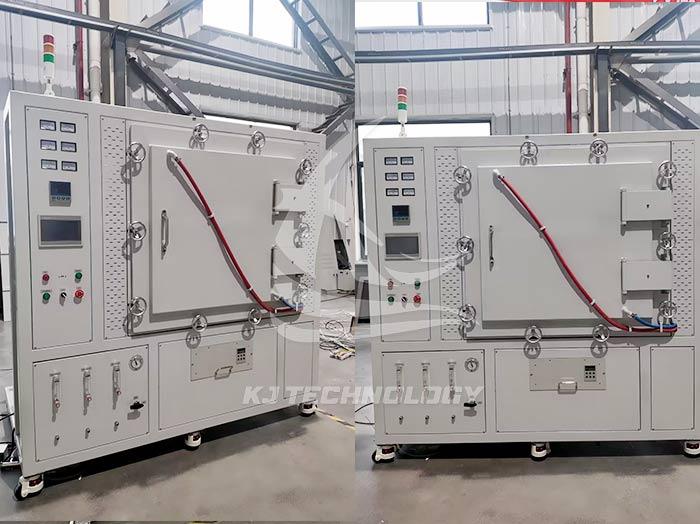
Customized graphite atmosphere brazing furnace (click on the image to view product details)
Conclusion
Choosing a high-temperature atmosphere brazing furnace in 2026 is not about picking the cheapest model—it’s about balancing 7 core parameters to match your process, quality standards, and production goals.
Prioritize temperature uniformity, atmosphere purity, and safety over price. A well-selected furnace will deliver 30% lower defect rates, 20% energy savings, and 5+ years of stable operation.