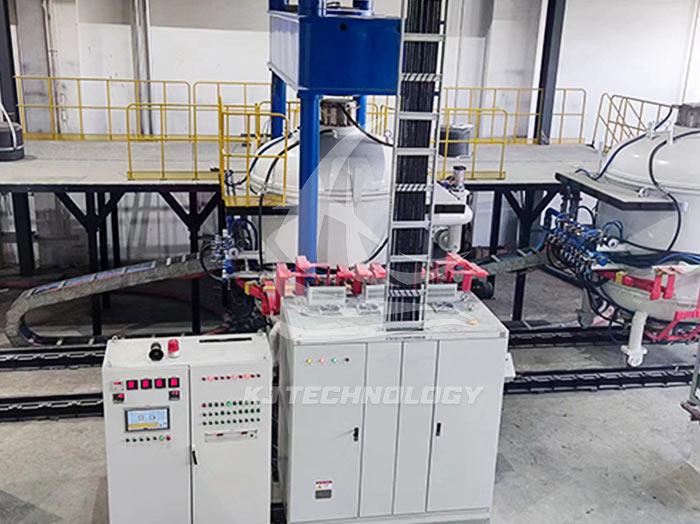
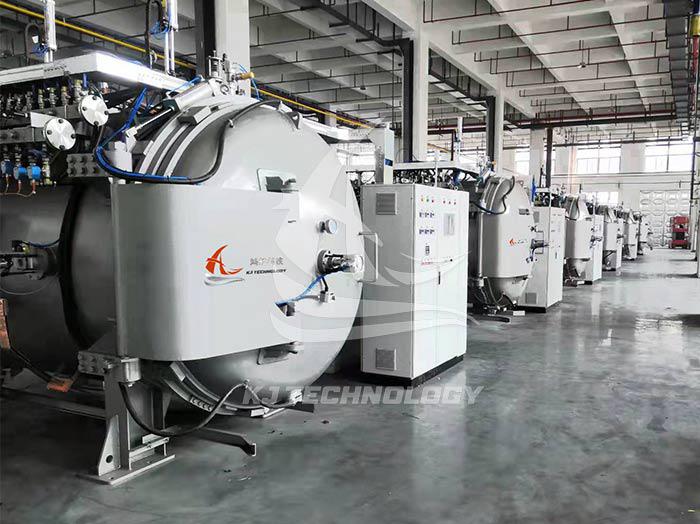
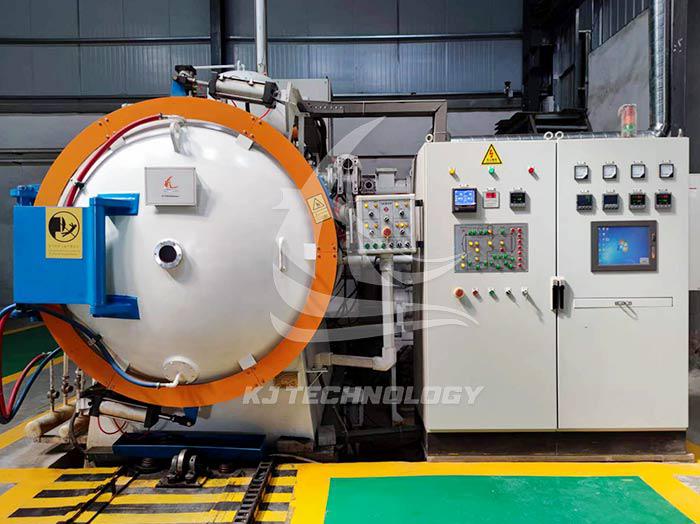
1800℃ oxide ceramic sintering vacuum furnace
 02-28-2026 Author: KJ technology
The 1800 ℃ oxide ceramic sintering vacuum furnace is a device designed specifically for sintering high-temperature, high-purity oxide ceramic materials. Its core advantage lies in precise temperature and atmosphere control in a vacuum environment, which can significantly improve the density, purity, and performance of ceramic materials. The following is a detailed analysis of its key features and application scenarios:
1. Core functions and technological advantages
High temperature vacuum environment
Temperature range: up to 1800 ℃, meeting the sintering requirements of oxide ceramics such as alumina, zirconia, yttria, etc. The sintering temperature is usually 0.5-0.8 times the melting point of the material (e.g. alumina melting point is about 2072 ℃, sintering temperature is about 1600-1800 ℃).
Vacuum degree: can be pumped to ≤ 1 × 10 ⁻ ³ Pa, effectively eliminating gases (such as oxygen, water vapor, nitrogen, etc.) inside the furnace, avoiding oxidation or formation of pores in ceramic materials at high temperatures, and improving density.
Precise temperature control system
Temperature control accuracy: ± 1 ℃, supports multi-stage programmed heating (such as adjustable heating rate of 5-20 ℃/min), meets the requirements of complex sintering processes.
Heating element: using silicon molybdenum rod or graphite heating element, high temperature resistance, oxidation resistance, and long service life.
Insulation structure: Multi layer composite insulation materials (such as alumina fiber, graphite felt) reduce heat loss and improve energy efficiency.
Flexibility in atmosphere control
Vacuum mode: suitable for easily oxidizable ceramics (such as metal ceramics, high-temperature alloy ceramics) or sintering that requires no impurity contamination.
Inert atmosphere mode: Nitrogen, argon, etc. can be introduced to prevent oxidation of non oxide ceramics (such as silicon nitride, silicon carbide).
Reduction atmosphere mode: Introduce hydrogen or carbon monoxide to achieve reduction sintering of metal oxide ceramics (such as tungsten carbide ceramics).
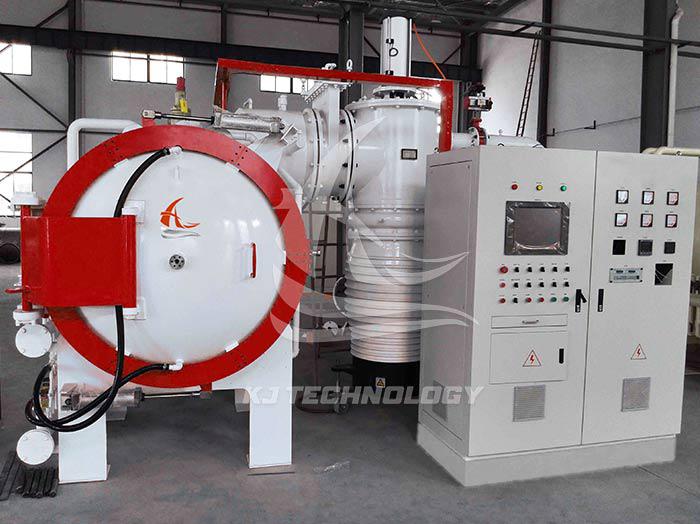
Commonly used oxide sintering vacuum furnace (click on the image to view product details)
2. Application scenarios and material adaptation
In the field of electronic ceramics
Aluminum oxide substrate: used for chip packaging and circuit boards, requiring high density and insulation performance. Vacuum sintering at 1800 ℃ can improve its dielectric constant and thermal stability.
Piezoelectric ceramics: such as barium titanate and lead zirconate titanate ceramics, vacuum sintered to ensure their piezoelectric effect, used in sensors and ultrasonic transducers.
Magnetic ceramics: such as ferrite, sintered in an oxidizing atmosphere, used for electronic components such as transformers and inductors.
Special ceramics field
Structural ceramics: such as silicon nitride and silicon carbide ceramics, sintered in vacuum or inert atmosphere, with high strength and high temperature resistance, used for engine blades and cutting tools.
Bioceramics, such as hydroxyapatite and alumina ceramics, maintain biocompatibility through low-temperature vacuum sintering (800-1200 ℃) and are used for artificial joints and dental implants.
Aerospace ceramics: such as zirconia toughened alumina ceramics and boron carbide ceramics, sintered under ultra-high temperature vacuum, resistant to high temperature and corrosion, used for spacecraft heat shields and rocket nozzles.
Other specialized fields
Ceramic pigments and glazes: achieved color development and stability of pigments through vacuum sintering, used for ceramic decoration.
Ceramic membrane materials: Control sintering temperature and atmosphere to form porous structures for water treatment and gas separation.
Nuclear industry ceramics, such as uranium oxide ceramics, are sintered in a vacuum high-temperature furnace to ensure the stability and safety of nuclear fuel.
3. Selection suggestions
Temperature requirement: If materials with melting points higher than 1800 ℃ (such as tungsten and molybdenum) need to be processed, an ultra-high temperature vacuum furnace (up to 2200 ℃) should be selected.
Atmosphere control: Choose vacuum, inert, or reducing atmosphere modes based on material properties, for example, non oxide ceramics require inert atmosphere protection.
Furnace size: Select the appropriate working chamber volume based on the sample size to avoid space waste or loading difficulties.
Temperature control accuracy: For processes that require high temperature uniformity (such as film growth), equipment with a temperature control accuracy of ± 1 ℃ should be selected.
Brand and after-sales: Priority should be given to manufacturers that provide one-year warranty and 7 × 24-hour technical support to reduce maintenance costs in the later stage.