How to choose a vacuum furnace for silicon nitride sintering?
 12-26-2025 Author: KJ technology
Silicon nitride (Si ∝ N ₄) belongs to covalent bonding compounds and is difficult to sinter. It usually requires a vacuum or inert atmosphere environment, high temperature and high pressure (or atmospheric pressure auxiliary sintering aid) conditions. The selection of the corresponding vacuum furnace should focus on core elements such as sintering process requirements, temperature field uniformity, atmosphere control accuracy, and pressure regulation ability. The specific selection points are as follows:
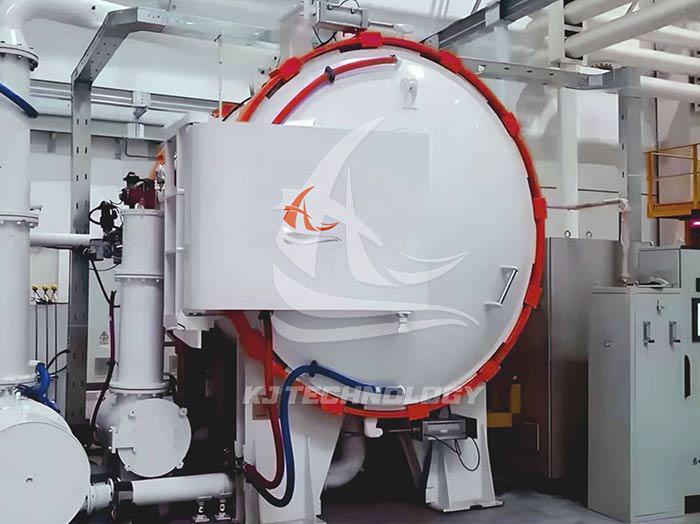
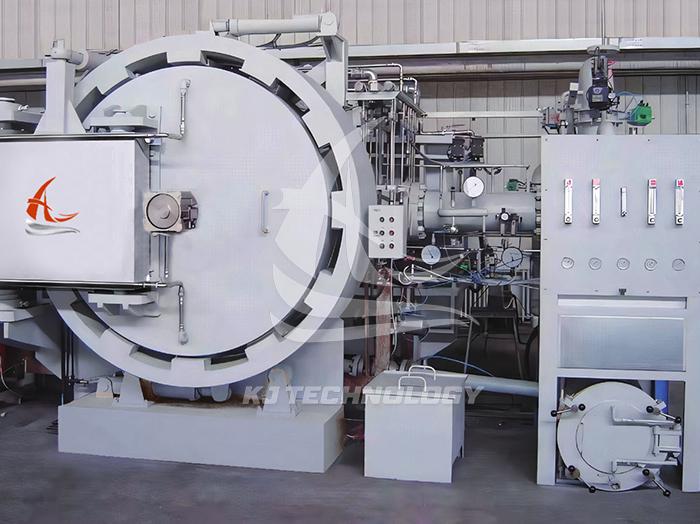
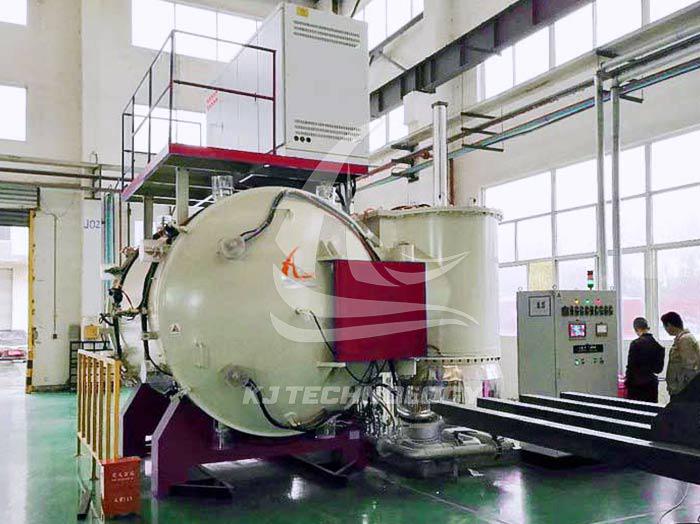
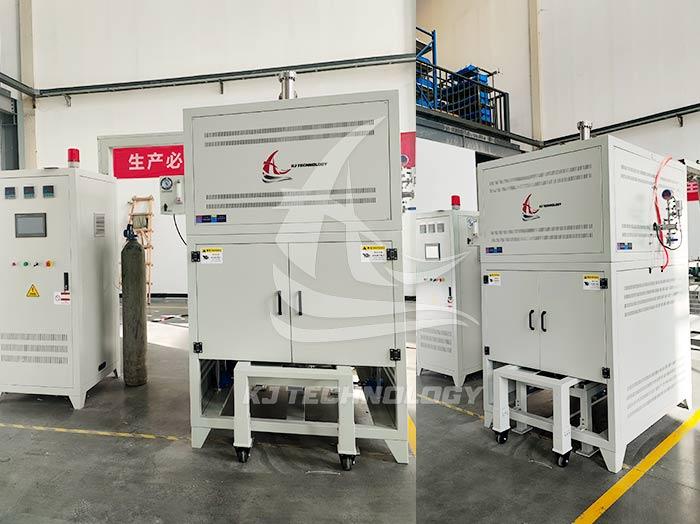
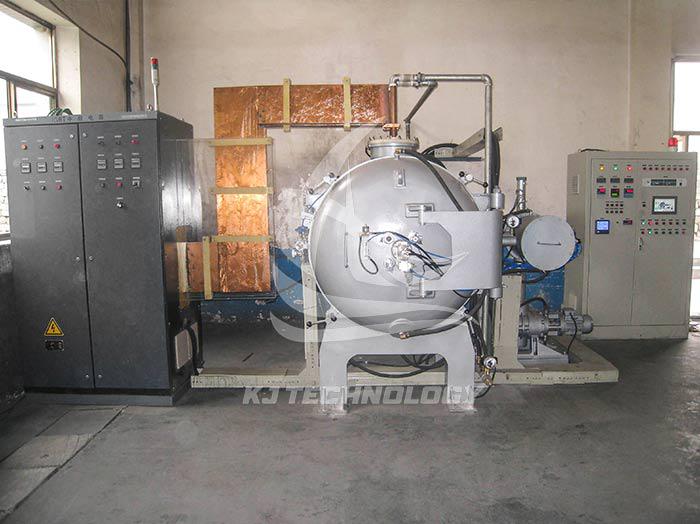
Commonly used silicon nitride vacuum sintering furnace (click on the image to view product details)
1. Clarify furnace type: prioritize matching silicon nitride sintering process
The common sintering methods for silicon nitride include atmospheric pressure sintering (PLS), hot pressing sintering (HPS), gas pressure sintering (GPS), and reaction sintering. Different processes correspond to different types of vacuum furnaces
Atmospheric pressure sintering/reaction sintering: Choose a vacuum box atmosphere furnace or a vacuum tube atmosphere furnace, which requires high vacuum pumping and inert gas (mainly nitrogen) filling and replacement inside the furnace, and a stable temperature of 1600-1800 ℃.
Hot pressing sintering: A vacuum hot pressing furnace must be selected, which integrates a vacuum system and an axial compression system. It can apply unidirectional pressure (usually 10-50MPa) to the sample at high temperatures, significantly reducing sintering temperature and improving density. It is the core equipment for preparing high-performance silicon nitride ceramics.
Pressure sintering: Choose a high-pressure gas sintering furnace (GPS furnace), which can be filled with high-pressure nitrogen gas (pressure can reach 1-10MPa) to suppress the high-temperature decomposition of silicon nitride and promote grain densification. It is suitable for preparing large-sized and complex shaped silicon nitride components.
2. Temperature parameters: meet the requirements of sintering temperature and temperature control accuracy
Maximum temperature: The sintering temperature of silicon nitride is generally between 1600-1900 ℃, and a vacuum furnace with a rated maximum temperature of ≥ 1900 ℃ should be selected to reserve temperature margin to avoid long-term full load operation of heating elements.
Heating element: Priority should be given to graphite heating elements (high temperature resistance and good thermal conductivity under vacuum/inert atmosphere). Note that graphite heating elements will evaporate at high temperatures and need to be equipped with graphite insulation screens. The oxygen content in the furnace atmosphere should be strictly controlled to prevent graphite oxidation; If ultra-high purity sintering is required, tungsten or molybdenum heating elements (with higher vacuum requirements) can be chosen.
Temperature control accuracy: The temperature control accuracy is required to be ≤ ± 1 ℃, and it should have the function of programmed heating/cooling. Silicon nitride sintering is sensitive to the heating rate (slow heating and gel removal in the low-temperature section, and solid phase reaction promoted by insulation in the high-temperature section), and precise temperature control can avoid abnormal grain growth.
3. Vacuum and atmosphere control: core guarantee for sintering quality
Silicon nitride is prone to react with oxygen at high temperatures to form SiO ₂, and decomposition occurs above 1800 ℃. Therefore, vacuum and atmosphere control are key factors in selection:
Vacuum degree index:
Pre vacuum stage: It is necessary to achieve a high vacuum of ≤ 1 × 10 ⁻ ² Pa, which can quickly evacuate the air (especially oxygen) inside the furnace to avoid sample oxidation.
Sintering insulation stage: If it is vacuum sintering, it is necessary to maintain stable vacuum degree; If it is atmosphere sintering, high-purity nitrogen gas needs to be filled after vacuuming, and the furnace body has excellent sealing performance to prevent gas leakage.
Atmosphere circulation and replacement: A gas guide device should be installed inside the furnace to ensure uniform distribution of nitrogen. For box type furnaces, it is recommended to choose models with gas convection fans to improve the uniformity of the atmosphere inside the furnace and avoid sample decomposition caused by local nitrogen partial pressure differences.
4. Uniformity of temperature field: determines the consistency of performance of silicon nitride components
Silicon nitride ceramics have extremely high requirements for temperature field uniformity, and excessive temperature field deviation can lead to uneven local grain growth and significant density differences in the sample
Require temperature field uniformity within the effective heating zone to be ≤ ± 5 ℃ (for small-sized samples) or ≤ ± 3 ℃ (for large-sized/complex samples).
When selecting, priority should be given to vacuum furnaces with multi zone temperature control design (such as three zone temperature control). By adjusting the heating power in sections, the heat loss at the edge of the furnace can be offset, and the uniformity of the temperature field can be improved.
If it is a box furnace, the furnace size should match the sample, and the sample volume should not exceed 60% of the effective volume of the furnace to avoid sample accumulation affecting heat transfer.
5. Pressure regulation capability: for hot pressing/pressure sintering processes
Vacuum hot press furnace: Pay attention to the parameters of the pressurization system - the maximum pressure should be ≥ 50MPa, the pressure control accuracy should be ≤± 0.5MPa, and the pressurization rate can be adjusted (matching the sintering temperature rise curve); The mold should be made of graphite material (high temperature resistance, non adhesive with silicon nitride).
Pressure sintering furnace: Pay attention to the upper limit of gas pressure (recommended ≥ 5MPa), the rate of pressure increase (programmable control), and the pressure resistance performance of the furnace body (in compliance with pressure vessel safety standards).
6. Other key auxiliary configurations
Insulation structure: Choose graphite felt/carbon felt insulation layer, which has good insulation effect and high temperature resistance, avoiding excessive temperature on the outer wall of the furnace body; Note that the insulation material should be free of impurities to prevent contamination of the sample.
Cooling system: equipped with a water cooling system, used to cool the furnace shell, electrodes, sealing flanges and other components, ensuring long-term stable operation of the equipment and avoiding high temperature damage to the seals.
Control system: Choose a model with PLC fully automatic control and touch screen operation, which can store sintering process curves, support data recording and traceability, and also have safety alarm functions such as over temperature, over pressure, and water cut-off.
Small selection suggestions
If preparing small batches of laboratory samples, priority should be given to using a small vacuum box atmosphere furnace (atmospheric pressure sintering) or a small vacuum hot pressing furnace; If mass producing large-sized components, choose a high-pressure gas sintering furnace.
When selecting, the manufacturer is required to provide a temperature field test report and a vacuum maintenance test report for the same model of furnace. If necessary, samples can be sent for trial sintering verification.