How to choose a silicon carbide reaction sintering electric furnace?
 12-18-2025 Author: KJ technology
When selecting a silicon carbide reaction sintering electric furnace, the following aspects can be focused on and comprehensively evaluated based on specific needs:
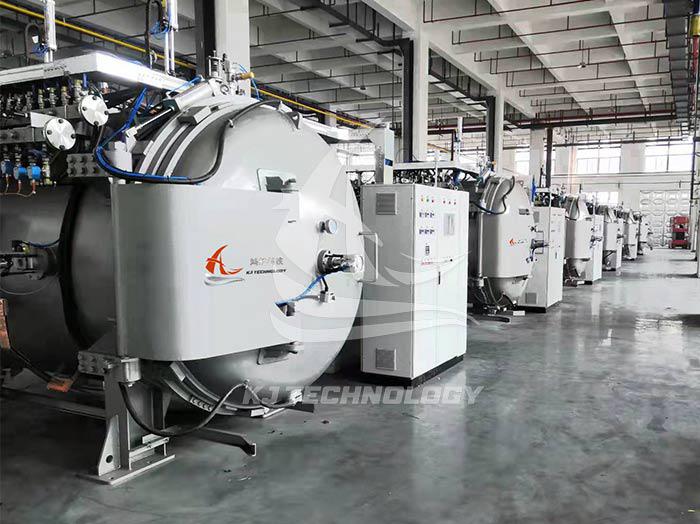
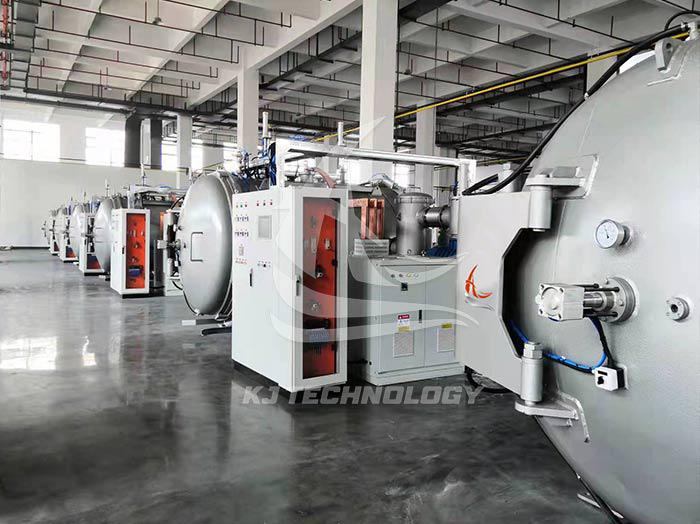
Silicon carbide reaction sintering furnace (click on the image to view product details)
1. Core performance parameters
Temperature range and stability
Maximum temperature: It needs to cover the typical temperature range of silicon carbide sintering (1500 ℃ -2000 ℃), for example, some equipment can reach 2200 ℃, meeting the requirements of high-temperature processes.
Temperature control accuracy: Priority should be given to high-precision equipment within ± 1 ℃ to ensure minimal temperature fluctuations during the sintering process and avoid differences in material properties. For example, equipment controlled by PID temperature control instruments can achieve an accuracy of ± 1 ℃ during the insulation stage.
Temperature uniformity: Temperature field uniformity (such as ± 5 ℃ or ± 10 ℃) directly affects product consistency. Large furnaces (such as those with a uniform temperature zone size of 600 × 600 × 2500mm) can reduce local temperature differences by optimizing the heating chamber structure.
Heating method and efficiency
Resistance heating: Graphite heating elements (such as high-purity graphite rods) have a long lifespan, are not easily volatile, and are suitable for long-term high-temperature operation.
Power matching: Select the heating power based on the furnace size to ensure rapid heating to the target temperature and shorten the production cycle.
Atmosphere control ability
Vacuum degree: High vacuum environment (ultimate vacuum degree ≤ 1Pa) can avoid material oxidation and is suitable for impurity free sintering. Some equipment is equipped with molecular pumps, and the vacuum degree can reach 10 ⁻⁴ Pa.
Atmosphere type: Supports the introduction of inert gases (such as nitrogen and argon) or reducing gases (such as hydrogen) to meet different process requirements. For example, reaction sintering requires the introduction of gases required for silicon infiltration.
Gas circulation system: A closed-loop gas recovery device can reduce the consumption of high-purity gas with a lower cost proportion.
2. Equipment structure and materials
Furnace size and capacity
Select the effective volume of the furnace according to the sample size and production batch (such as 0.01-1m ³) to ensure a reasonable loading capacity. For example, large equipment (such as 700 × 700 × 6800mm) can accommodate 3000kg of material and is suitable for mass production.
The furnace structure needs to be optimized, such as multi-layer composite insulation layer (carbon felt+graphite plate), which can improve thermal efficiency and reduce energy consumption.
Material durability
Furnace material: Made of 304 stainless steel according to pressure vessel standards, it has strong corrosion resistance and excellent sealing performance.
Insulation material: High purity graphite felt is durable, reduces heat loss, and extends equipment life.
Heating element: The cost of graphite heating element is lower than that of molybdenum wire (MoSi ₂), and the modular design is easy to replace quickly, suitable for small and medium-sized production.
3. Automation and Security Performance
control system
Intelligent monitoring: equipped with touch screen or PLC automatic control module, realizing real-time monitoring and adjustment of parameters such as temperature, vacuum degree, gas flow rate, etc. For example, the one click replacement function can automatically complete the process of vacuuming and filling argon gas in the furnace.
Data recording: Supports process curve storage and traceability, facilitating optimization of production processes.
Remote operation: optional remote monitoring function, reducing manual intervention and improving production efficiency.
safety design
Explosion proof device: The furnace body is equipped with an automatic explosion-proof valve, and the sensor is equipped with a flow switch to monitor the water flow in real time. The power supply is set with overcurrent and overvoltage protection to ensure safe operation.
Sealing performance: Double stage pressure protection and high sealing furnace door design prevent external gas infiltration and ensure stable sintering environment.
4. Brand and after-sales service
Manufacturer strength
Choose a high-tech company with integrated research and development, production, and service capabilities, such as Kejia Furnace, whose products cover more than 30 countries at home and abroad, serving fields such as semiconductors and carbon materials, and have a good customer reputation.
Reference real case: A customized graphitization furnace for a certain car company achieved precise temperature control of 1800 ℃, helping to improve the efficiency of new material research and development.
after-sales support
Confirm whether the manufacturer provides full cycle services such as installation and debugging, technical training, and lifelong maintenance. For example, Kejia Furnace promises to operate its equipment for 12 months with zero malfunctions and is equipped with a 24-hour after-sales response team.
Understand the supply and maintenance costs of spare parts, and prioritize equipment with easy replacement and low maintenance costs for vulnerable parts such as heating elements and sealing rings.
5. Cost effectiveness and cost optimization
Initial investment and long-term operating costs
Compare the prices of different brands of equipment (such as the difference between basic and high-end models), and comprehensively evaluate the cost-effectiveness based on factors such as heating element lifespan, energy consumption, and maintenance frequency. For example, although graphite heating elements have a short lifespan (about 2000 hours), modular design can reduce replacement costs.
Considering the benefits of large-scale production: When the loading capacity of a single furnace is increased from 50kg to 200kg, the unit energy consumption cost can be reduced.
Energy saving and environmentally friendly design
Prioritize equipment equipped with pure water cooling systems and energy recovery devices to reduce long-term operational energy consumption. For example, flue gas waste heat recovery can recover thermal energy, resulting in a lower proportion of energy costs.