Industrial electric heating vacuum heat treatment furnace
 12-16-2025 Author: KJ technology
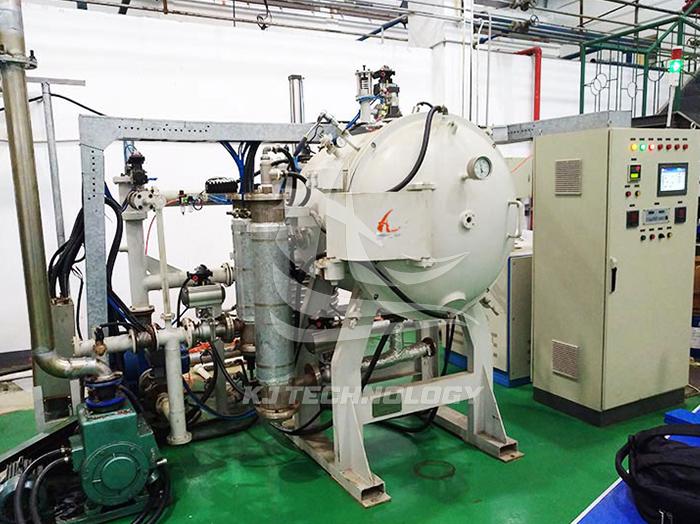
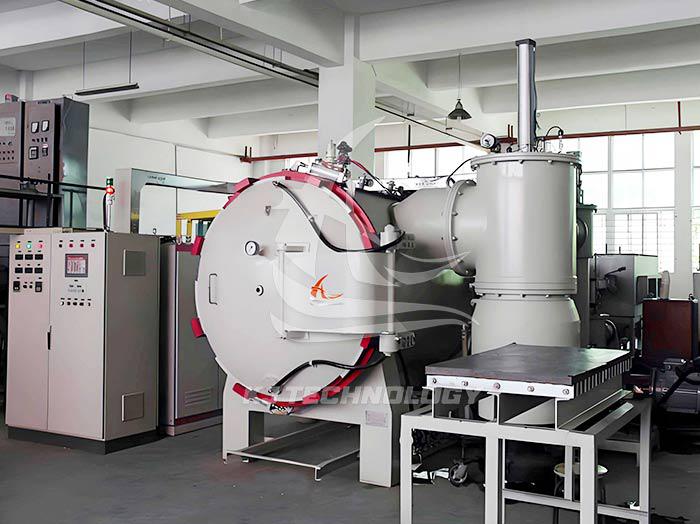
Industrial electric heating vacuum heat treatment furnace is a high-end industrial equipment that combines vacuum technology and electric heating technology. Let's take a detailed look below!
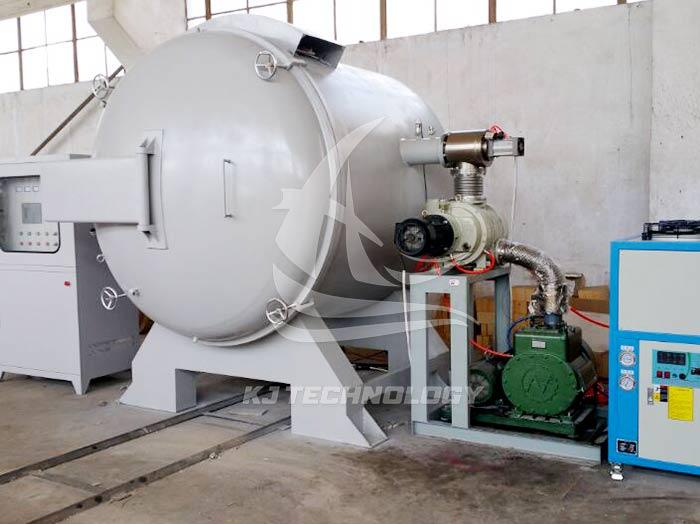
Vacuum atmosphere heat treatment furnace
1. Core working principle
Construction of Vacuum Environment
The air inside the furnace is pumped to extremely low pressure (usually below 1 Pa) through a vacuum pump system, creating a state close to vacuum. This environment effectively blocks the oxidation, decarburization, and pollution reactions of materials caused by oxygen, nitrogen, water vapor, etc., especially suitable for precision machining that requires extremely high surface quality.
Electric heating technology
Using resistance wire (such as tungsten or molybdenum wire) heating method, the material is directly heated in a vacuum environment. Resistance heating vacuum furnace has become the mainstream choice for industrial applications due to its simple structure and low cost.
2. Core advantages
Non oxidizing and pollution-free treatment
The vacuum environment completely avoids chemical reactions between materials and air, ensuring a smooth and oxide free surface of the workpiece, reducing subsequent machining allowances, and improving material utilization.
High precision temperature control
Equipped with a high-precision temperature control system, it can achieve temperature fluctuations within ± 5 ℃, meeting the requirements of complex heat treatment processes such as solution aging, quenching, etc.
Efficient energy saving and rapid temperature rise and fall
The electric heating method has high thermal efficiency, combined with a vacuum environment to reduce heat loss, and can achieve rapid heating (such as raising from room temperature to 1200 ℃ in just a few minutes) and rapid cooling, shortening the production cycle.
Wide adaptability of materials
Suitable for sintering, annealing, quenching, brazing and other processes of metals (such as high-speed steel, titanium alloys, high-temperature alloys), ceramics, semiconductors, glass and other materials, especially for the treatment of high value-added materials.
Process stability and repeatability
The vacuum environment eliminates external interference, ensures consistent performance of products from the same batch and different batches, and meets the strict requirements for quality stability in high-end fields such as aerospace and semiconductor.
3. Typical application scenarios
Aerospace field
Performing solution aging treatment on high-temperature alloy blades to enhance their creep resistance performance; Vacuum brazing of titanium alloy components to ensure connection strength and corrosion resistance.
semiconductor manufacturing
Used for silicon wafer diffusion, oxidation, and integrated circuit packaging testing, vacuum environment reduces impurity pollution and improves device reliability.
Powder metallurgy and ceramic sintering
Prepare hard alloy parts with a density of over 99% or high-purity ceramic materials through vacuum sintering technology to meet precision machining requirements.
automotive industry
Bright quenching of mold steel and bearing steel to enhance surface hardness and wear resistance; Vacuum welding should be performed on the heat exchanger to avoid the oxide layer affecting the heat exchange efficiency.
4. Key technical challenges and solutions
Vacuum sealing and material selection
Challenge: Vacuum sealing materials are prone to aging at high temperatures, leading to an increase in air leakage rate.
Solution: Adopt airtight welding structure to reduce openings; Use high temperature resistant and low vapor pressure sealing materials (such as fluororubber and metal sealing rings); Design specialized sealing structures for key components such as water-cooled electrodes and thermocouples.
Heating element lifespan and stability
Challenge: Resistance wires are prone to volatilization in high temperature and vacuum environments, shortening their service life.
Solution: Select high melting point materials such as tungsten and molybdenum; Optimize the structural design of heating elements (such as avoiding tips and increasing electrode spacing) to prevent glow discharge or arc discharge.
Automation control accuracy
Challenge: The heat treatment process requires dozens of coordinated actions to complete, and manual operation is prone to errors.
Solution: Integrate PLC control system to achieve automatic adjustment of temperature, pressure, time and other parameters; Equipped with rapid cooling devices (such as high-pressure gas quenching systems) to shorten quenching time.
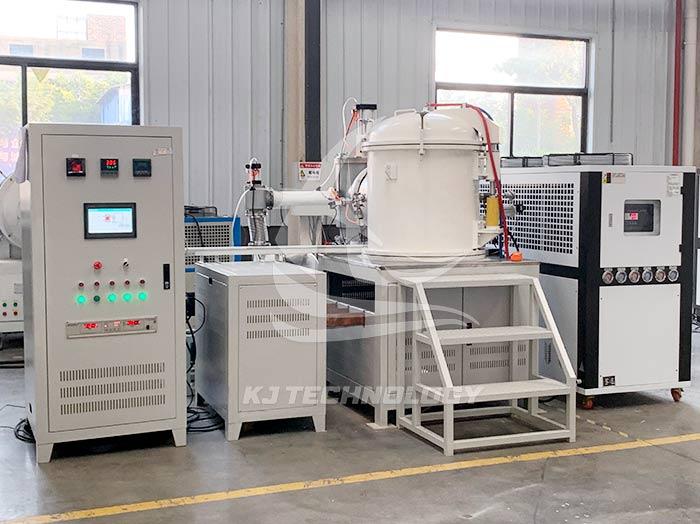
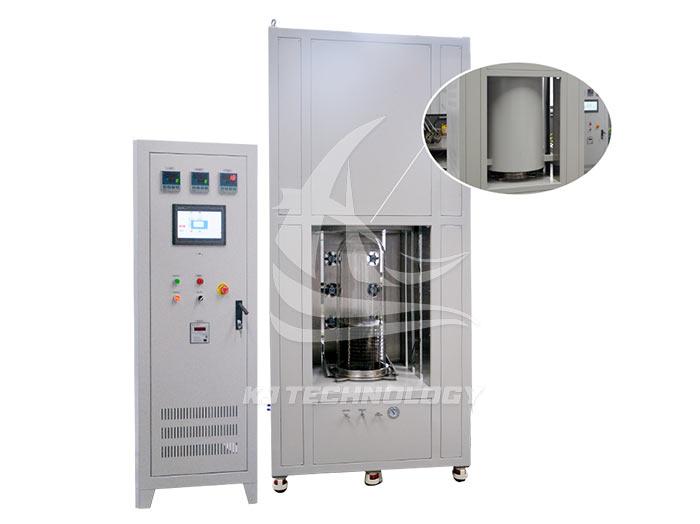
Vertical vacuum carbon tube furnace
5. Development Trends
intelligent upgrade
Introducing IoT technology to achieve remote monitoring and fault diagnosis; Optimize process parameters through big data analysis to improve production efficiency.
Green Manufacturing
Develop low-energy heating elements (such as graphene heating elements); Optimize the design of the vacuum system to reduce pumping time and energy consumption.
Multi-functional integration
Integrating vacuum heat treatment with technologies such as 3D printing and additive manufacturing to achieve integrated molding and heat treatment of complex components.