Atmosphere protection vacuum muffle furnace
 12-11-2025 Author: KJ technology
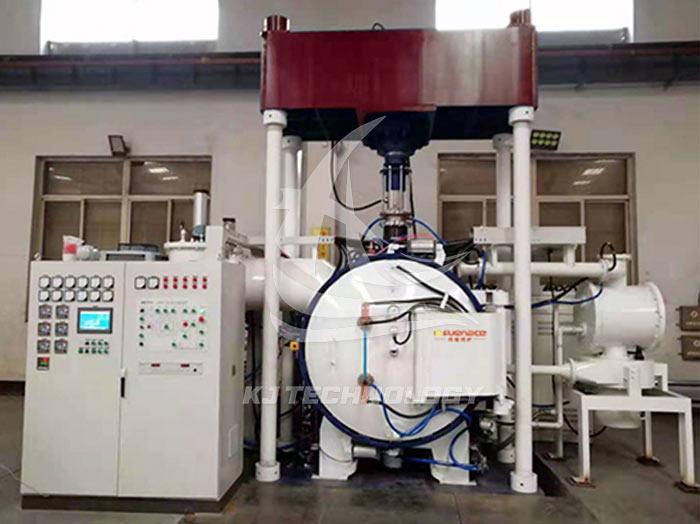
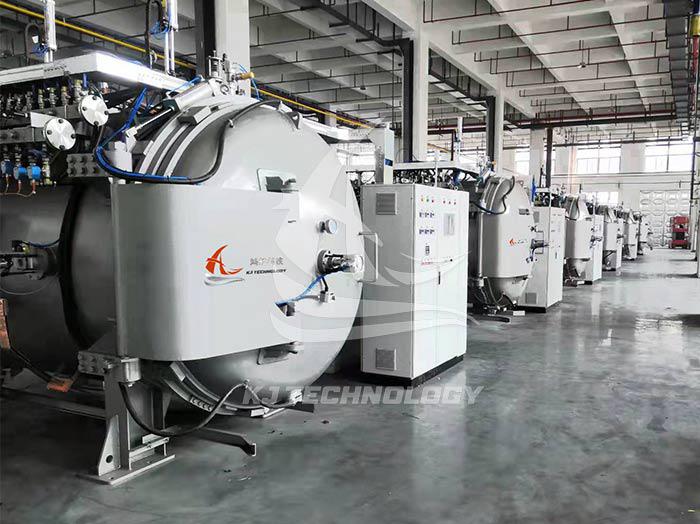
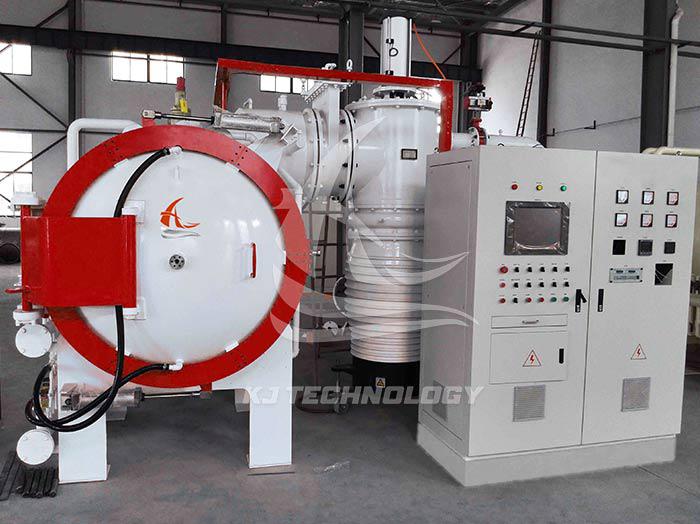
Atmosphere protected vacuum muffle furnace is a high-temperature heat treatment equipment that combines vacuum environment and controllable atmosphere protection functions, widely used in materials science, semiconductor, powder metallurgy, ceramic preparation and other fields. The following provides a detailed introduction from four aspects: working principle, core advantages, typical applications, and operational precautions:
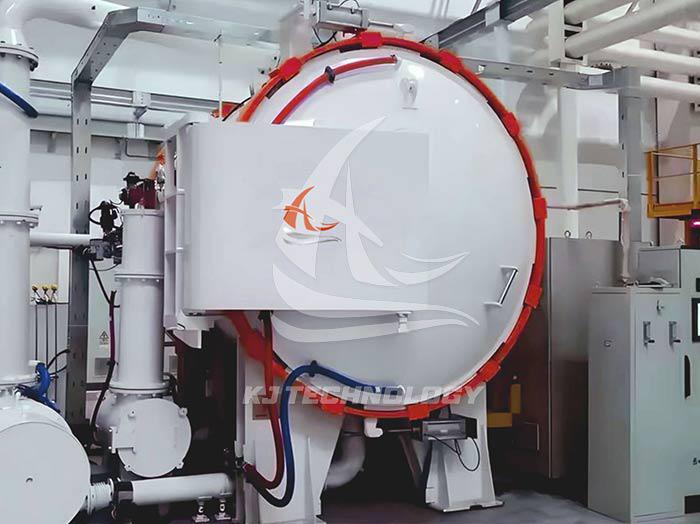
Vacuum sintering furnace with protective gas (click on the image to view product details)
1. Working principle
vacuum system
By using vacuum pumps (such as rotary vane pumps and molecular pumps) to extract gas from the furnace chamber, a high vacuum environment (up to 10 ⁻ Pa) is formed, effectively eliminating impurities such as oxygen and water vapor, and preventing material oxidation or other adverse reactions at high temperatures.
Atmosphere control system
On the basis of vacuum, inert gases (such as nitrogen and argon), reducing gases (such as hydrogen), or specific proportions of mixed gases can be introduced, and the gas composition and flow rate can be accurately adjusted through a mass flow controller (MFC) to meet the heat treatment needs of different materials. For example:
Inert gas protection: prevents metal powder oxidation and improves the purity of sintered products.
Reductive atmosphere: used for metal oxide reduction, such as hydrogen reduction of lithium cobalt oxide to prepare high-purity cobalt powder.
Heating and temperature control system
Heating element: using silicon molybdenum rods, high-temperature resistance wires, etc., to convert electrical energy into thermal energy, raising the furnace temperature above 1000 ℃ (some equipment can reach 1700 ℃).
Temperature control technology: Combining thermocouple temperature sensors with PID intelligent control algorithms to achieve precise temperature control (accuracy ± 1 ℃), and supporting multi-stage programmed heating to meet the requirements of complex process curves.
Sealing and insulation structure
Furnace design: Made of lightweight alumina ceramic fiber material, it has excellent insulation properties and reduces heat loss.
Sealing structure: The furnace door is sealed with silicone or metal flange to ensure stable vacuum environment and prevent gas leakage.
2. Core advantages
High purity processing environment
Dual protection of vacuum and controllable atmosphere, avoiding material contact with air at high temperatures, significantly improving product purity and performance stability. For example, in semiconductor process annealing, a high vacuum environment can reduce impurity contamination and improve wafer quality.
Precise process control
Temperature uniformity: By optimizing the furnace structure and heating element layout, combined with an intelligent temperature control system, the temperature distribution inside the furnace is ensured to be uniform, reducing local temperature differences and avoiding performance differences caused by uneven heating of materials.
Atmosphere flexibility: Supports multiple gas switching and proportional adjustment to meet the reaction needs of different materials. For example, in chemical vapor deposition (CVD) experiments, uniform deposition of thin films is achieved by precisely controlling the gas flow rate and ratio.
Efficient and energy-saving design
Double layer furnace shell structure: filled with high-quality insulation materials such as ceramic fiber board in the middle, effectively reducing heat loss, lowering the surface temperature of the furnace body, and achieving significant energy-saving effects.
Rapid heating capability: Using high-efficiency heating elements such as silicon molybdenum rods, the heating speed is fast (such as 5-10 ℃/min), shortening the processing cycle and improving production efficiency.
Intelligent operation experience
Programming control: Supports multi-stage program heating and atmosphere changes. Users can preset process parameters through the control panel or remote monitoring system to achieve automated operation.
Security protection mechanism: equipped with multiple safety devices such as over temperature alarm, gas leakage detection, and disconnection protection to ensure the safety of equipment and operators.
3. Typical application areas
Powder metallurgy sintering
Under vacuum or inert gas protection, high-temperature sintering of metal powders (such as iron, copper, titanium) is carried out to avoid oxidation, improve product density and mechanical properties, and is widely used in the production of aerospace and automotive components.
Preparation of Ceramic Materials
High temperature vacuum environment promotes the densification of ceramic powders (such as zirconia and silicon nitride), optimizes grain structure, enhances hardness, wear resistance, and high temperature resistance, and is used in fields such as electronic ceramics and structural ceramics.
semiconductor process
Annealing treatment: High temperature annealing of wafers in vacuum or inert atmosphere to eliminate lattice defects and improve electrical performance.
CVD deposition: Deposition of thin film materials in a high-temperature and specific gas environment (such as silane, ammonia) for manufacturing integrated circuits, solar cells, etc.
Research and development of new energy materials
Lithium ion battery materials: sintering positive and negative electrode materials (such as lithium cobalt oxide, graphite) in vacuum or inert atmosphere, optimizing crystal structure, improving charge and discharge efficiency and cycle life.
Fuel cell catalyst: By controlling the atmosphere, the distribution of active components in catalyst powder can be adjusted to enhance catalytic performance.
Catalyst preparation
In the preparation process of hydrogenation catalysts in the petrochemical industry and waste gas treatment catalysts in the environmental protection field, the pore structure and specific surface area are optimized through vacuum and atmosphere control to enhance catalyst activity and stability.
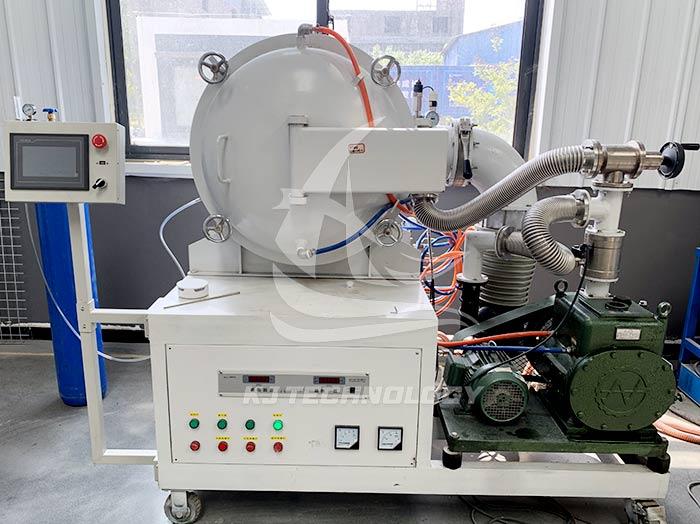
Vacuum atmosphere heat treatment electric furnace (click on the picture to view product details)
4. Operation precautions
Check before startup
Ensure that the appearance of the equipment is undamaged, the furnace door is well sealed, and the power cord is not damaged.
Check whether the vacuum pump, gas pipeline, valves and other components are normal to avoid air leakage or blockage.
Sample placement and container selection
Place the sample to be processed into a high-temperature resistant crucible (such as ceramic, quartz, platinum, etc.) to avoid direct contact with the furnace and prevent contamination or damage.
The sample size should not be too large to ensure uniform heating and avoid overheating of the furnace.
Process parameter setting
Set target temperature, heating rate, holding time, and cooling rate based on material characteristics. For example, metal powder sintering commonly uses a heating rate of 5-20 ℃/min, while ceramic sintering requires slow heating to remove moisture.
Choose the appropriate atmosphere type and flow rate to avoid safety hazards caused by gas reactions. For example, hydrogen reduction treatment requires ensuring equipment sealing to prevent hydrogen leakage.
Operation monitoring and maintenance
Regularly observe the temperature display and equipment operation status during the heating process to ensure that there are no abnormalities.
After the experiment is completed, when the furnace temperature drops to a safe range (usually below 200 ℃), wear insulated gloves and take out the sample.
Regularly clean the residue inside the furnace, check for cracks or damage, and replace the furnace or contact for maintenance if necessary.
Regularly calibrate the temperature controller to ensure accurate heating temperature.
Safety protection measures
Wear protective equipment such as insulated gloves and goggles during operation to prevent burns or splashes.
Avoid direct contact with high-temperature parts such as furnaces and crucibles to prevent burns.
When heating samples that are prone to producing toxic gases, it is necessary to operate in a fume hood or equip an exhaust system.
Flammable and explosive materials shall not be stacked around the equipment to ensure a safe distance.
To avoid power fluctuations or sudden power outages, a voltage regulator or UPS power supply should be equipped if necessary.