Advantages of Carbon Tube Vacuum Furnace
 11-25-2025 Author: KJ technology
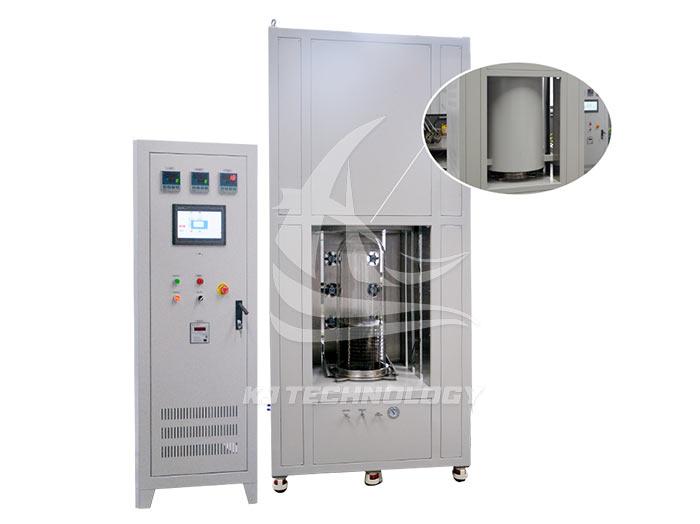
Carbon tube vacuum furnace combines vacuum environment and carbon tube heating technology, demonstrating significant advantages in the field of material processing. The following is a detailed summary of its core advantages:
1. Excellent high-temperature performance, meeting extreme demands
Ultra high temperature range: The maximum working temperature of carbon tube vacuum furnace can reach 2000 ℃ to 2200 ℃, far exceeding conventional furnace types, and can easily meet the high-temperature sintering and heat treatment needs of ceramics, metals, composite materials, etc.
Stable high-temperature environment: Carbon tube heating elements have excellent thermal stability and chemical inertness at high temperatures, ensuring uniform and low fluctuation temperature inside the furnace, providing reliable high-temperature conditions for material processing.
2. Pure vacuum environment to prevent material contamination
Deep vacuum degree: Through an efficient vacuum system, the pressure inside the furnace can be reduced to 10 ⁻ ² to 10 ⁻ ³ Pa, effectively eliminating air, moisture, and impurities, and avoiding material oxidation, decarburization, or pollution at high temperatures.
Inert gas protection: supports the filling of inert gases such as argon and nitrogen to create a protective atmosphere, further suppressing the reaction between materials and the environment, and ensuring the purity of the treatment process.
3. Uniform and efficient heating, improving material quality
Circular radiation heat field: The carbon tube heating element is designed in conjunction with the circular furnace body to form a uniform radiation heat field with minimal temperature gradient, ensuring uniform heating of all parts of the material and reducing cracking or deformation caused by thermal stress.
Efficient heat conduction: Carbon tube heating elements have excellent heat conduction performance, which can quickly convert electrical energy into thermal energy, improve heating efficiency, and shorten processing cycles.
4. Flexible and diverse processes to adapt to complex requirements
Multi stage programming control: supports programming control of multiple parameters such as temperature, time, and vacuum degree, and can preset complex process curves to meet personalized processing needs of different materials.
Positive and negative pressure carbonization process: It can be carbonized under vacuum environment or filled with reaction gas for positive pressure carbonization to meet the process requirements of different materials.
5. Energy saving and environmentally friendly design, reducing operating costs
Efficient insulation layer: The furnace body adopts multiple layers of insulation materials, such as carbon fiber felt, alumina fiber board, etc., effectively reducing heat loss and energy consumption.
Intelligent temperature control system: Through PID control technology, real-time monitoring and adjustment of furnace temperature are carried out to avoid overheating and further save energy.
Environmental emissions: Vacuum environment reduces exhaust emissions, in line with the trend of green manufacturing, while reducing environmental pollution.
6. Safe and reliable operation, ensuring operational safety
Multiple safety protections: equipped with safety devices such as over temperature alarm, break protection, and leakage protection to ensure automatic shutdown of equipment in case of abnormal conditions, safeguarding the safety of operators and equipment.
Sturdy furnace structure: The furnace body is made of high-strength materials, with a stable structure that can withstand stress in high temperature and high pressure environments, extending the service life of the equipment.
7. Widely applicable in various fields, meeting diverse needs
Materials Science: supports high-temperature sintering and heat treatment of ceramics, metals, composite materials, as well as the preparation of nanomaterials and inorganic compounds.
Electronics industry: used for vacuum processing of electronic components and semiconductor materials to improve the reliability and stability of components.
Energy storage: supports vacuum preparation of battery materials and supercapacitor materials, optimizing the electrochemical performance of materials.
Aerospace: Provide a controllable high-temperature vacuum environment for the research and development of high-temperature materials and component manufacturing, meeting the performance testing requirements under extreme conditions.
Research Education: Suitable for teaching experiments in colleges and research institutions, cultivating students' practical abilities and innovative spirit.