Customized production type high-temperature vacuum brazing furnace
 12-08-2025 Author: KJ technology
If you need to customize a production type high-temperature vacuum brazing furnace, you need to conduct a comprehensive design from five dimensions: core parameters, structural design, automation control, safety and environmental protection, and customized services. The following is the specific plan:
1. Core parameter design
temperature range
Maximum temperature: Select according to material and process requirements. For example, brazing of non-ferrous metals such as aluminum and copper should be ≤ 1200 ℃, titanium alloys and high-temperature alloys should be 1300-1500 ℃, and TLP welding of single crystal alloy blades should be ≥ 1600 ℃.
Temperature uniformity: In an empty furnace state, the temperature difference tested at 9 o'clock at 1000 ℃ is ≤ ± 5 ℃ to ensure consistent heating of workpieces in mass production.
Temperature control accuracy: PID algorithm is used, with an accuracy of ≤± 1 ℃, to avoid temperature fluctuations that may cause differences in the flowability of the solder material.
degree of vacuum
Extreme vacuum degree: ≤ 5.0 × 10 ⁻³ Pa (oil diffusion pump) or ≤ 10 ⁻⁴ Pa (molecular pump) in cold state, meeting the requirement of non oxidative brazing for highly active materials such as titanium and zirconium.
Extraction rate: The time for the empty furnace to extract from atmospheric pressure to 10 ⁻ ³ Pa is ≤ 30 minutes, which shortens the production cycle.
Heating and cooling
Heating method: Multi zone independent temperature control (such as zone 6), using molybdenum strip or graphite heating elements to ensure rapid heating (empty furnace 0-1100 ℃ ≤ 60 minutes).
Cooling system: external circulation water cooling+high-purity nitrogen/argon forced gas quenching, cooling rate ≥ 50 ℃/min, reducing workpiece deformation.
2. Structural design optimization
Furnace structure
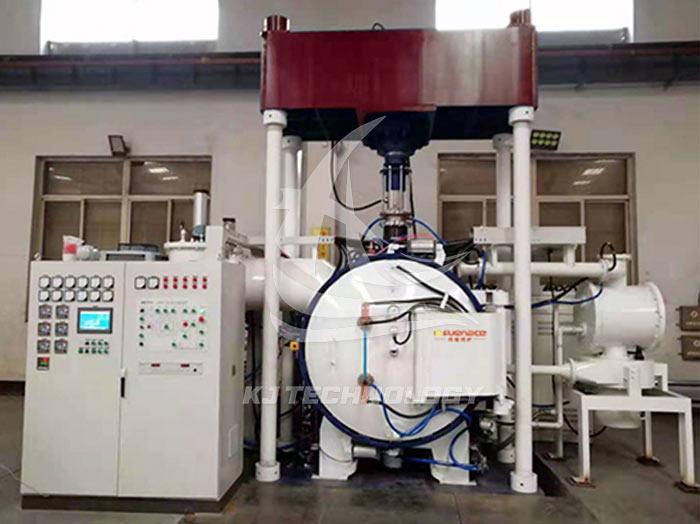
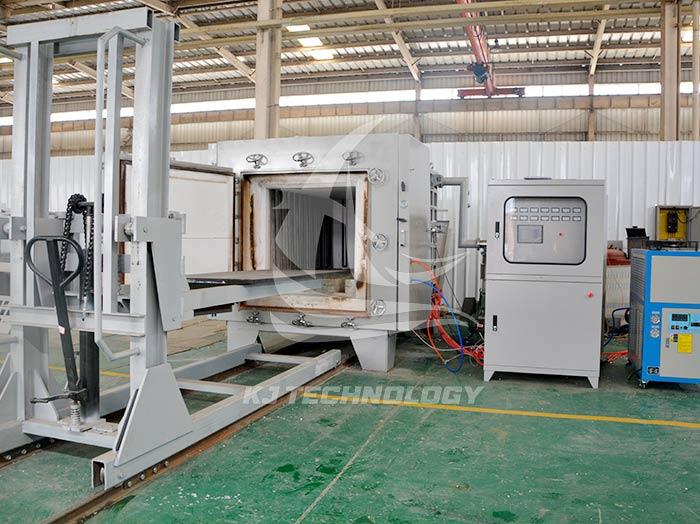
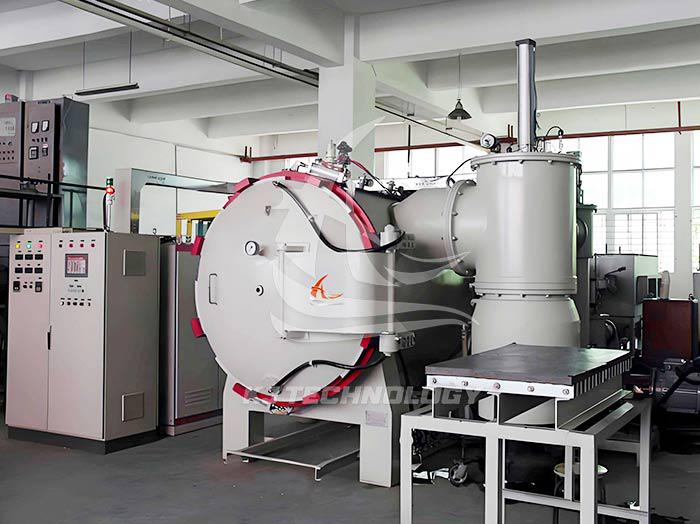
Horizontal/vertical selection: Customized according to the size of the workpiece, horizontal furnaces are suitable for long axis parts (such as blades), and vertical furnaces are suitable for disc parts (such as gears).
Size of uniform temperature zone: Designed according to production capacity, such as 400 × 400 × 600mm, it can accommodate batches of small or single large-sized workpieces.
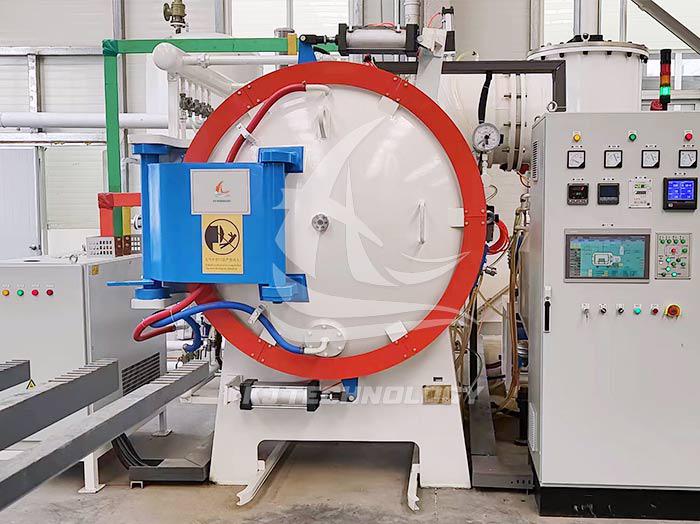
Furnace door design: It adopts hydraulic or pneumatic quick opening and is equipped with an observation window (quartz glass) for real-time monitoring of the brazing process.
thermal insulation system
Multi layer metal insulation screen: made of materials such as molybdenum and stainless steel, reducing thermal radiation loss and energy consumption.
Water cooled electrode: prevents electrode oxidation at high temperatures and extends its service life.
3. Automated control system
PLC+touch screen
Process programming: supports control of hundreds of heat treatment curve points, and can store/call different material process parameters (such as temperature, vacuum degree, time).
Real time monitoring: displays parameters such as temperature, vacuum degree, cooling water flow rate, etc., with over temperature, couple breakage, and leakage alarm functions.
Data traceability: Generate process reports to meet the traceability requirements in fields such as aerospace.
Vacuum system integration
Pump configuration: mechanical pump (rough pumping)+Roots pump (medium vacuum)+diffusion pump/molecular pump (high vacuum), achieving rapid pumping.
Valve control: The pre valve, bypass valve, high valve, etc. are all controlled by PLC pneumatic control to ensure the sealing of the vacuum system.
4. Safety and Environmental Design
safety protection
Interlock function: Heating is prohibited when the furnace door is not closed, and inflation is prohibited when the vacuum degree does not meet the standard.
Emergency cooling: In the event of a sudden power outage, the backup power supply activates the cooling system to prevent the workpiece from overheating.
environmental protection measures
Exhaust gas treatment: Connect the exhaust gas treatment device to filter out trace volatile substances (such as flux components) generated during the brazing process.
Low noise design: The pump unit adopts a soundproof cover to reduce operating noise.
5. Customized services
Non-standard design
Special workpiece adaptation: Customize tooling fixtures (such as rotating trays, multi-layer racks) according to the shape of the workpiece to ensure uniform filling of the brazing material.
Multi atmosphere control: Reductive gases such as hydrogen and methane can be introduced to achieve brazing in complex atmospheres.
Process support
Process: Optimize parameters such as solder selection and temperature curve.
Training service: On site training of operators to ensure safe and efficient operation of equipment.
6. Typical application cases
Aerospace field: A certain enterprise customized a 1600 ℃ high-temperature vacuum brazing furnace for TLP welding of single crystal alloy blades, which improved the yield rate.
In the field of new energy vehicles, a battery manufacturer customized a 1200 ℃ horizontal furnace to achieve batch brazing of battery shells and shorten the production cycle.