Carbon tube vacuum furnace
 11-25-2025 Author: KJ technology
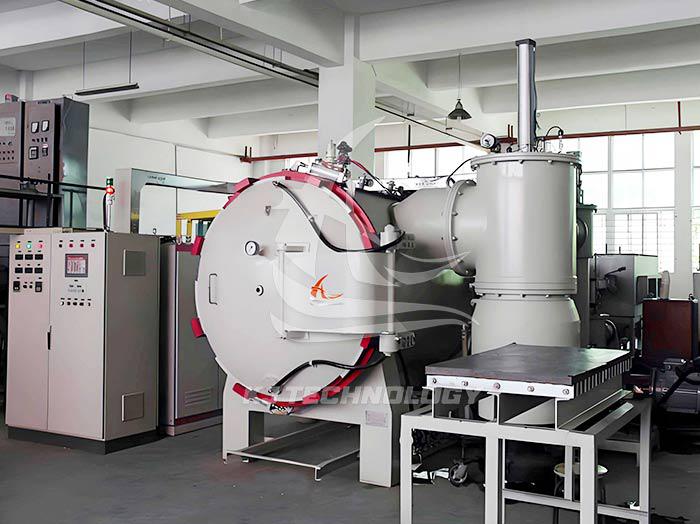
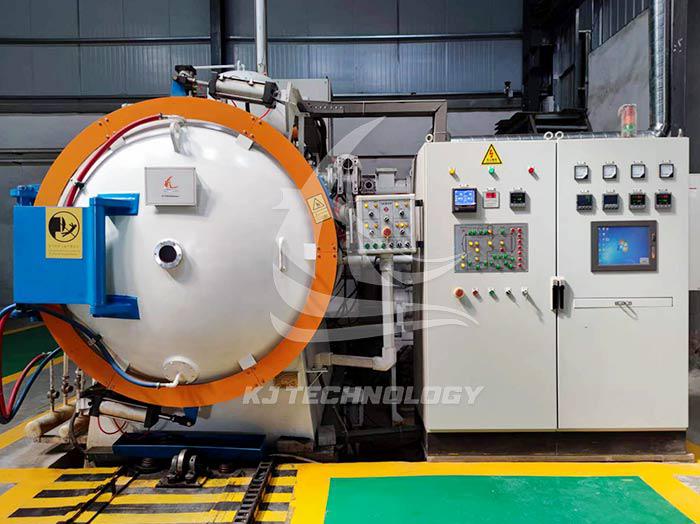
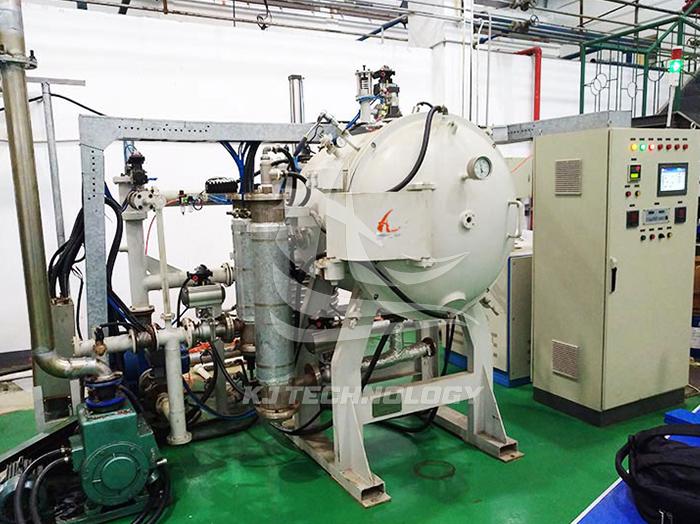
Carbon tube vacuum furnace is a high-temperature industrial equipment that combines vacuum environment and carbon tube heating technology. The following is a detailed introduction to it:
1. Core structure
Heating system: Carbon tubes (such as graphite tubes) are used as heating elements, and high-temperature heating is achieved by connecting electrodes to a power source. Some devices may combine metal heating elements with graphite insulation materials to optimize performance.
Vacuum system: composed of vacuum pump, vacuum measuring device, valves, etc., it can reduce the pressure inside the furnace to the range of 10 ⁻ to 10 ⁻ Pa, effectively eliminate air and impurities, and prevent material oxidation.
Furnace structure: usually designed in a tubular shape, equipped with sealing flanges and observation windows. The furnace tube material can be selected from quartz or alumina ceramics to ensure stability and corrosion resistance at high temperatures.
Temperature control system: adopting PID control technology, combined with real-time monitoring of thermocouples, to achieve temperature accuracy control within ± 1 ℃, supporting multi-stage programming to meet complex process requirements.
Cooling system: Optional external circulation rapid cooling device can shorten batch processing cycle and improve production efficiency through forced cooling.
2. Working principle
Sample loading and sealing: Place the material to be processed in the center of the furnace tube and fix both ends with sealing flanges to ensure the sealing of the vacuum environment.
Vacuum extraction and atmosphere control: Start the vacuum pump to remove air from the furnace, monitor the vacuum degree to the set value, and then fill inert gas (such as argon) or reaction gas as needed to form a protective or reaction atmosphere.
Heating treatment: The carbon tube heating element is activated by electricity, and the temperature control system heats up and maintains a constant temperature according to the preset program to complete the material heat treatment.
Cooling and Sampling: After processing, the sample is taken out by natural cooling or forced cooling to a safe temperature, opening the sealing flange.
3. Application Fields
a. Carbon material preparation: Used for carbonization treatment of high thermal conductivity materials such as carbon fiber and graphite film to improve material properties.
b. Metal heat treatment: realizing vacuum annealing, tempering, quenching and other processes of metal materials to improve their microstructure and mechanical properties.
Ceramics and composite materials: support vacuum sintering of ceramic materials and densification treatment of carbon/carbon composite materials.
Research experiment: Provide a controllable high-temperature vacuum environment for materials science research, meeting the needs of small-scale laboratory experiments.
4. Technical advantages
High temperature uniformity: The carbon tube heating element is designed in conjunction with the annular furnace body to form a uniform radiation heat field with minimal temperature gradient.
Anti oxidation protection: The vacuum environment effectively isolates oxygen, avoiding high-temperature oxidation of materials and ensuring processing quality.
High purity processing: Inert gas protection or vacuum conditions can prevent impurity contamination and meet the requirements for high-purity material preparation.
Process flexibility: Supports positive or negative pressure carbonization processes to meet the processing needs of different materials.
Energy saving and environmental protection: The efficient insulation layer design reduces heat loss and energy consumption, in line with the trend of green manufacturing.