Advantages of customizing high vacuum brazing electric furnace
 10-13-2025 Author: KJ technology
The customized high vacuum brazing electric furnace combines high vacuum environment and precise temperature control technology, which has significant advantages in material connection, product quality improvement, and process adaptability. The following is a detailed analysis of its core advantages:
1. Non oxidizing and pollution-free welding environment
Inhibit oxidation reaction
Principle: In a high vacuum environment (with a maximum vacuum degree of 5.0 × 10 ⁻⁴ Pa or below), active gases such as oxygen and nitrogen are effectively eliminated, preventing metals from reacting with oxygen and nitrogen at high temperatures.
Effect: The surface of the welded joint is smooth, without the formation of oxide or nitride layers, significantly improving the strength and corrosion resistance of the joint. For example, during brazing of titanium alloys, a vacuum environment can prevent titanium from reacting with oxygen to form a brittle TiO ₂ layer, ensuring joint toughness.
Reduce impurity pollution
Principle: The vacuum environment isolates external dust, moisture, and other impurities to prevent contamination of the brazing material or base material.
Effect: Especially suitable for welding high-purity materials such as semiconductors and optical components, ensuring stable product performance. For example, in electronic packaging, vacuum brazing can prevent impurities from entering the solder material and improve circuit reliability.
2. High precision welding and high-quality joints
Accurate temperature control capability
Principle: Equipped with high-precision temperature controllers (such as PID control) and multi-point temperature measurement systems to achieve temperature uniformity (within ± 5 ℃) inside the furnace.
Effect: Avoid local overheating or insufficient temperature, ensure that the brazing material is fully melted and evenly filled in the gaps. For example, precise temperature control during brazing of high-temperature alloys can prevent the growth of base metal grains and maintain the mechanical properties of the material.
Low deformation and low residual stress
Principle: Vacuum brazing adopts low-temperature process (compared to fusion welding), and the heating/cooling rate is controllable to reduce thermal stress.
Effect: Small welding deformation, especially suitable for welding thin-walled or complex structural components. For example, the brazing of aircraft engine blades requires strict control of deformation, and a vacuum environment can meet this requirement.
High quality joint performance
Principle: A non oxidizing and non polluting welding environment promotes metallurgical bonding between the brazing material and the base metal, forming a dense joint.
Effect: The joint has high strength and good airtightness, suitable for high-pressure, high-temperature, or corrosive environments. For example, brazing of nuclear reactor components needs to be completed under vacuum to ensure long-term radiation and corrosion resistance of the joints.
3. Wide material adaptability
Nonferrous metals and alloys
Application: Welding of copper, aluminum, titanium and their alloys.
Advantages: The vacuum environment can avoid copper oxidation (resulting in Cu ₂ O embrittlement) and interference from aluminum surface oxide films, achieving high-quality connections. For example, vacuum brazing of aluminum radiators can improve heat exchange efficiency.
Black metal and high-temperature alloy
Application: Welding of stainless steel and nickel/cobalt based high-temperature alloys.
Advantages: High vacuum can reduce chromium oxidation (key to stainless steel corrosion resistance), while avoiding embrittlement caused by the precipitation of γ 'phase in high-temperature alloys. For example, the brazing of gas turbine blades needs to be completed under vacuum to ensure high-temperature strength.
Combination of heterogeneous materials
Application: Connection of dissimilar materials such as ceramic metal and metal composite materials.
Advantages: Chemical bonding can be achieved under vacuum using active brazing materials such as Ag Cu Ti, breaking through the limitations of traditional welding. For example, vacuum brazing of Al ₂ O ∝ ceramics and Kovar alloys is widely used in electronic packaging.
Special material system
Application: Welding of active metals such as zirconium and niobium, as well as precious metals such as gold and platinum.
Advantages: The vacuum environment can avoid the reaction of active metals with oxygen and nitrogen, while reducing the oxidation loss of precious metals. For example, zirconium alloy brazing of nuclear fuel cladding needs to be completed under vacuum to ensure radiation resistance.
4. Process flexibility and efficiency
Multi segment programmable temperature control
Function: Supports multiple temperature curve settings such as heating, insulation, and cooling, adapting to different material and process requirements.
Effect: For example, when brazing titanium alloys, surface adsorbed gases can be removed at low temperatures first, followed by heating to complete brazing, and finally rapid cooling to prevent grain growth.
Automation and Intelligence
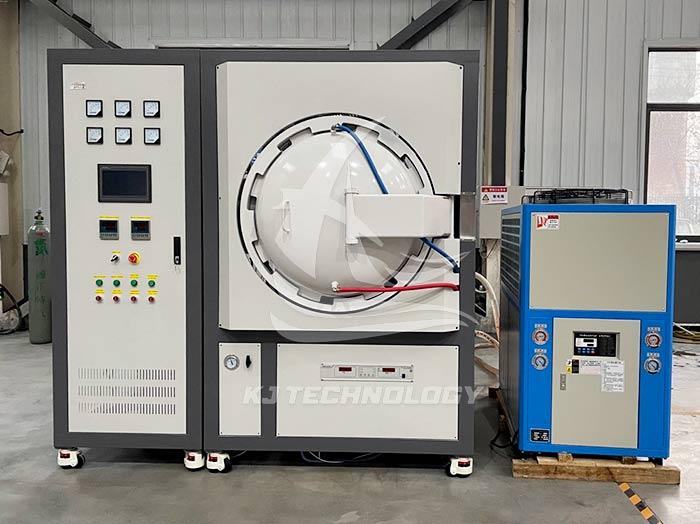
Function: Integrate PLC and touch screen (HMI) to achieve automatic temperature control, automatic inflation and deflation, fault diagnosis and other functions.
Effect: Reduce manual operation errors, improve production efficiency and consistency. For example, when mass producing electronic components, automated control can ensure stable quality of each solder joint.
modular design
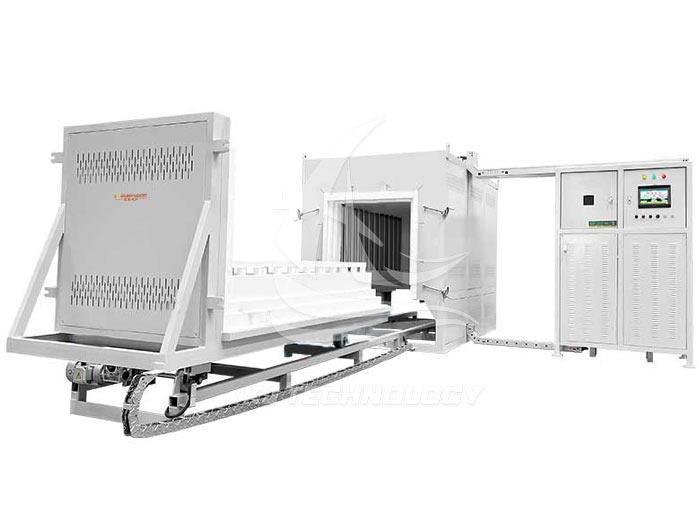
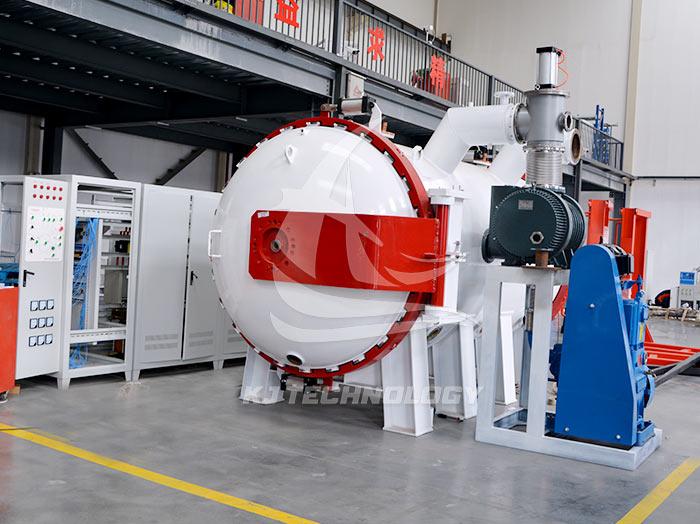
Function: Supports furnace customization (vertical, horizontal, top opening door, etc.) and function expansion (such as multi-channel protective gas inlet, forced cooling).
Effect: Meet different workpiece sizes and process requirements, reduce equipment idle rate. For example, the brazing of large aviation structural components requires customized horizontal furnaces, while small electronic components are suitable for vertical furnaces.
5. Long term economic benefits
Reduce rework rate
Principle: High quality welding reduces rework caused by oxidation, contamination, or deformation, saving material and labor costs.
Effect: For example, in the production of automotive turbochargers, vacuum brazing can significantly reduce waste rates and improve overall efficiency.
Extend equipment lifespan
Principle: Vacuum environment reduces the oxidation and corrosion of furnace components (such as heaters and insulation materials) at high temperatures, extending the service life of equipment.
Effect: Compared to non vacuum equipment, the maintenance cycle is longer and the overall cost is lower.
Support high value-added products
Principle: Vacuum brazing technology is suitable for high-end fields such as aerospace and new energy, with high product added value.
Effect: Enterprises can enhance their technological barriers and market competitiveness by customizing high vacuum brazing electric furnaces.